Topic Overview
Generative Audio AI Platforms cover the tools and integrations that turn text and conversational AI outputs into natural-sounding speech, capture and transcribe audio, and power real‑time voice agents. By 2026 the landscape centers on two patterns: LLM-driven pipelines (e.g., Sora/OpenAI integrations) that stream prompts into synthesis in low-latency applications, and dedicated audio-first vendors (ElevenLabs, Descript, Replica) focused on fidelity, cloning and developer APIs. ElevenLabs offers expressive TTS, high-fidelity voice cloning and production-ready speech features (including speech-to-text and voice isolation). Descript provides an all-in-one editor with overdub cloning, transcription and multitrack editing for creators. Replica (Replica Studios) emphasizes character and acting-style voices for games and interactive media. Complementary platforms — Murf, Podcastle, Recall.ai, Krisp, OpenCall, ZenCall and Simple Phones — supply multilingual dubbing, meeting capture/transcription, noise cancellation, and turnkey AI phone agents or HIPAA‑compliant voice workflows. Evoke/Amadeus Code and VOICEplug represent music/SFX generation and voice ordering integrations for verticals like restaurants and gaming. Key considerations in 2026 include audio quality vs. latency trade-offs, API and SDK support for streaming STT/TTS, compliance (consent, HIPAA), and safeguards for misuse (watermarking, provenance). For product teams, the choice is pragmatic: use LLM+Sora/OpenAI flows for conversational, low-latency agents; pick ElevenLabs or Descript when fidelity, cloning nuance and production tooling matter; and select verticalized platforms (OpenCall, ZenCall, VOICEplug) for operational voice services. Understanding these trade-offs helps match technical constraints, regulatory needs and creative requirements when deploying generative audio.
Tool Rankings – Top 6
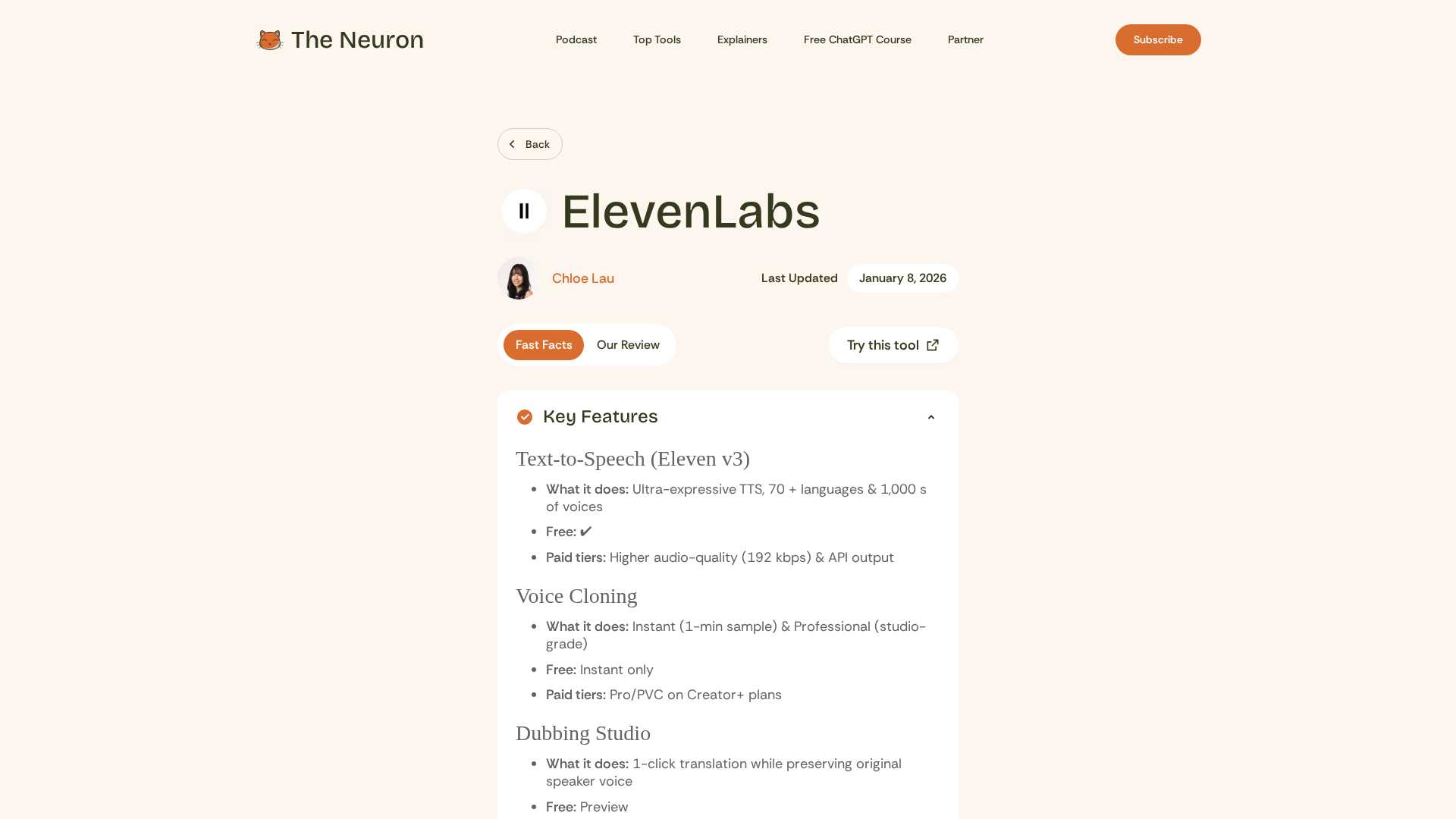
Industry-leading AI audio platform for ultra-realistic text-to-speech, voice cloning, transcription, and voice agents.

A single AI platform to record, edit, dub, subtitle, clip, and clone voices for audio, video, and voice content.

Realistic AI text-to-speech, dubbing, and voice APIs with 200+ voices and multilingual support.

API and SDK platform to capture, transcribe, stream, and surface meeting recordings and metadata (Zoom, Meet, Teams, etc

AI audio/meeting platform for noise cancellation, real-time transcription, meeting notes, accent conversion, and voice/音

AI-powered, HIPAA-compliant phone and messaging automation that books patients and accelerates sales.
Latest Articles (62)
A New Year update on Threads from Podcastle AI; content not provided in this prompt.
Cannot generate a precise preview without the article text.
A comprehensive guide to the leading voice AI providers for 2025, with evaluation criteria and practical buying tips.
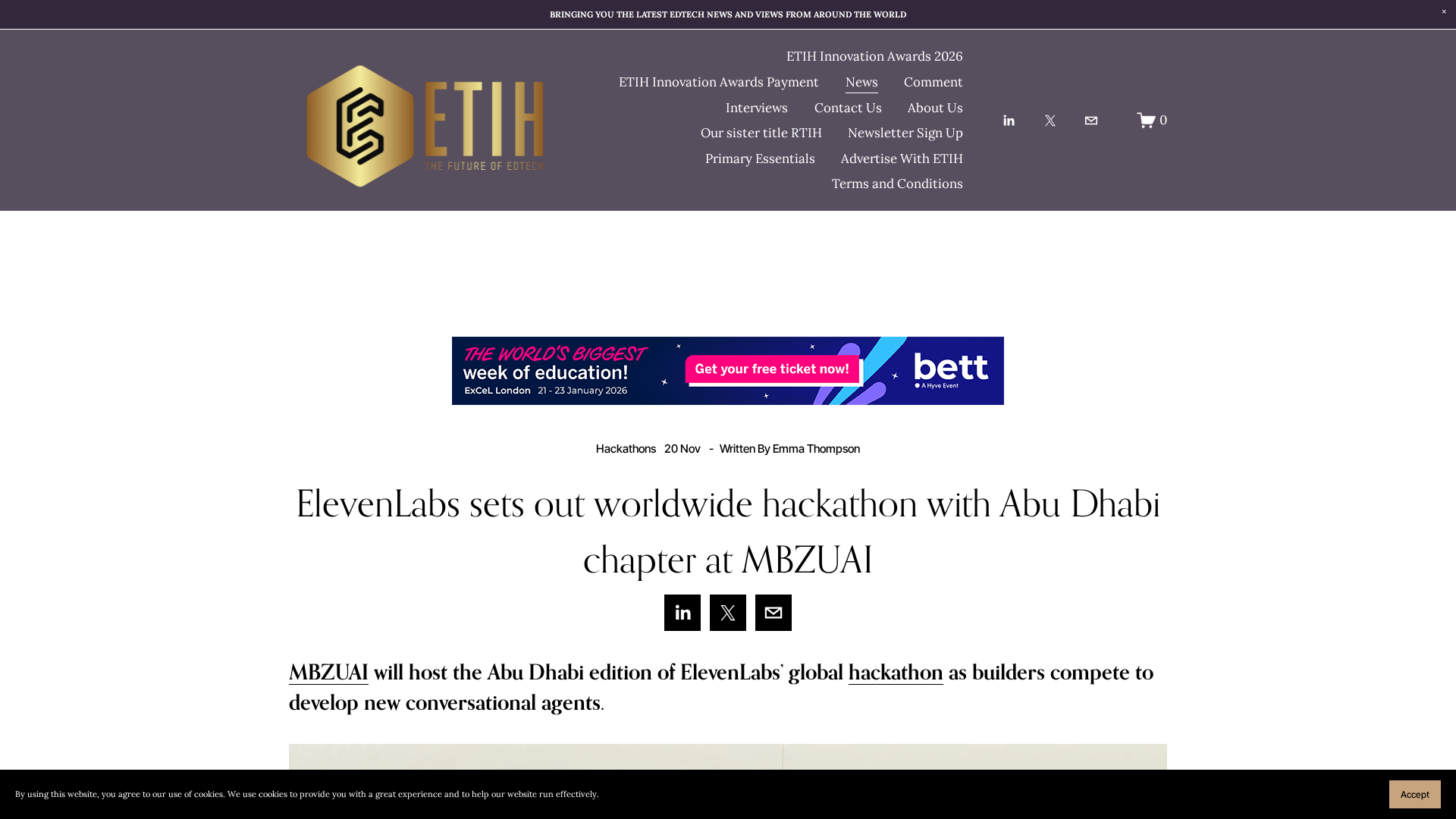
ElevenLabs launches a worldwide hackathon with MBZUAI's Abu Dhabi chapter to prototype conversational agents for prize winnings.
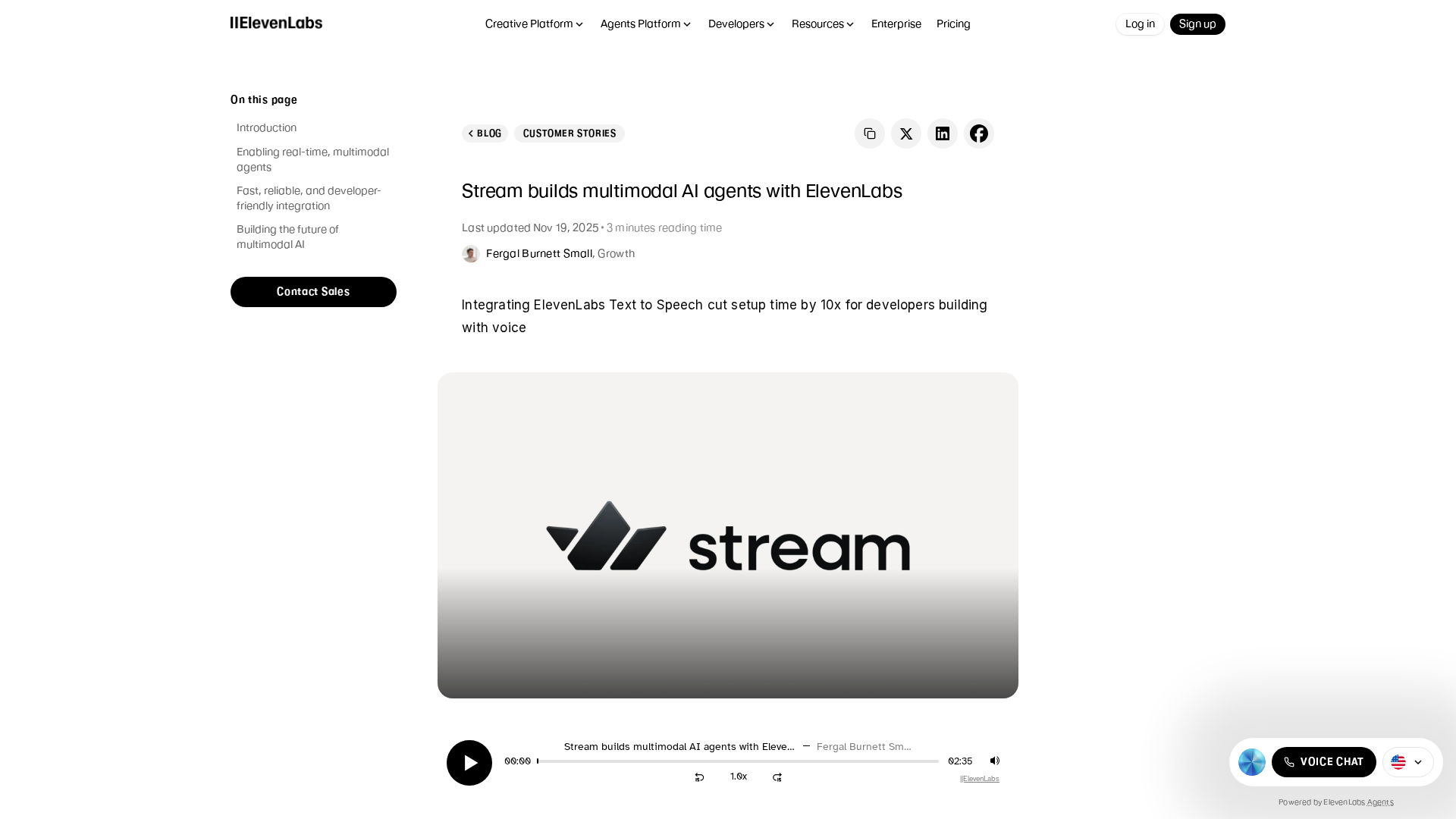
Stream Vision Agents now use ElevenLabs TTS for real-time, lifelike voices, delivering 10x faster voice setup and low-latency multimodal AI.