Topic Overview
This topic covers the intersection of intent‑aware computing and desktop automation agents: systems that translate user intent—spoken, typed, or inferred—into sequenced actions across local apps, cloud services, and developer workflows. Advances in multimodal models (e.g., Google Gemini) and broad platform integrations (notably Microsoft’s agent ecosystem via tools like GitHub Copilot) are accelerating agents that live inside IDEs, productivity suites, and the desktop itself. Key actor categories include agent frameworks (LangChain, GPTConsole) that standardize model/tool interfaces and lifecycle management; no‑code/low‑code builders (AgentGPT, Tate‑A‑Tate, Anakin.ai) that let non‑developers assemble agents quickly; developer platforms and IDE‑embedded assistants (Replit, Cursor, JetBrains AI Assistant, GitHub Copilot) that embed automation into coding workflows; and marketplaces for agents and tools where creators publish, monetize, and discover agents. Workspace platforms such as Notion and search hybrids like GPTGO combine document, search, and automation primitives into end‑user experiences. The trend is timely because multimodal LLMs have made it feasible to map richer user signals to concrete side‑effects (file manipulation, API calls, code edits), while frameworks and marketplaces lower the friction to build, run, and govern those agents. Practical considerations driving adoption are interoperability (model/tool chaining), memory and state management, observability, and enterprise safety/governance. For teams evaluating this space, the important differentiators are model capabilities (multimodality, grounding), orchestration/monitoring features, ease of integration into desktop workflows, and marketplace ecosystems that support reuse and compliance.
Tool Rankings – Top 6

Google’s multimodal family of generative AI models and APIs for developers and enterprises.

An open-source framework and platform to build, observe, and deploy reliable AI agents.

A browser-based platform to create and deploy autonomous AI agents with simple goals.

AI-powered online IDE and platform to build, host, and ship apps quickly.

Developer-focused platform (SDK, API, CLI, web) to create, share and monetize production-ready AI agents.

AI-first code editor and assistant by Anysphere embedding AI across editor, agents, CLI and web workflows.
Latest Articles (66)
A missing page reveals Tate-A-Tate’s broad AI tools, integrations, and developer-focused capabilities.
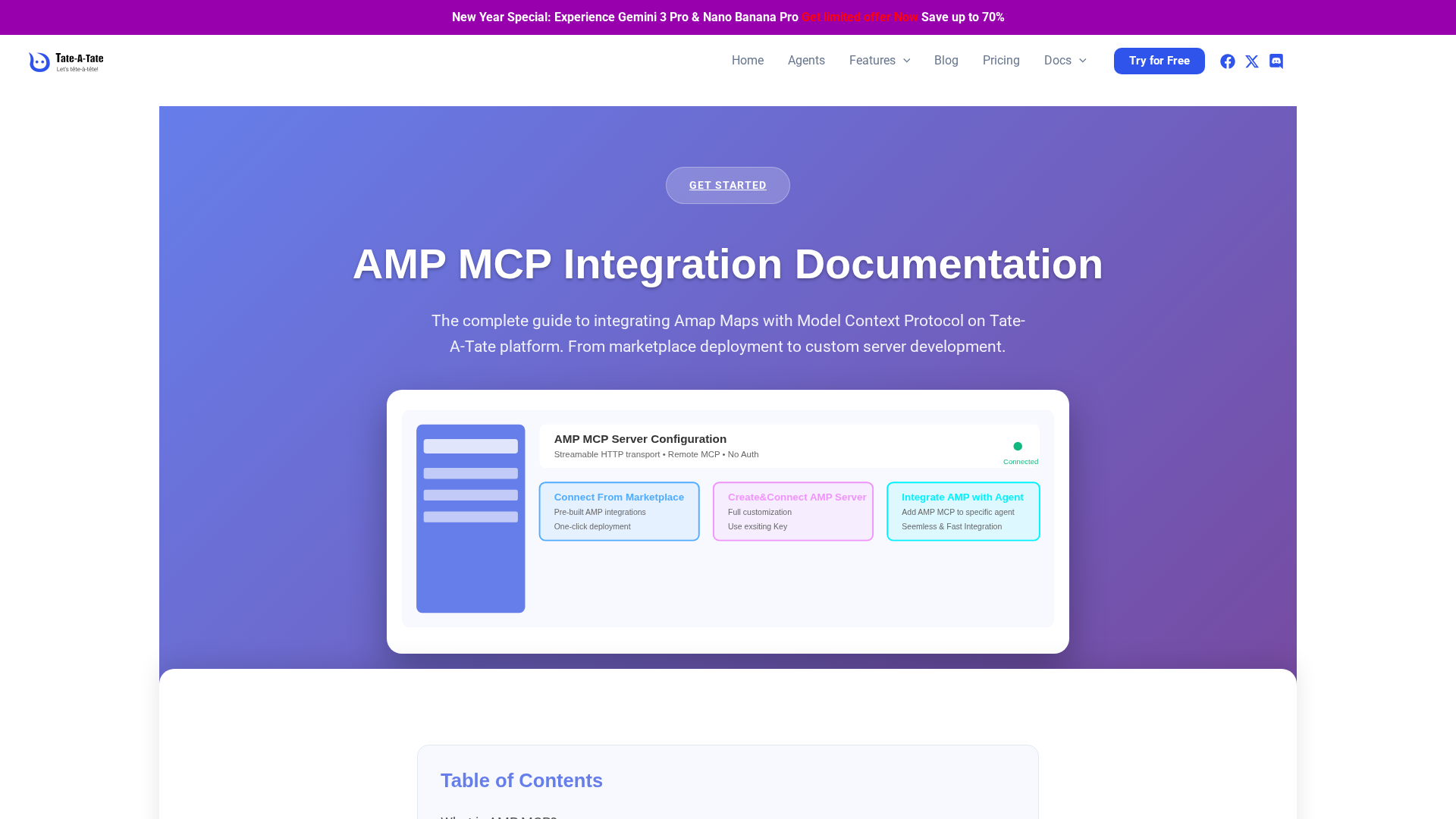
A practical, dual-path guide to integrating AMP MCP with Tate-A-Tate, via marketplace deployment or custom servers.
Promotional guide to Tate-A-Tate's no-code AI agent builder with a 70% New Year discount and deployment tutorials.
Explore Google's Nano Banana (Gemini 2.5 Flash Image): features, access paths, and the Tate-A-Tate no-code integration.
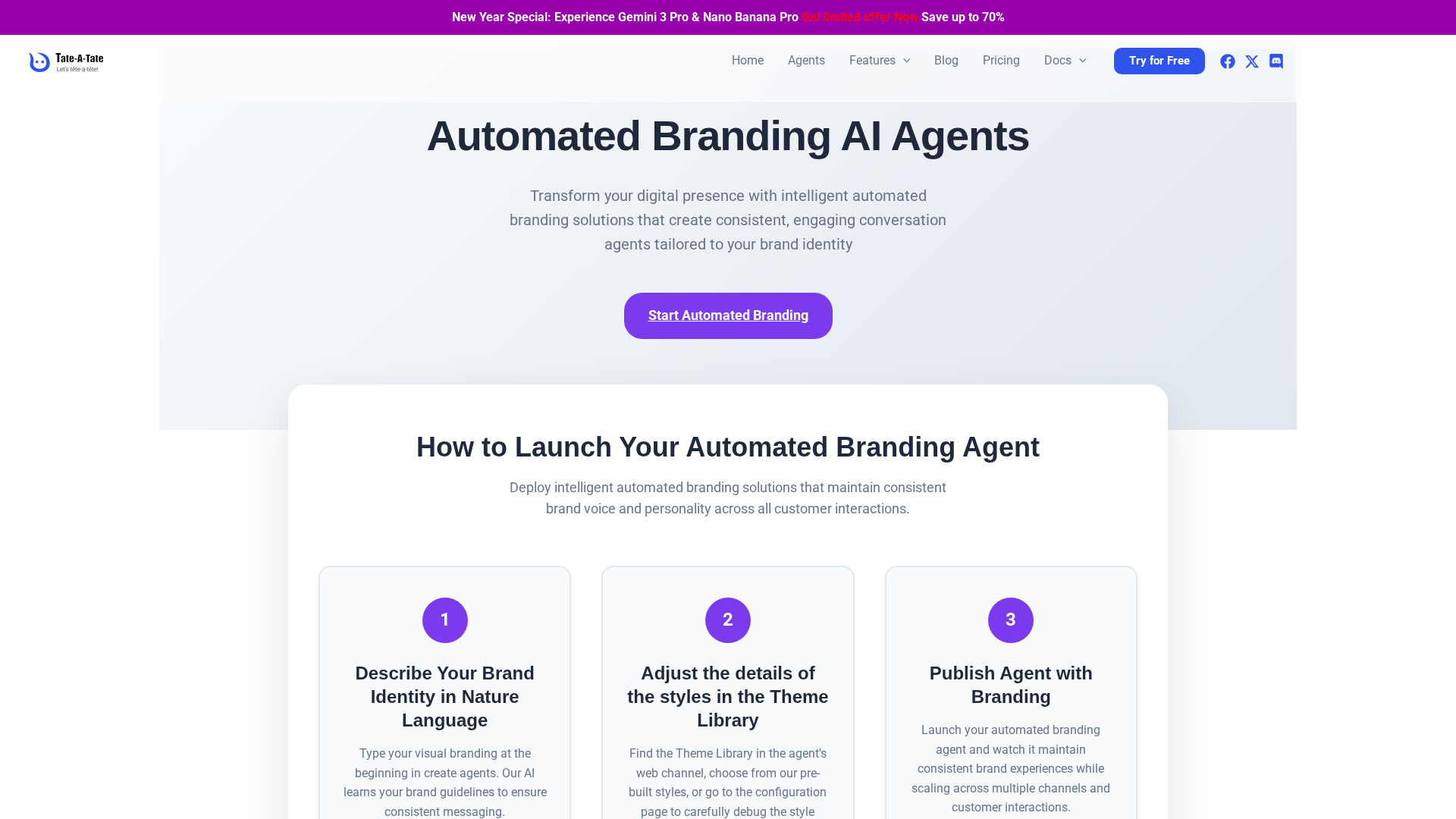
Launch and manage AI-powered branding agents that maintain a consistent brand voice across multiple channels.