Topic Overview
This topic covers the developer-oriented large language models and platform updates shaping coding workflows in 2026. Recent model families (for example, Gemini 3.5, the Claude Opus series, and Grok) alongside a rise in hardware-aware LLMs have pushed emphasis toward latency, cost-efficiency, and predictable behavior for engineering use cases. That shift is timely: teams are moving from exploratory prompts to production-grade code assistance, agentic workflows, and measurable developer productivity gains. Key categories include AI code assistants and code-generation models, agent frameworks, GenAI test automation, and AI agent marketplaces. Tooling illustrates these trends: LangChain provides an SDK and platform to build, observe, and deploy LLM-powered agents; Windsurf (formerly Codeium) positions an AI-native IDE and agentic coding environment with multi-model support and live previews; Replit combines an online IDE, hosting, and integrated assistants for rapid prototyping and deployment. Enterprise and open alternatives—Amazon CodeWhisperer (integrating into Amazon Q Developer), CodeGeeX, Salesforce CodeT5/CodeT5+, and self-hosted Tabby—show the spectrum from cloud-managed services to local-first, auditable deployments. Domain-specific applications (e.g., Veesual for visual commerce) highlight how vertical tooling integrates generative capabilities into product flows. Practical considerations for 2026: pick models and runtimes that balance inference cost, latency, and safety; prioritize frameworks (like LangChain) for observability and testing; consider self-hosting or hardware-aware stacks when privacy or deterministic performance matters. Overall, developer-focused LLMs in 2026 are less about novelty and more about integration, reliability, and operational trade-offs across IDEs, agent platforms, and deployment environments.
Tool Rankings – Top 6

An open-source framework and platform to build, observe, and deploy reliable AI agents.

AI-native IDE and agentic coding platform (Windsurf Editor) with Cascade agents, live previews, and multi-model support.

AI-powered online IDE and platform to build, host, and ship apps quickly.

AI-driven visual commerce platform for fashion e-commerce delivering on-model visuals, Mix&Match outfit builders, multi‑

AI-driven coding assistant (now integrated with/rolling into Amazon Q Developer) that provides inline code suggestions,
AI-based coding assistant for code generation and completion (open-source model and VS Code extension).
Latest Articles (44)
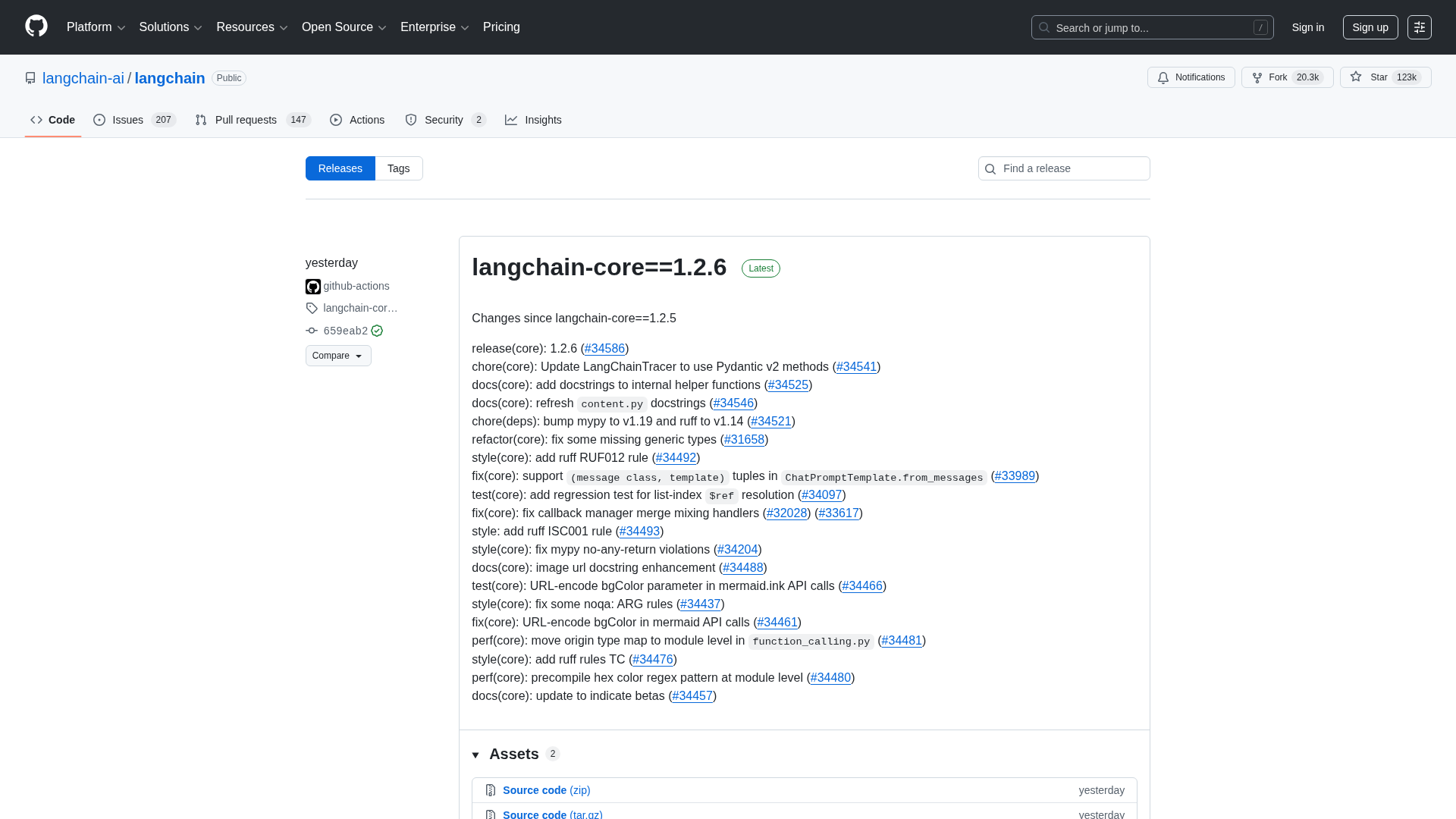
A comprehensive LangChain releases roundup detailing Core 1.2.6 and interconnected updates across XAI, OpenAI, Classic, and tests.
A reproducible bug where LangGraph with Gemini ignores tool results when a PDF is provided, even though the tool call succeeds.
A CLI tool to pull LangSmith traces and threads directly into your terminal for fast debugging and automation.
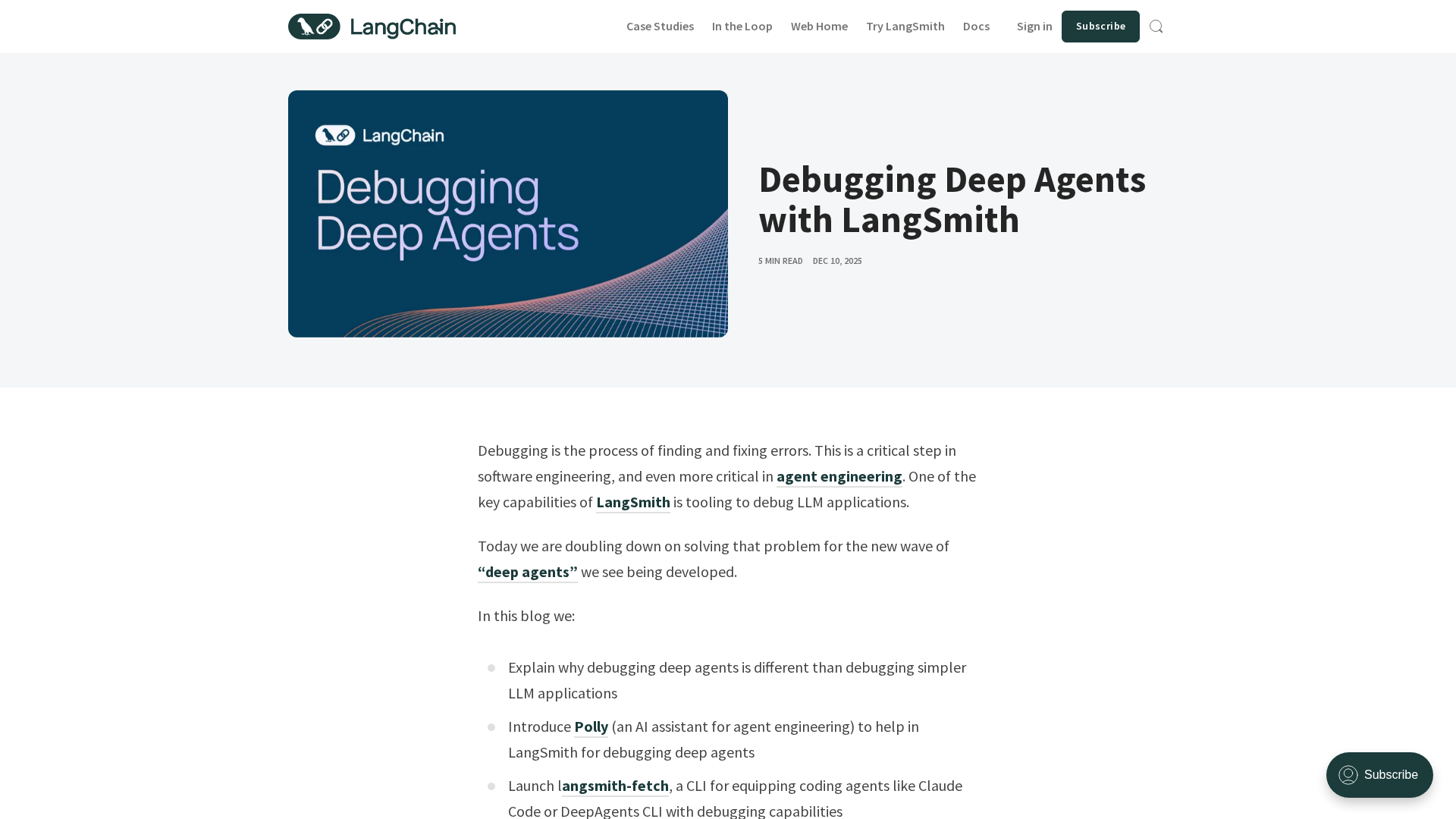
A practical guide to debugging deep agents with LangSmith using tracing, Polly AI analysis, and the LangSmith Fetch CLI.
A blocked Discourse page about Agent 3's known issues; no content is accessible.