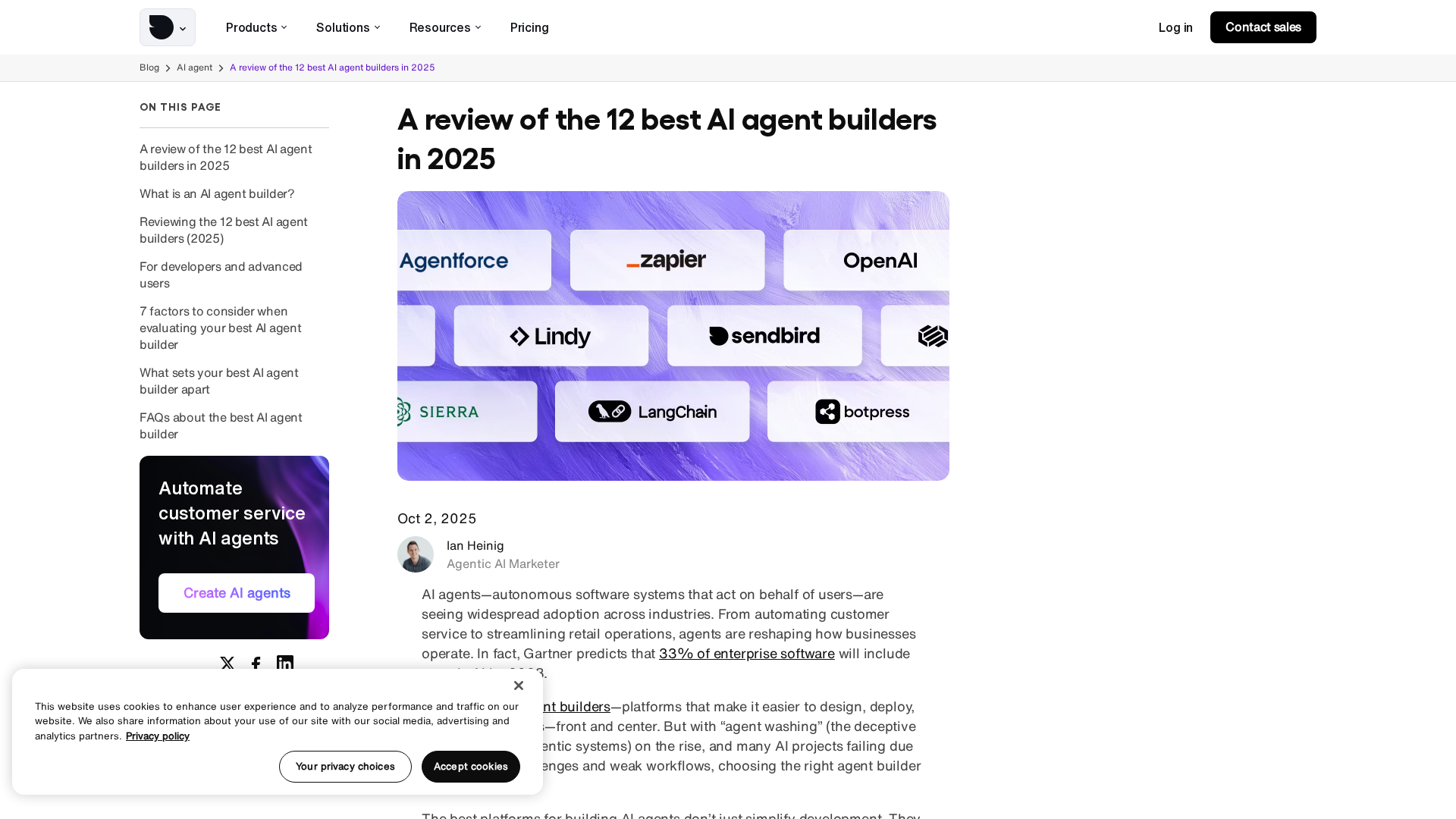
Topic Overview
Agent‑builder platforms and enterprise AI agents encompass the tools, frameworks, and marketplaces organizations use to create, deploy, and operate autonomous LLM‑powered workflows. This space spans developer‑first frameworks (e.g., LangChain) that provide SDKs, model interfaces, and deployment tooling; no‑code/low‑code builders (Lindy, MindStudio) that let business teams specify objectives and ship dedicated agents; and enterprise assistant platforms (IBM watsonx Assistant, Kore.ai) that focus on governance, observability, and multi‑agent orchestrations for regulated environments. Specialized vendors—Observe.AI for contact‑center voice agents and real‑time assist, Adept for agentic agents that act inside software interfaces, and Xilos for agentic infrastructure—address vertical needs and operational visibility. Complementary tools include developer‑centric copilots and IDE integrations (GitHub Copilot, JetBrains AI Assistant, Replit) that accelerate agent development and testing. As of 2026, the topic is timely because organizations are moving from experimental pilots to production agent deployments, raising priorities around governance, auditability, data privacy, cost control, and observability. Marketplaces and AI tool catalogs are emerging to discover prebuilt agents and composable components, while orchestration layers enable safe multi‑agent workflows. The practical tradeoffs are clear: developer frameworks offer flexibility and extensibility, no‑code builders speed time‑to‑value, and enterprise platforms add compliance and monitoring. Understanding these categories and tooling choices helps teams align architecture, governance, and integration strategies when building reliable, auditable enterprise agents.
Tool Rankings – Top 6

An open-source framework and platform to build, observe, and deploy reliable AI agents.

Enterprise virtual agents and AI assistants built with watsonx LLMs for no-code and developer-driven automation.

Enterprise AI agent platform for building, deploying and orchestrating multi-agent workflows with governance, observabil

Enterprise conversation-intelligence and GenAI platform for contact centers: voice agents, real-time assist, auto QA, &洞

No-code/low-code AI agent platform to build, deploy, and govern autonomous AI agents.

No-code/low-code visual platform to design, test, deploy, and operate AI agents rapidly, with enterprise controls and a
Latest Articles (103)
A vendor‑agnostic guide to the 14 best AI governance platforms in 2025, with criteria, comparisons, and practical buying guidance.
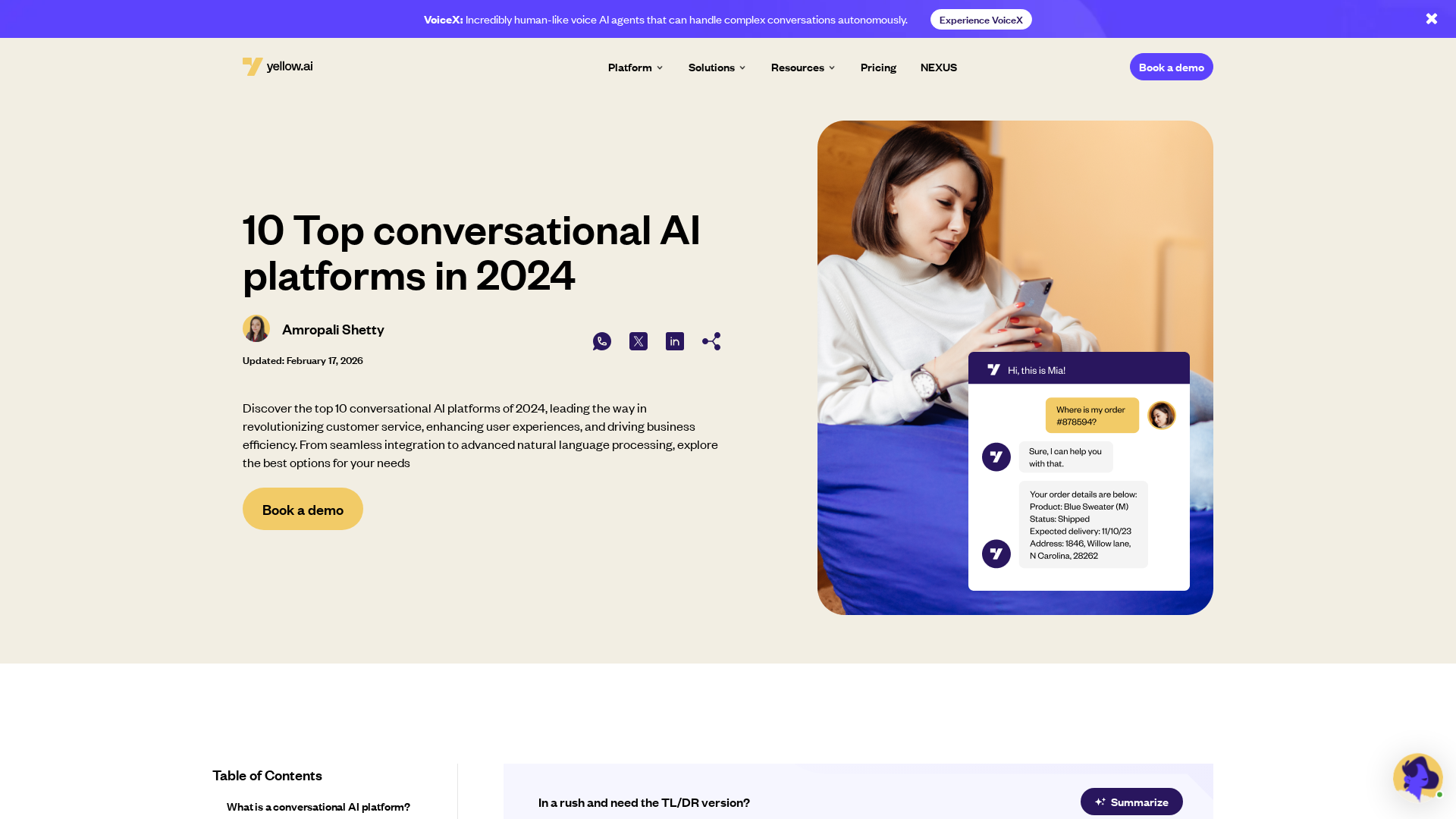
A concise guide to the top 10 conversational AI platforms in 2024, with features, benefits, and use cases.
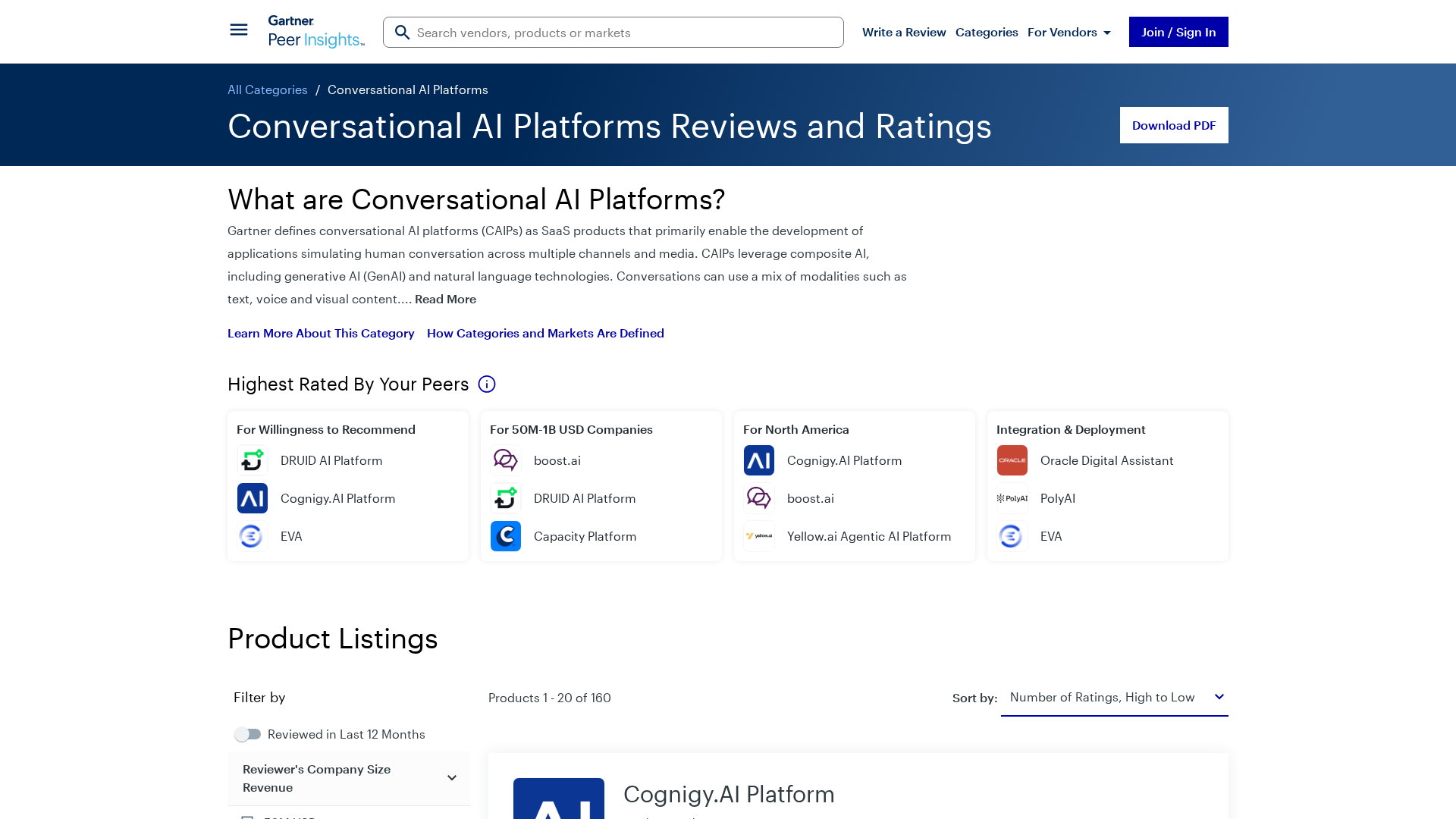
Gartner’s market view on conversational AI platforms, outlining trends, vendors, and buyer guidance.
OpenAI’s bypass moment underscores the need for governance that survives inevitable user bypass and hardens system controls.
A call to enable safe AI use at work via sanctioned access, real-time data protections, and frictionless governance.