
Topic Overview
This topic surveys compute and accelerator options for large language models (LLMs), contrasting dominant platforms — Nvidia H100/H200 GPUs and cloud TPUs — with emerging, energy‑focused alternatives and decentralized infrastructure approaches. The discussion is timely: growing model sizes, wider production deployments, and operational cost and energy limits are driving interest in inference‑optimized ASICs, chiplet/SoC designs, and marketplace-style compute. Key considerations include throughput, latency, memory bandwidth, software compatibility (CUDA/XLA), and total cost of ownership for training versus inference. Relevant tools and categories: Rebellions.ai builds GPU‑class software and energy‑efficient inference accelerators (chiplets, SoCs, servers) aimed at hyperscale data centers; Tensorplex Labs explores open, decentralized AI infrastructure that integrates model development with blockchain/DeFi primitives to coordinate resources; Activeloop’s Deep Lake provides multimodal data storage, versioning and vector indexing critical for RAG and retrieval-heavy LLM applications. Developer tooling—Warp’s Agentic Development Environment, Cline’s client‑side coding agent, and Windsurf’s AI‑native IDE—illustrate how agentic workflows and local model orchestration change how engineers target specific accelerators and distributed compute pools. Taken together, the ecosystem trend is pluralization: large GPU and TPU platforms remain central for training and many production workloads, while specialized inference hardware and decentralized compute aim to reduce energy use and cost at scale. Success depends as much on software stacks, data pipelines (e.g., Deep Lake), and developer workflows as on raw silicon. For teams choosing infrastructure, the tradeoffs are clear: ecosystem maturity and peak performance vs. operational efficiency, flexibility, and decentralization. This topic helps readers weigh those tradeoffs and map tools to deployment goals.
Tool Rankings – Top 6

Energy-efficient AI inference accelerators and software for hyperscale data centers.
Open-source, decentralized AI infrastructure combining model development with blockchain/DeFi primitives (staking, cross

Deep Lake: a multimodal database for AI that stores, versions, streams, and indexes unstructured ML data with vector/RAG

Agentic Development Environment (ADE) — a modern terminal + IDE with built-in AI agents to accelerate developer flows.
Open-source, client-side AI coding agent that plans, executes and audits multi-step coding tasks.

AI-native IDE and agentic coding platform (Windsurf Editor) with Cascade agents, live previews, and multi-model support.
Latest Articles (44)
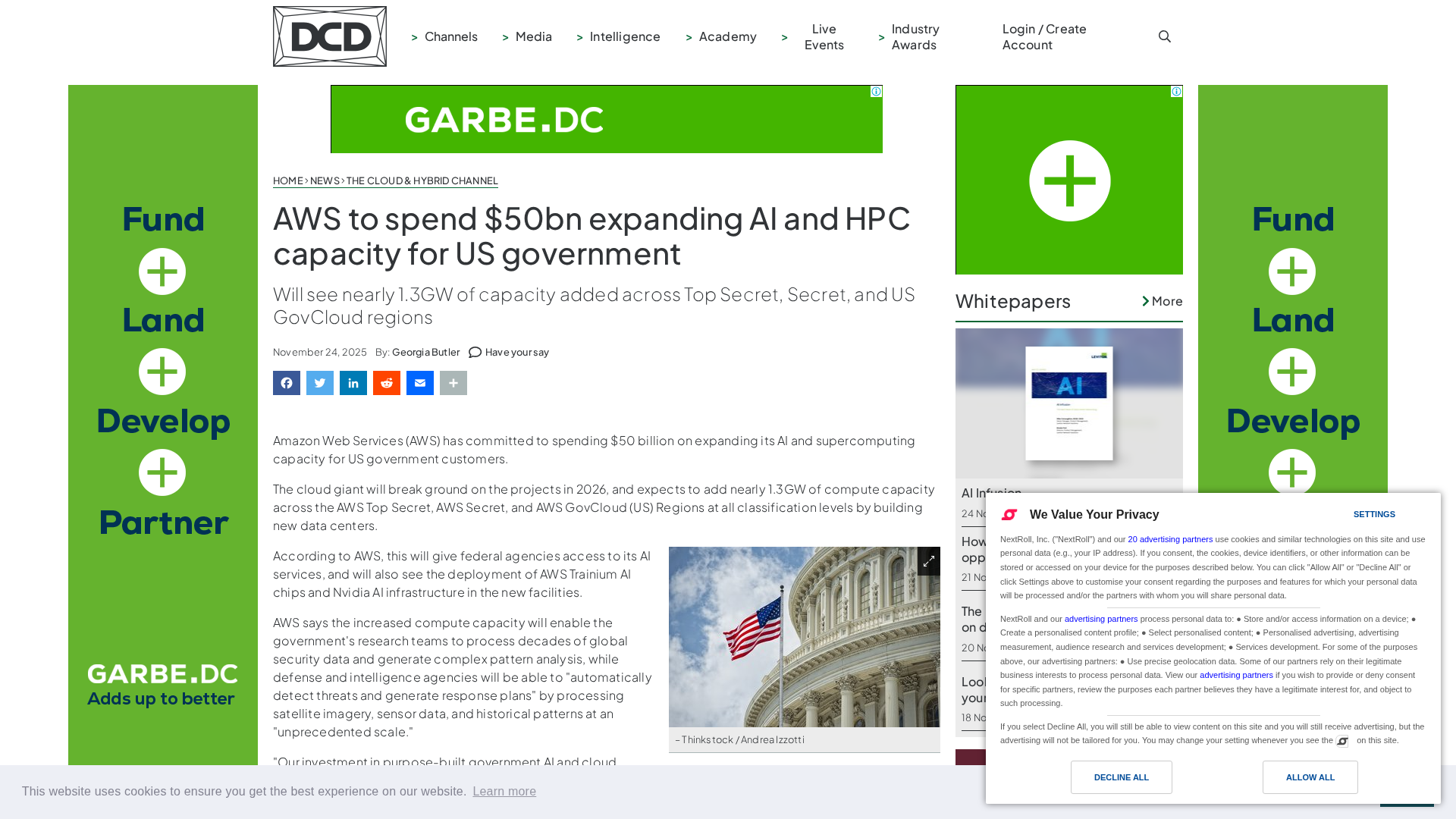
AWS commits $50B to expand AI/HPC capacity for U.S. government, adding 1.3GW compute across GovCloud regions.
How AI agents can automate and secure decentralized identity verification on blockchain-enabled systems.
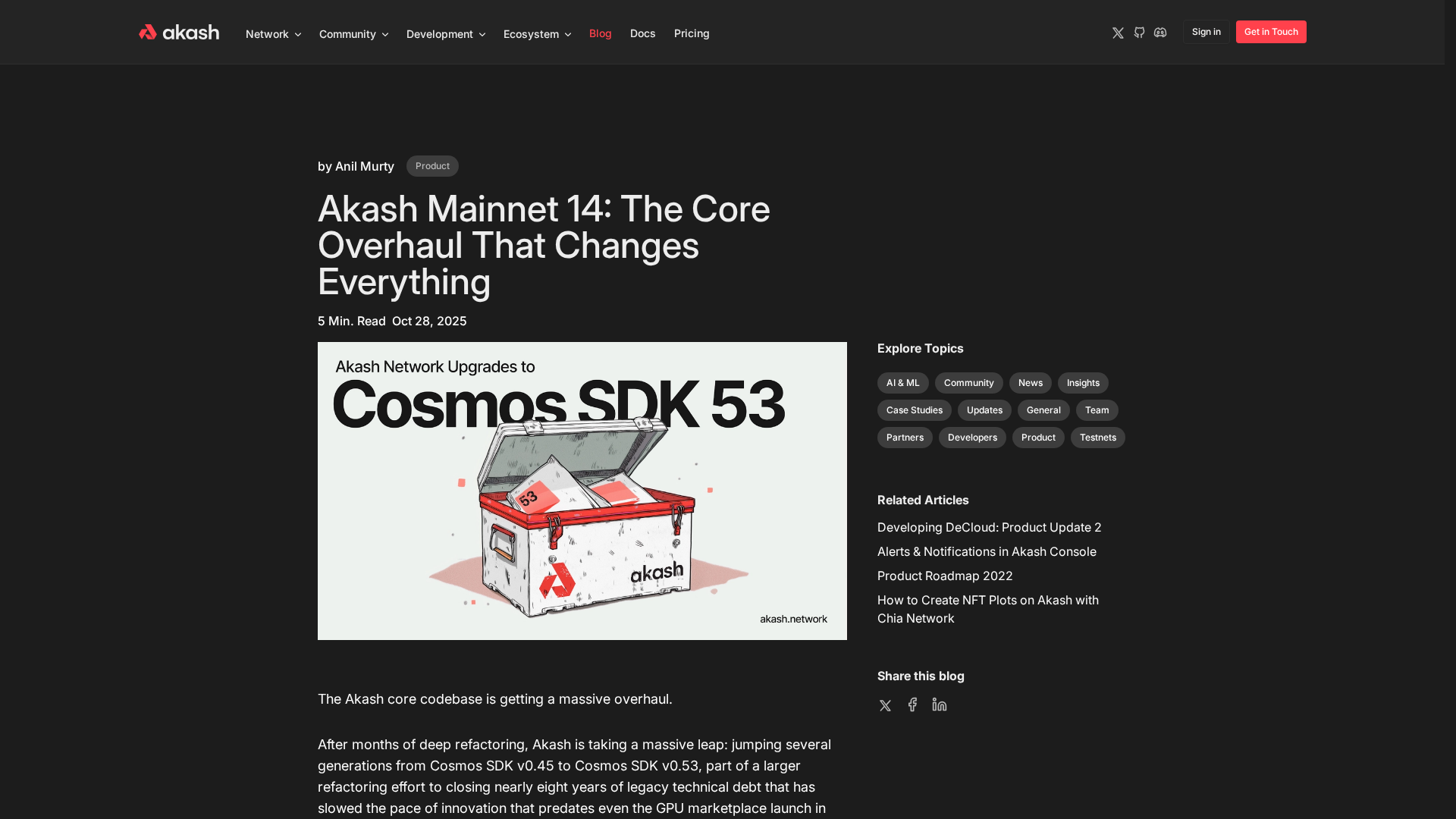
A foundational Core overhauL that speeds up development, simplifies authentication with JWT, and accelerates governance for Akash's decentralized cloud.
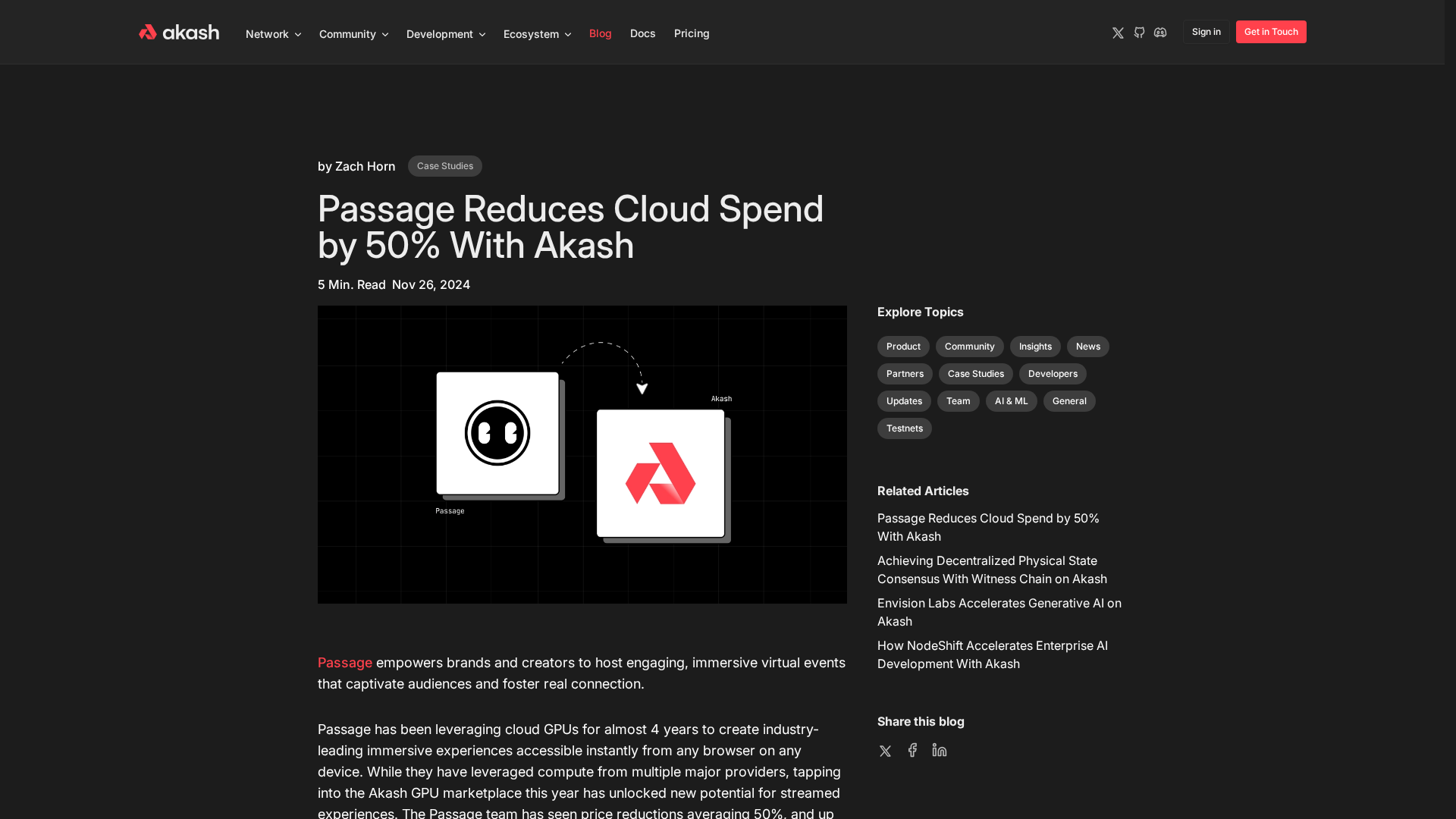
Passage cuts GPU cloud costs by up to 70% using Akash's open marketplace, enabling immersive Unreal Engine 5 events.

Meta may partner with Sify to lease a 500 MW Vishakhapatnam data center in a Rs 15,266 crore project linked to the Waterworth subsea cable.