Topic Overview
Decentralized GPU AI inference platforms (exemplified by AkashML and alternatives) are systems that move model serving away from single-cloud silos toward distributed marketplaces and orchestration layers that allocate GPU capacity across many providers. They combine spot or contract-based compute marketplaces with software-defined routing, workload placement, and integrations for model and data tooling. This approach aims to reduce cost, increase geographic and vendor diversity, and enable new economic primitives (for example, staking and cross‑chain incentives) while also raising operational and governance questions. Key tools and categories: Tensorplex Labs — an open-source decentralized AI stack that couples model development with blockchain/DeFi primitives (staking, cross‑chain coordination) to align incentives; FlexAI — a software‑defined, hardware‑agnostic orchestration and routing platform that directs inference workloads to optimal GPU resources across cloud, edge, and on‑prem environments; Activeloop / Deep Lake — a multimodal database for storing, versioning, streaming, and indexing unstructured ML data with vector/RAG support, useful for low‑latency inference pipelines. Why it matters in 2025: demand for real‑time LLM and multimodal inference has grown, driving pressure to control costs, satisfy data locality and regulatory constraints, and avoid vendor lock‑in. Decentralized platforms offer alternative pricing dynamics and composability with Web3 primitives, while advances in orchestration (FlexAI‑style routing) and data infra (Deep Lake) make distributed serving more practical. Tradeoffs remain: variable performance/availability, security and data governance challenges, and added complexity for operators. For teams evaluating decentralized inference, the practical decision points are cost predictability, SLAs, integration with model/data workflows, and the maturity of orchestration and incentive layers.
Tool Rankings – Top 3
Open-source, decentralized AI infrastructure combining model development with blockchain/DeFi primitives (staking, cross
%201.png)
Software-defined, hardware-agnostic AI infrastructure platform that routes workloads to optimal compute across cloud and

Deep Lake: a multimodal database for AI that stores, versions, streams, and indexes unstructured ML data with vector/RAG
Latest Articles (38)

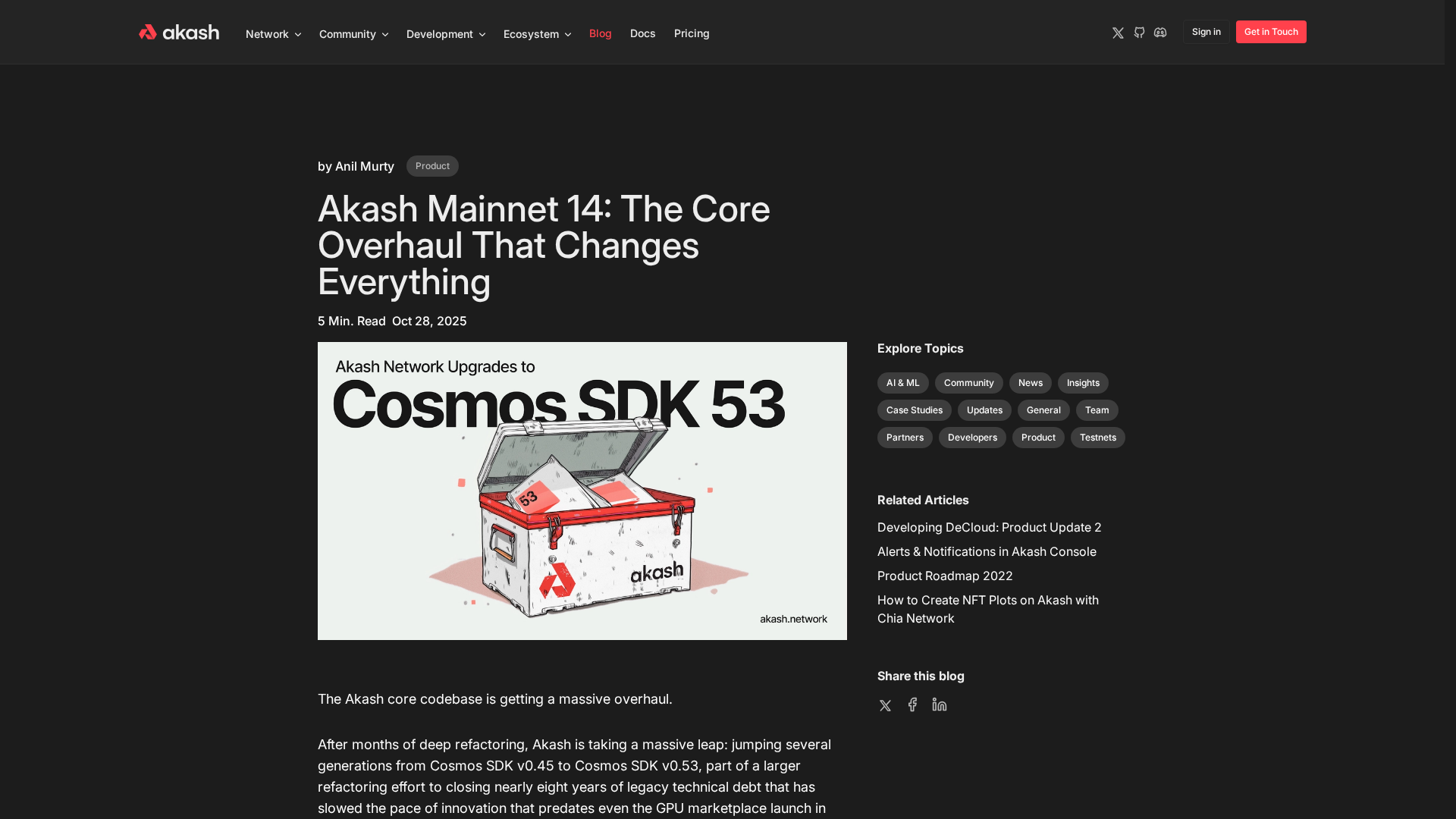
A deep dive into Akash Network, the decentralized cloud marketplace challenging traditional cloud models.

Analyzes data centers' AI-driven demand, energy and water needs, policy barriers, and routes to equitable digital infrastructure.
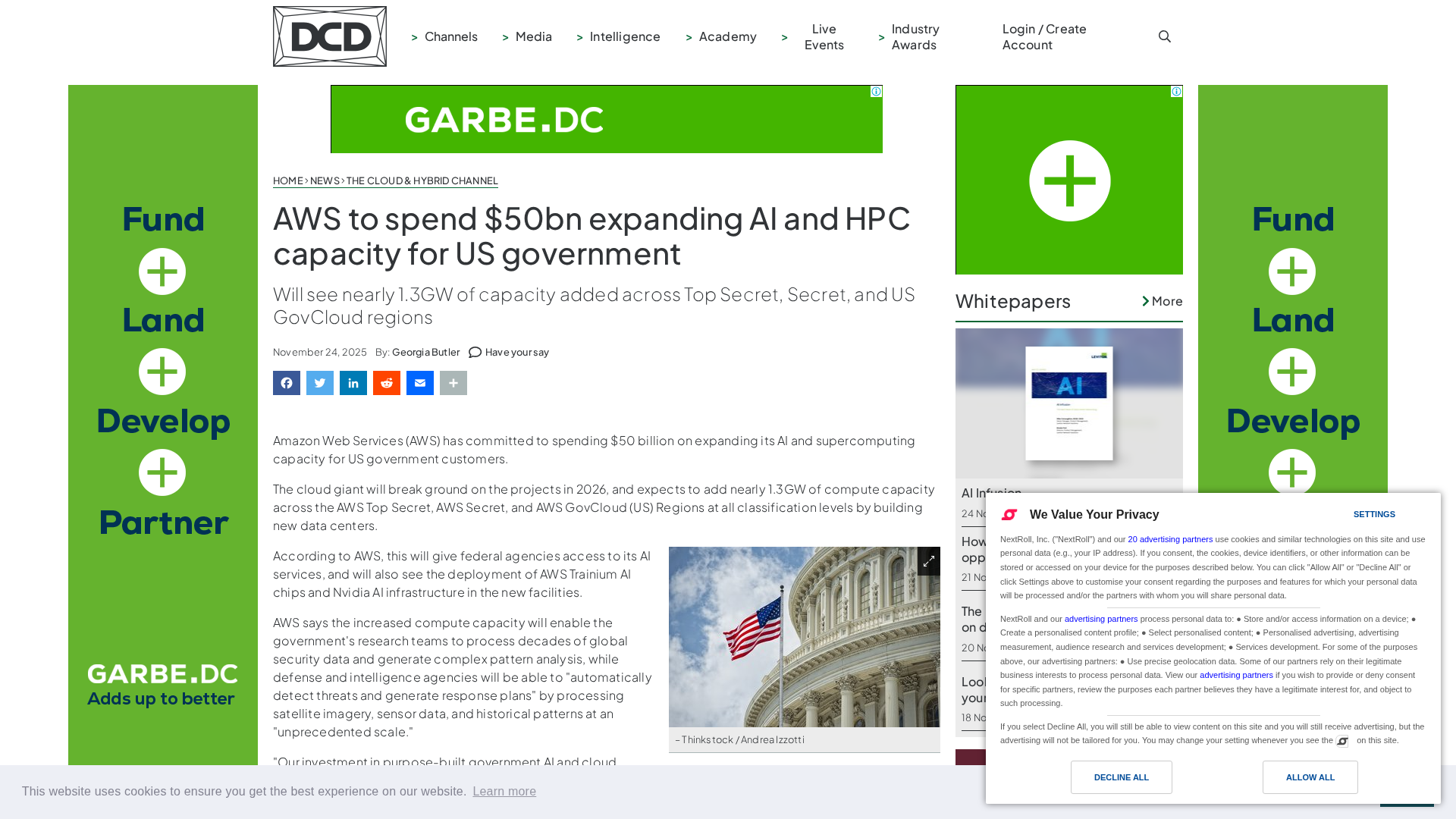
AWS commits $50B to expand AI/HPC capacity for U.S. government, adding 1.3GW compute across GovCloud regions.
How AI agents can automate and secure decentralized identity verification on blockchain-enabled systems.

Nokia unveils Autonomous Networks Fabric to accelerate AI-powered, zero-touch network automation.