Topic Overview
AI Governance & Compliance Tools for Creative and Enterprise Use covers the platforms and practices organizations use to make agentic AI safe, auditable, and compliant across customer-facing and internal workflows. As enterprises deploy voice and chat agents, multi-agent orchestrations, and embedded copilots, governance must span model inventories, policy-as-code, data lineage, runtime controls, and human‑in‑loop checkpoints. The result is a stack that combines conversation-intelligence, orchestration, observability, and knowledge management. Key vendor types include contact‑center conversation-intelligence platforms (e.g., Observe.AI) that provide VoiceAI, real-time assist and automated QA; end-to-end no-code/low-code platforms (e.g., StackAI) that let teams build, deploy and govern enterprise agents; multi-agent orchestration platforms (e.g., Kore.ai) with built‑in observability and workflow governance; enterprise assistant frameworks (e.g., IBM watsonx Assistant) for no-code and developer-driven automation; agentic CX/EX platforms (e.g., Yellow.ai) for cross-channel autonomous agents; and knowledge/workspace tools (e.g., Notion) used to codify policies, runbooks and evidence for audits. This topic is timely because widespread adoption of agentic AI has increased regulatory and operational risk: organizations need enforceable controls for data privacy, model behavior, and explainability while maintaining productivity. Current best practices emphasize integrated observability, continuous monitoring and red‑teaming, role-based access and model/version controls, and treating governance as part of the development lifecycle. Evaluating tools means mapping requirements (contact center compliance, enterprise automation, security posture) to capabilities such as real‑time policy enforcement, audit trails, and low‑code governance to scale controls without blocking innovation.
Tool Rankings – Top 6

Enterprise conversation-intelligence and GenAI platform for contact centers: voice agents, real-time assist, auto QA, &洞

End-to-end no-code/low-code enterprise platform for building, deploying, and governing AI agents that automate work onun

Enterprise AI agent platform for building, deploying and orchestrating multi-agent workflows with governance, observabil

Enterprise virtual agents and AI assistants built with watsonx LLMs for no-code and developer-driven automation.

Enterprise agentic AI platform for CX and EX automation, building autonomous, human-like agents across channels.
A single, block-based AI-enabled workspace that combines docs, knowledge, databases, automation, and integrations to sup
Latest Articles (75)
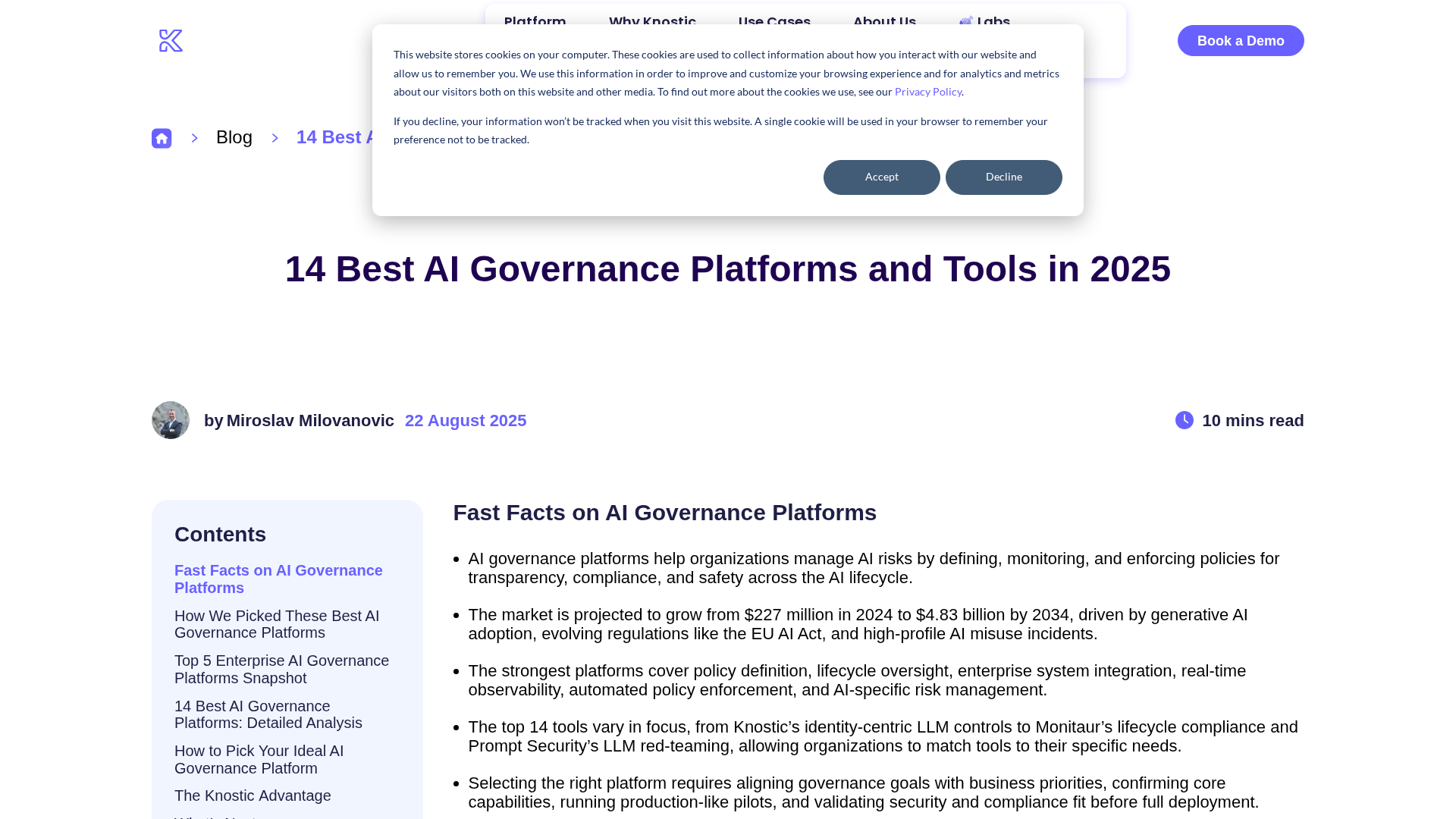
A vendor‑agnostic guide to the 14 best AI governance platforms in 2025, with criteria, comparisons, and practical buying guidance.
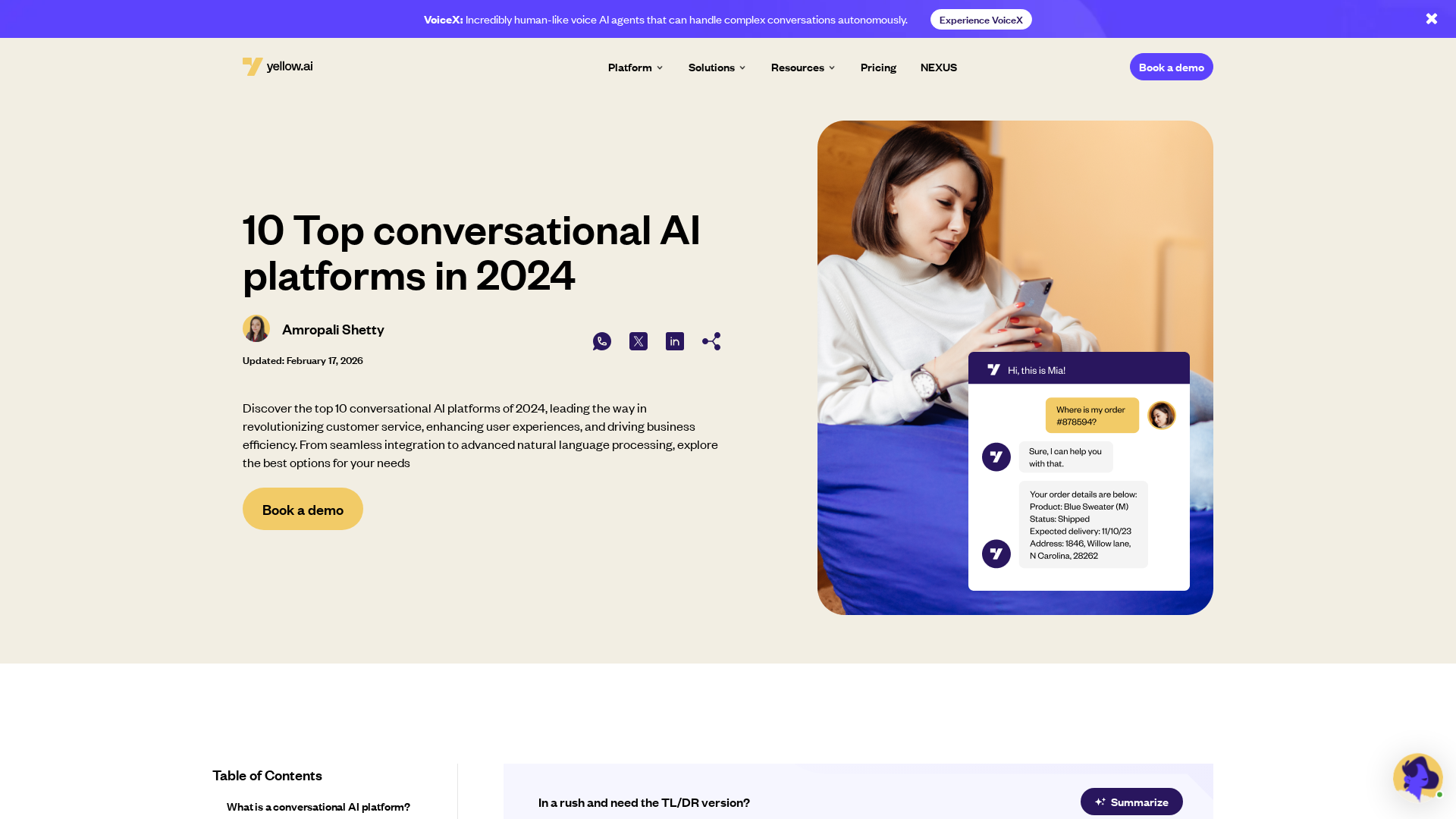
A concise guide to the top 10 conversational AI platforms in 2024, with features, benefits, and use cases.
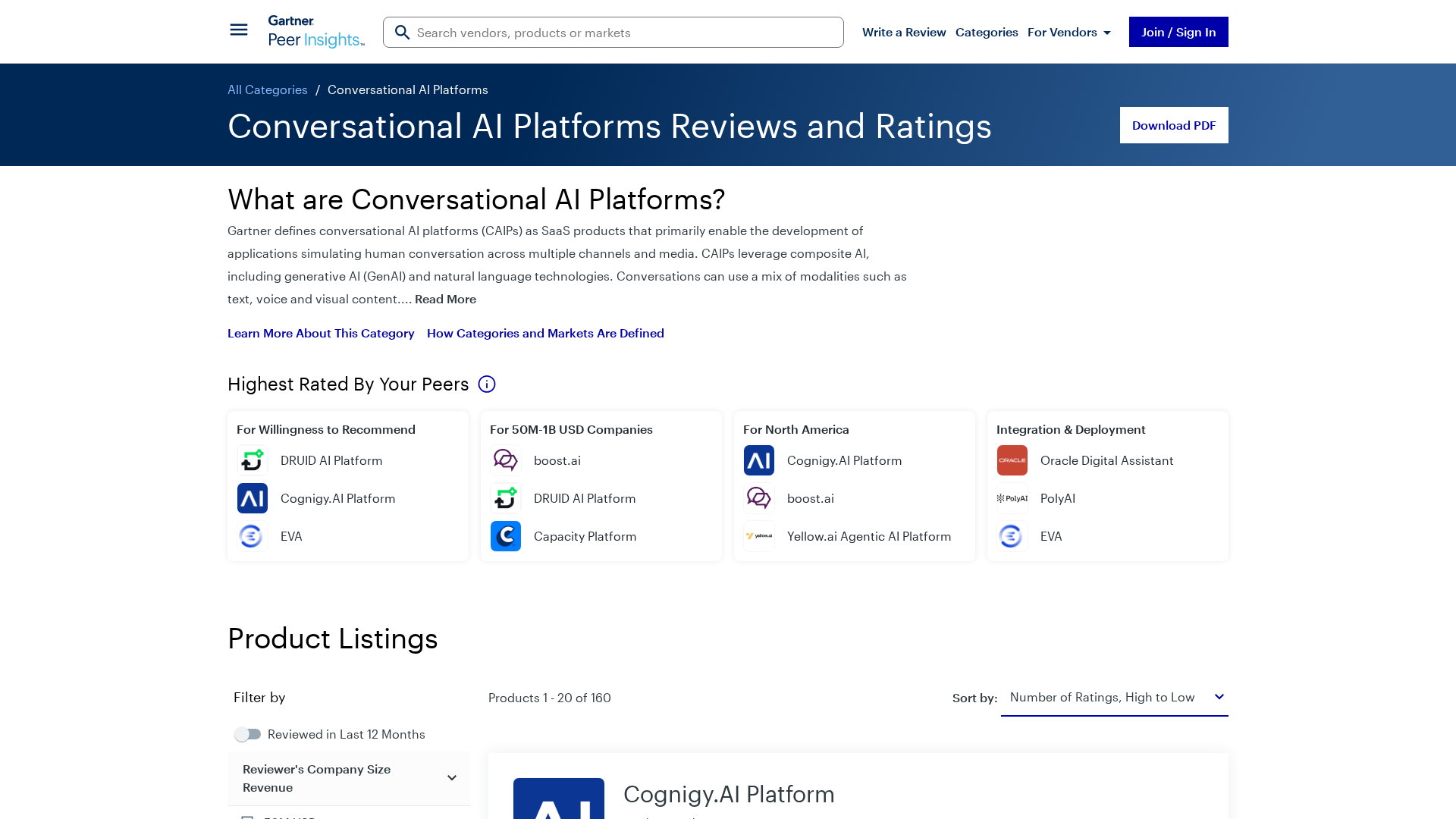
Gartner’s market view on conversational AI platforms, outlining trends, vendors, and buyer guidance.
In-depth look at Gemini 3 Pro benchmarks across reasoning, math, multimodal, and agentic capabilities with implications for building AI agents.

Adobe nears a $19 billion deal to acquire Semrush, expanding its marketing software capabilities, according to WSJ reports.