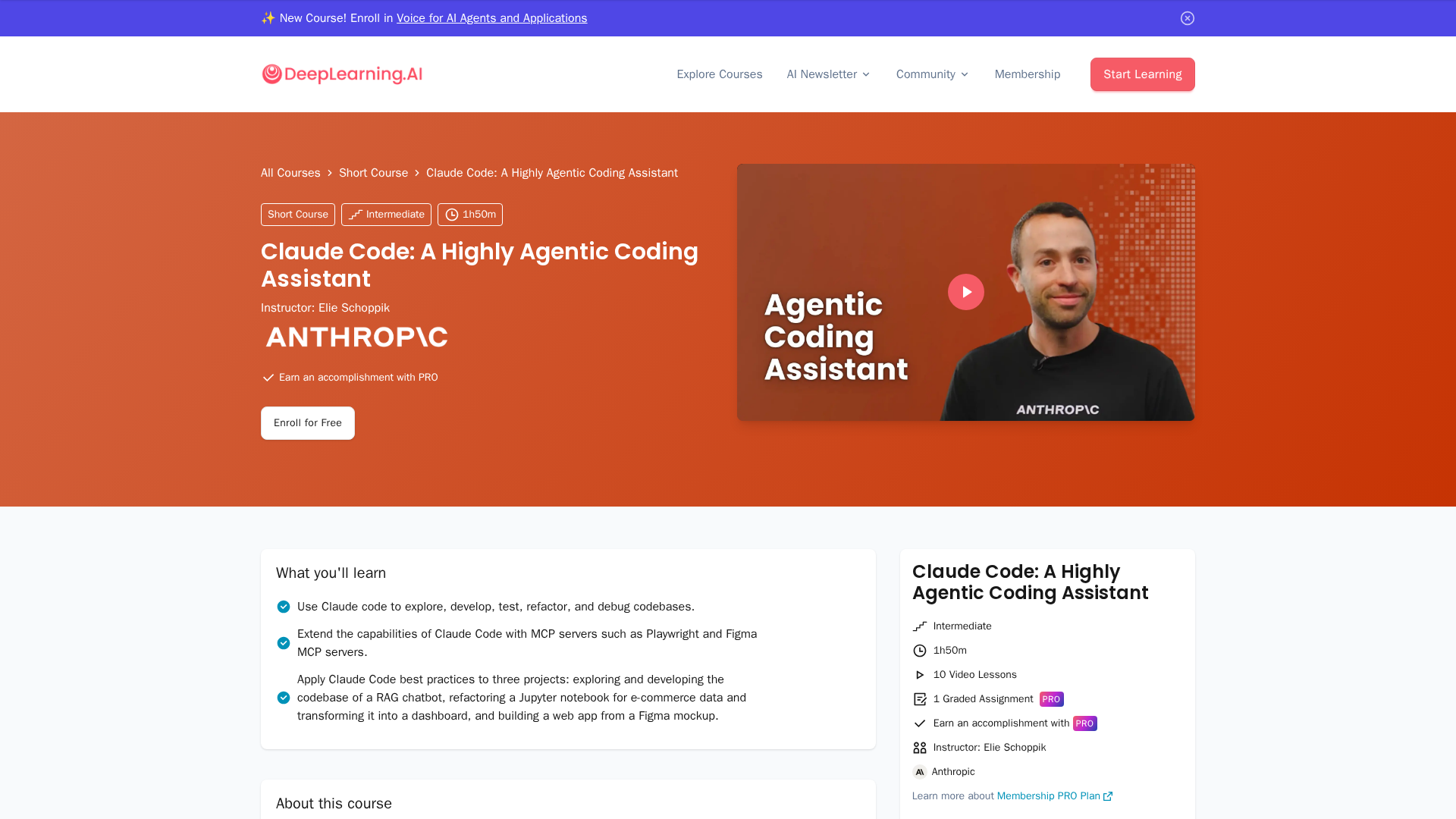
Topic Overview
This topic covers AI models and assistants that generate, explain, and maintain source code—spanning hosted models (e.g., OpenAI Codex, Claude Code, Z.ai), open research models (Salesforce CodeT5, WizardCoder/WizardLM families), and integrated copilots (GitHub Copilot, Tabnine, JetBrains AI Assistant, Amazon CodeWhisperer). It focuses on how these systems are used in development workflows: inline suggestions, multi‑turn code synthesis, codebase‑aware search, automated PR reviews, and goal‑driven testing. As of 2026-06-22 the space has matured from single‑prompt completion toward context‑aware, retrieval‑augmented workflows and agentized automation. Key trends include enterprise demand for private or self‑hosted deployments (Tabnine, self‑hosted model forks), tighter IDE and platform integration (JetBrains AI Assistant, Replit Agents, Amazon’s integration of CodeWhisperer into Amazon Q Developer), and specialized tooling for review and validation (Bito for PR reviews, QAgent for end‑to‑end testing). Open‑source LLMs and research releases (CodeT5, WizardCoder) continue to drive reproducibility and fine‑tuning use cases, while frameworks such as LangChain enable orchestration of multi‑step code agents and observability in production. Practically, teams choose among tradeoffs: cloud models for freshness and managed safety, open or on‑prem models for governance and data control, and integrated assistants for developer ergonomics. Important considerations include licensing and training data provenance, latency and cost for large models, context window and retrieval strategy for large codebases, and CI/CD validation for generated code. This topic helps compare models and product categories—code LLMs, in‑IDE copilots, codebase‑aware reviewers, and test‑automation agents—so engineering teams can align capabilities, governance, and workflow needs.
Tool Rankings – Top 6

Enterprise-focused AI coding assistant emphasizing private/self-hosted deployments, governance, and context-aware code.

AI-driven coding assistant (now integrated with/rolling into Amazon Q Developer) that provides inline code suggestions,
In‑IDE AI copilot for context-aware code generation, explanations, and refactorings.

AI-powered online IDE and platform to build, host, and ship apps quickly.

Official research release of CodeT5 and CodeT5+ (open encoder–decoder code LLMs) for code understanding and generation.
Open-source family of instruction-following LLMs (WizardLM/WizardCoder/WizardMath) built with Evol-Instruct, focused on
Latest Articles (41)
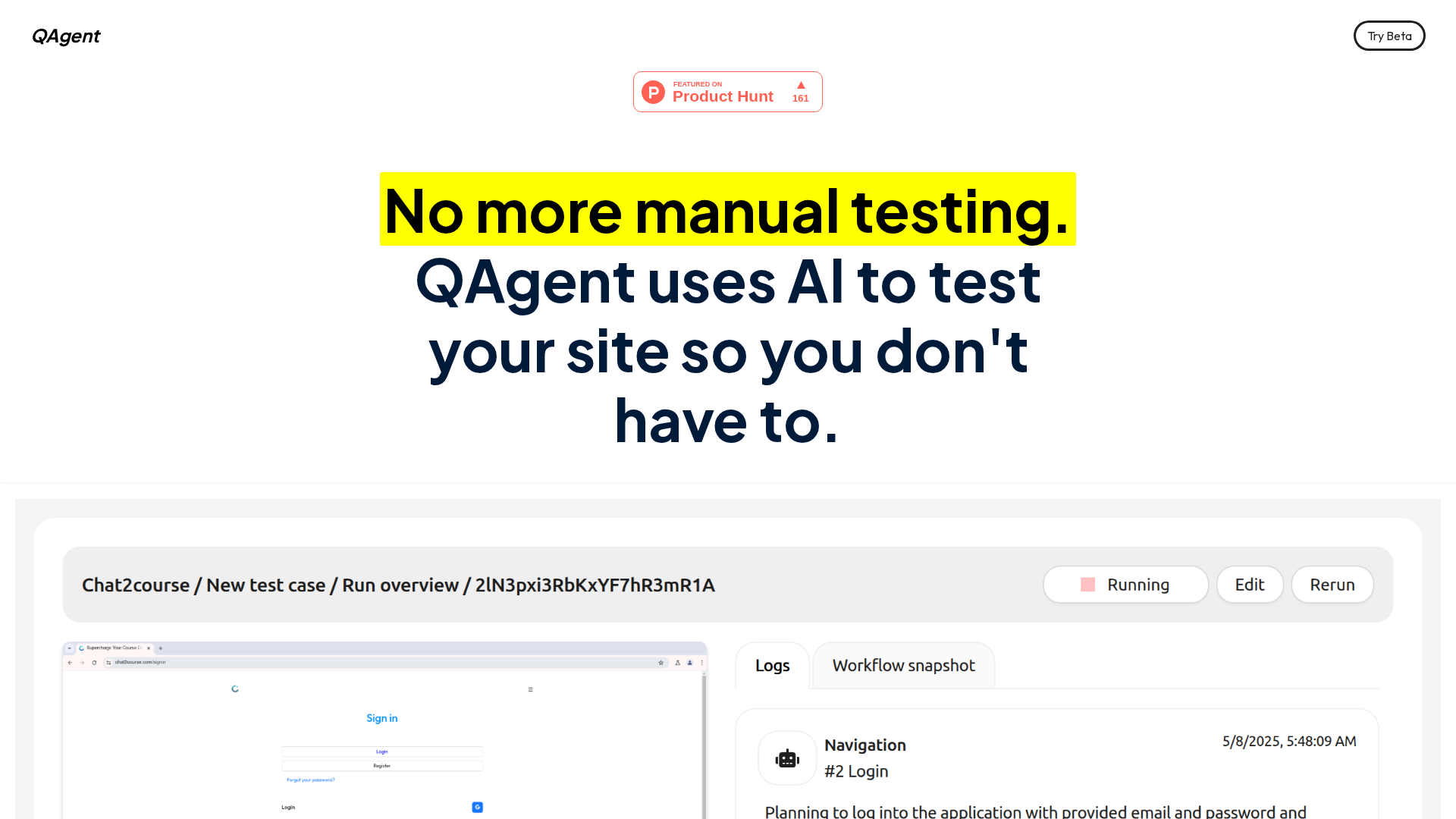
An AI assistant for enhanced Q&A and automation.
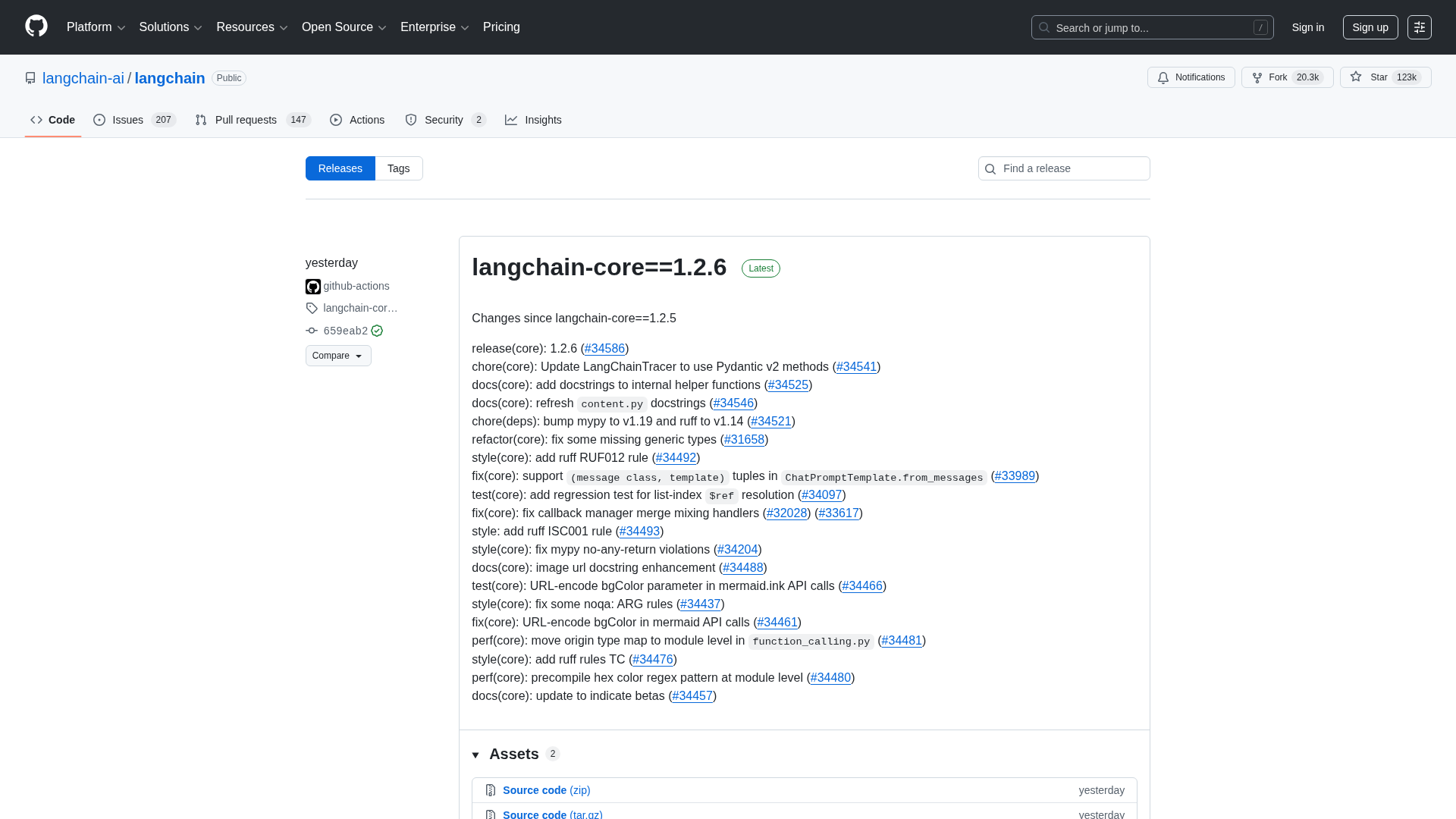
A comprehensive LangChain releases roundup detailing Core 1.2.6 and interconnected updates across XAI, OpenAI, Classic, and tests.
A reproducible bug where LangGraph with Gemini ignores tool results when a PDF is provided, even though the tool call succeeds.
A CLI tool to pull LangSmith traces and threads directly into your terminal for fast debugging and automation.
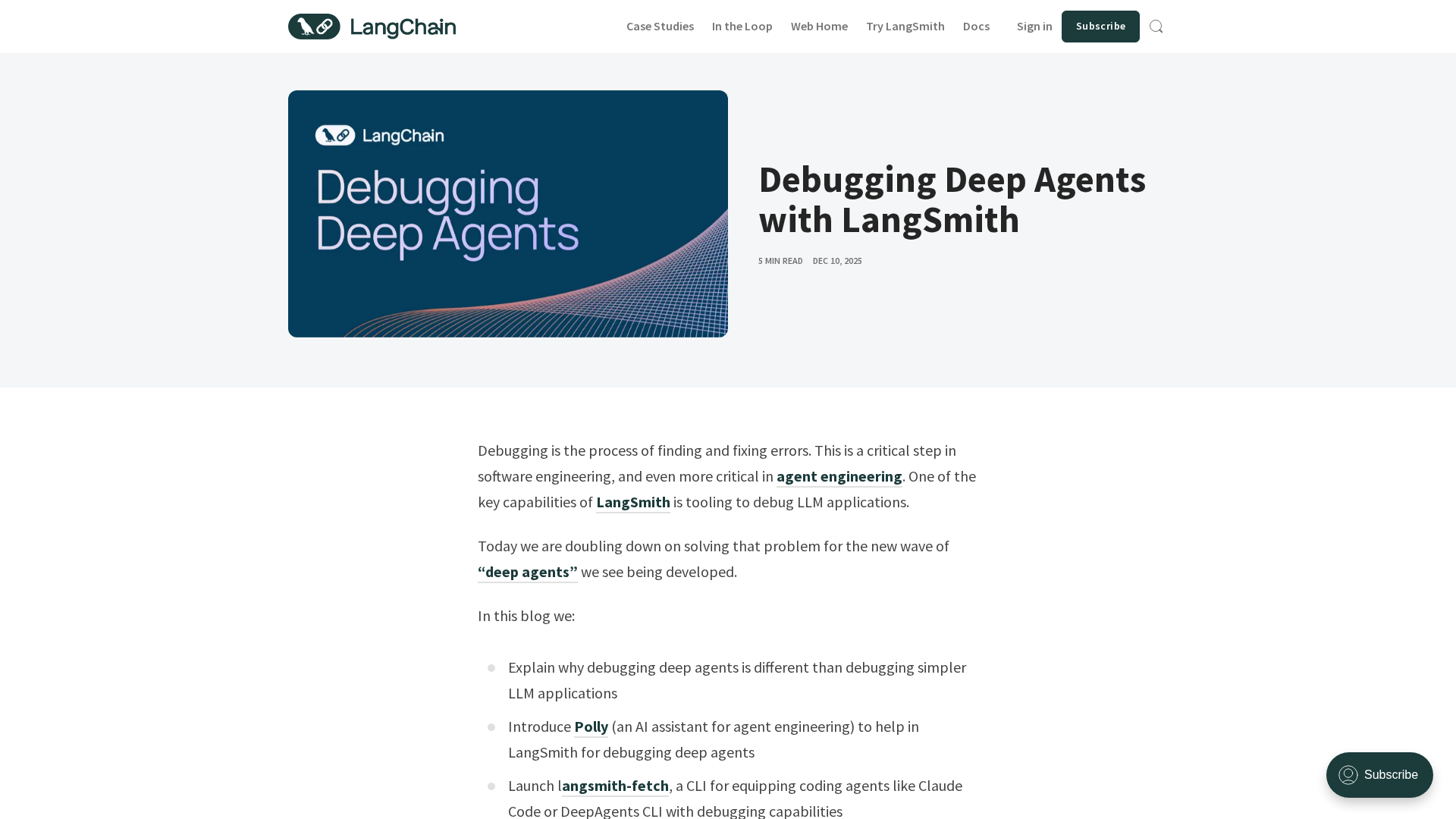
A practical guide to debugging deep agents with LangSmith using tracing, Polly AI analysis, and the LangSmith Fetch CLI.