Topic Overview
AI personalization SDKs and engines for gaming refer to toolkits and runtime services that adapt gameplay, narrative, and content to individual players in real time. By combining player modeling, retrieval-augmented LLMs, embeddings, procedural generation, and multi-agent orchestration, these systems deliver tailored difficulty, dialogue, itemization, and emergent NPC behavior without full manual scripting. As of 2026 this topic is timely because production games increasingly require privacy-safe, low-latency personalization at scale, designers demand low-code workflows, and studios must maintain observability and governance over automated systems. Key platform roles are emerging: cloud ML platforms (e.g., Vertex AI) provide end-to-end model training, fine-tuning, and deployment for both perception and generative models; enterprise LLM providers (e.g., Cohere) supply private, customizable text models and embeddings for in-game dialogue, recommendations, and state retrieval; agentic frameworks (e.g., Adept) and multi-agent/orchestration platforms (Kore.ai, Lindy, StackAI) enable autonomous NPCs, director agents, and tool-chain automation with governance and monitoring. Smaller or adjacent tools (e.g., knowledge or search utilities) can accelerate prototyping and content pipelines. Practically, game teams combine these categories to: build player embeddings and session-driven memory, run retrieval-augmented policies for consistent NPCs, generate procedural assets conditioned on player profiles, and coordinate multi-agent systems for complex behaviors. Critical considerations include latency, cost of inference, data privacy, reproducibility of player-facing decisions, and tooling that lets designers iterate without deep ML expertise. The current landscape favors hybrid architectures—cloud training with edge or regionally deployed inference, and governed agent orchestration—to deliver adaptive, auditable player experiences at scale.
Tool Rankings – Top 6

Unified, fully-managed Google Cloud platform for building, training, deploying, and monitoring ML and GenAI models.

Enterprise-focused LLM platform offering private, customizable models, embeddings, retrieval, and search.
Agentic AI (ACT-1) that observes and acts inside software interfaces to automate multistep workflows for enterprises.

Enterprise AI agent platform for building, deploying and orchestrating multi-agent workflows with governance, observabil

No-code/low-code AI agent platform to build, deploy, and govern autonomous AI agents.

End-to-end no-code/low-code enterprise platform for building, deploying, and governing AI agents that automate work onun
Latest Articles (76)
A concise guide to the top 10 conversational AI platforms in 2024, with features, benefits, and use cases.
In-depth look at Gemini 3 Pro benchmarks across reasoning, math, multimodal, and agentic capabilities with implications for building AI agents.

Humain teams with XAI to develop next-generation AI compute power, aiming to accelerate AI workloads.
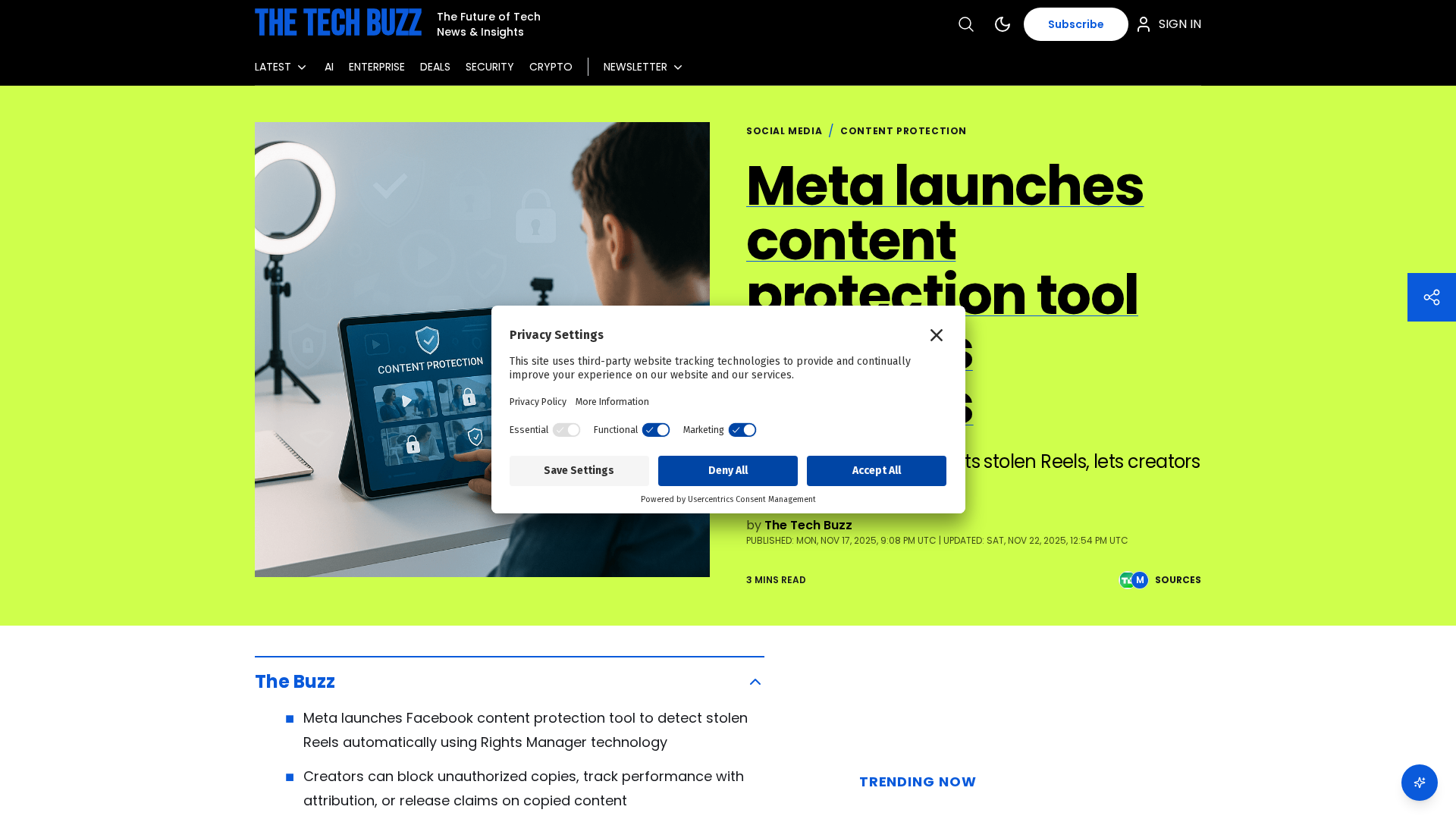
Meta rolls out Facebook Content Protection to detect stolen Reels and give creators options to block, track, or claim across Facebook and Instagram.
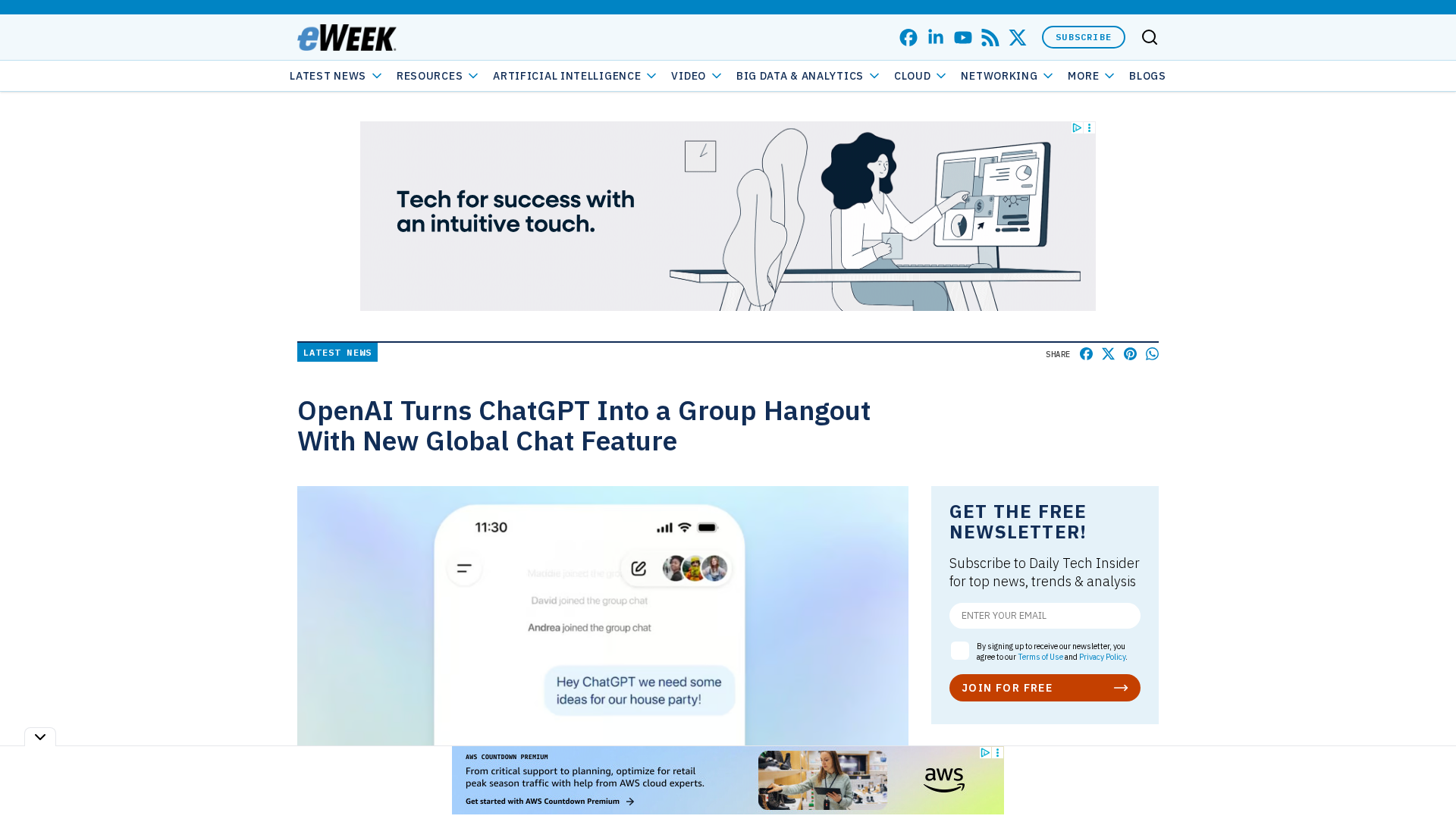
OpenAI expands ChatGPT with global group chats for up to 20 users, prioritizing privacy and collaboration.