Topic Overview
This topic covers agentic AI tools applied to healthcare workflows: systems that observe data, plan multi‑step actions, and execute or orchestrate tasks across EHRs, imaging stacks, scheduling, and patient communication. Relevance is driven by persistent clinician burnout, demand for personalized care pathways, and growing availability of compute‑optimized stacks (e.g., NVIDIA inference and imaging tools) and commercial agenting platforms (e.g., Amazon Agentic Health). As of 2026, regulatory scrutiny, data governance, and integration with electronic health records remain central constraints shaping adoption. Key categories include AI agent marketplaces and frameworks for composing and governing agents; AI automation platforms that build low‑code/no‑code workflows; clinical documentation tools that auto‑capture and summarize encounters; and personal AI assistants that deliver patient‑facing, personalized guidance. Representative tools span infrastructure and model layers: IBM watsonx Assistant and Anthropic’s Claude family serve as enterprise LLM backends for virtual assistants; StackAI and Xilos provide no‑/low‑code agent orchestration and observability for multi‑agent deployments; Adept’s action‑oriented agents automate multistep tasks inside software interfaces; DatologyAI supports curated training data for safer, smaller models. Practical deployments combine an LLM/agent runtime, curated clinical data, secure EHR connectors, and accelerated inference (often NVIDIA‑enabled) for imaging and multimodal workflows. Successful implementations prioritize explainability, access controls, audit logs, and clinical validation. The emerging landscape favors interoperable stacks—prebuilt agent templates for triage, documentation, and care coordination—paired with governance layers to meet privacy and safety requirements while reducing administrative burden and enabling more personalized patient workflows.
Tool Rankings – Top 6

Enterprise virtual agents and AI assistants built with watsonx LLMs for no-code and developer-driven automation.
Anthropic's Claude family: conversational and developer AI assistants for research, writing, code, and analysis.
End-to-end no-code/low-code enterprise platform for building, deploying, and governing AI agents that automate work onun
Intelligent Agentic AI Infrastructure
Agentic AI (ACT-1) that observes and acts inside software interfaces to automate multistep workflows for enterprises.

Data-curation-as-a-service to train models faster, better, and smaller.
Latest Articles (64)
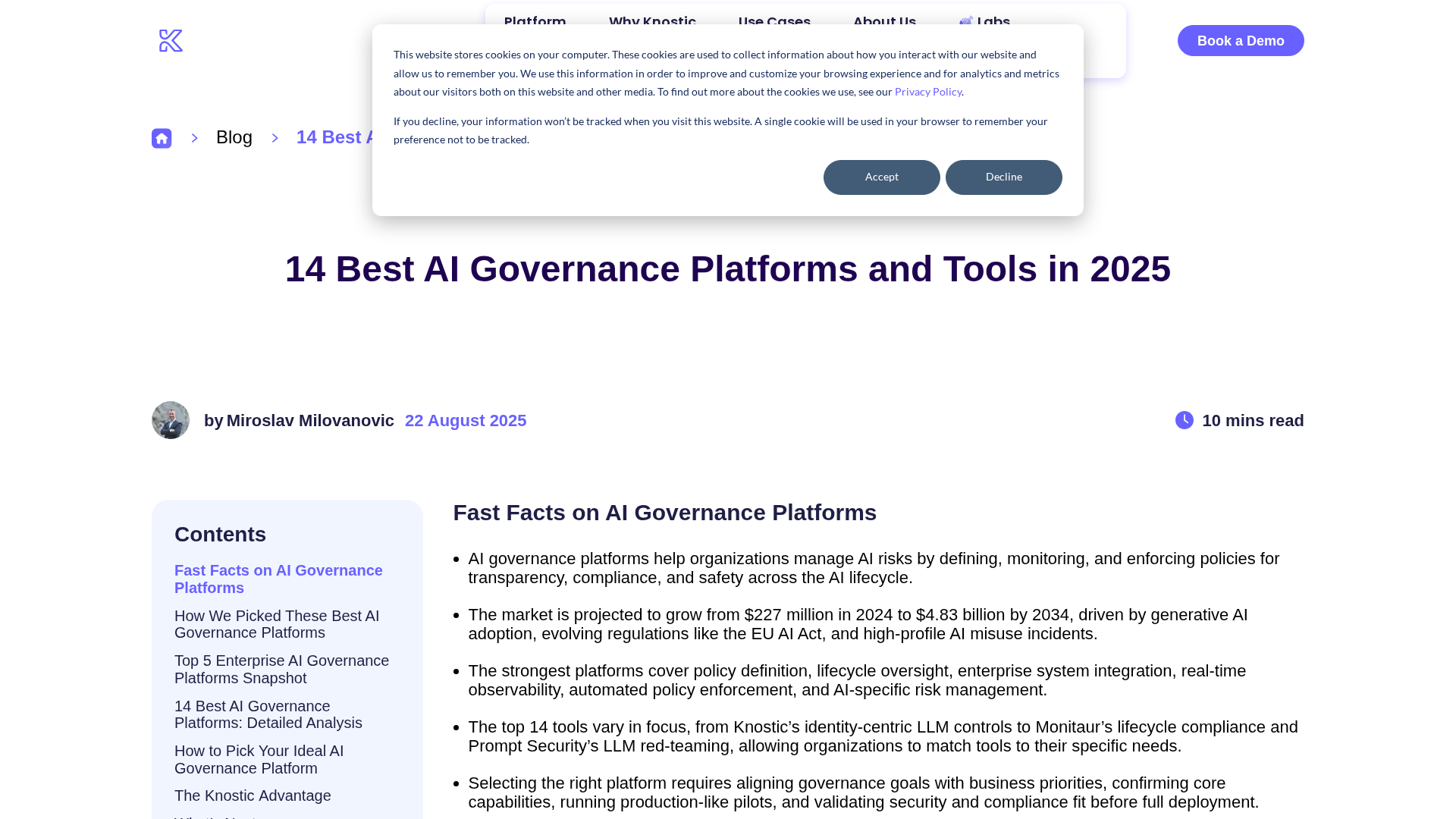
A vendor‑agnostic guide to the 14 best AI governance platforms in 2025, with criteria, comparisons, and practical buying guidance.
OpenAI’s bypass moment underscores the need for governance that survives inevitable user bypass and hardens system controls.
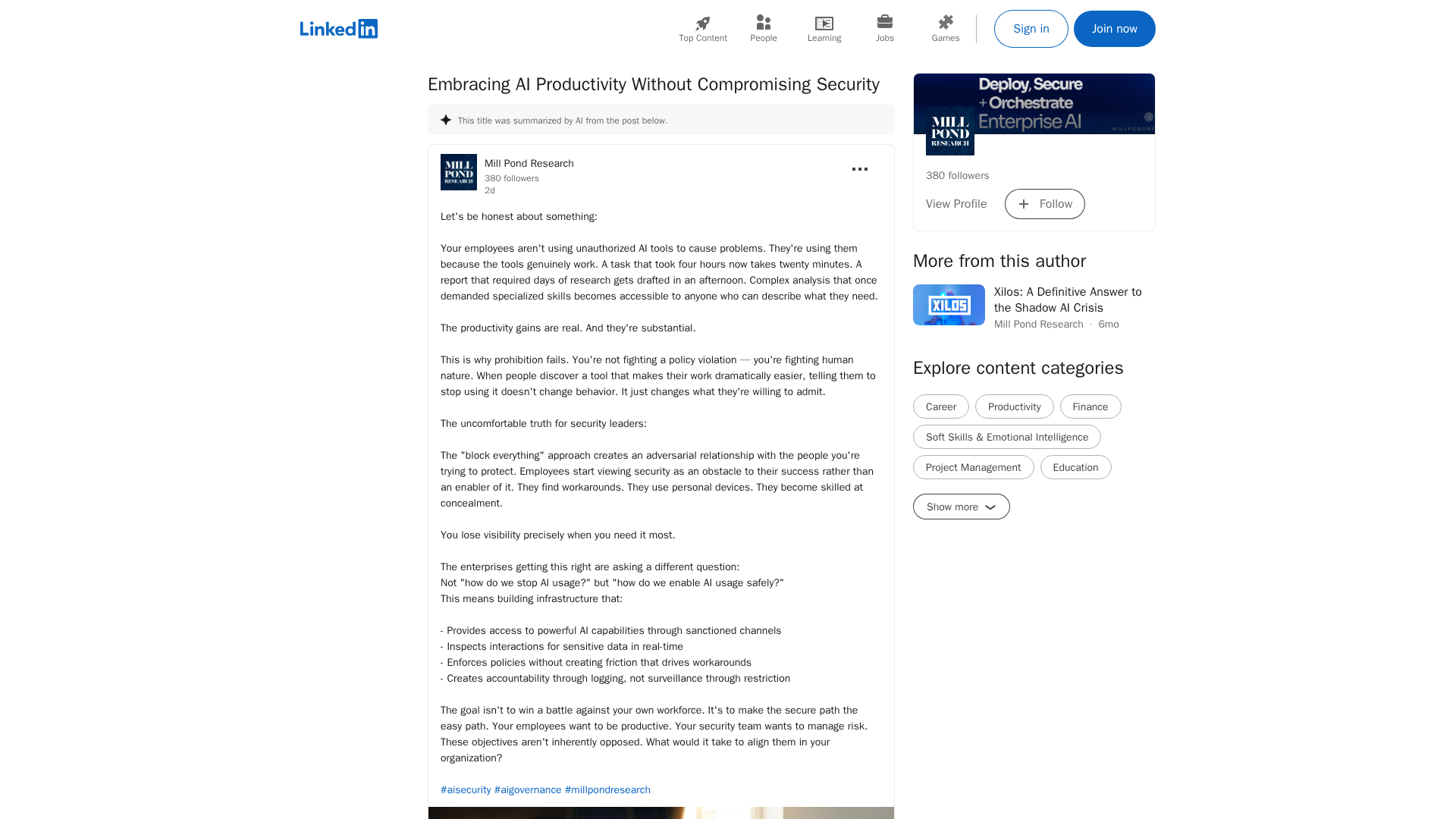
A call to enable safe AI use at work via sanctioned access, real-time data protections, and frictionless governance.
Explores the human role behind AI automation and how Bell Cyber tackles AI hallucinations in security operations.
A real-world look at AI in SOCs, debunking myths and highlighting the human role behind automation with Bell Cyber experts.