Topic Overview
Natural‑language Web3 app development covers the toolchains and platforms that let builders expose blockchain functionality through conversational interfaces and autonomous agents (example: Sonic Labs’ Spawn). As of 2026, the space blends agent frameworks, agent marketplaces, low‑/no‑code builders, and AI coding tools to accelerate secure, production‑grade integrations between large language models and on‑chain systems. Agent frameworks such as LangChain provide the developer SDKs, standard model interfaces, observability, and deployment primitives for composing LLM‑driven agents that orchestrate API calls, wallet interactions, and off‑chain logic. Developer‑focused platforms like GPTConsole add lifecycle, event‑chaining, memory and data infra for production agents. No‑code/low‑code visual platforms (Tate‑A‑Tate, MindStudio, StackAI) let product and community teams design, test and publish agents without deep engineering effort while adding governance and enterprise controls. Marketplaces—both general AI tool marketplaces and dedicated agent marketplaces—are becoming central for discovery, sharing and monetizing reusable agents and workflows. Complementary developer tooling (Replit, GitHub Copilot, JetBrains AI Assistant) speeds iteration with in‑IDE code generation, chat‑assistance and instant hosting. Key operational considerations for Web3: secure wallet and key handling, oracle and RPC integration, deterministic transaction composition, gas optimization, and clear separation of on‑chain vs off‑chain computation. Emerging trends through 2026 include richer memory/state management, event‑driven agent orchestration, and tightened governance/tamper‑resistance for publicly shared agents. Choosing the right stack means balancing speed (no‑code marketplaces), control (frameworks and SDKs), and developer productivity (AI code assistants), while prioritizing security, auditability and predictable on‑chain behavior.
Tool Rankings – Top 6

An open-source framework and platform to build, observe, and deploy reliable AI agents.

Developer-focused platform (SDK, API, CLI, web) to create, share and monetize production-ready AI agents.

From idea to Al Agent in minutes—zero coding

No-code/low-code visual platform to design, test, deploy, and operate AI agents rapidly, with enterprise controls and a
End-to-end no-code/low-code enterprise platform for building, deploying, and governing AI agents that automate work onun

AI-powered online IDE and platform to build, host, and ship apps quickly.
Latest Articles (37)
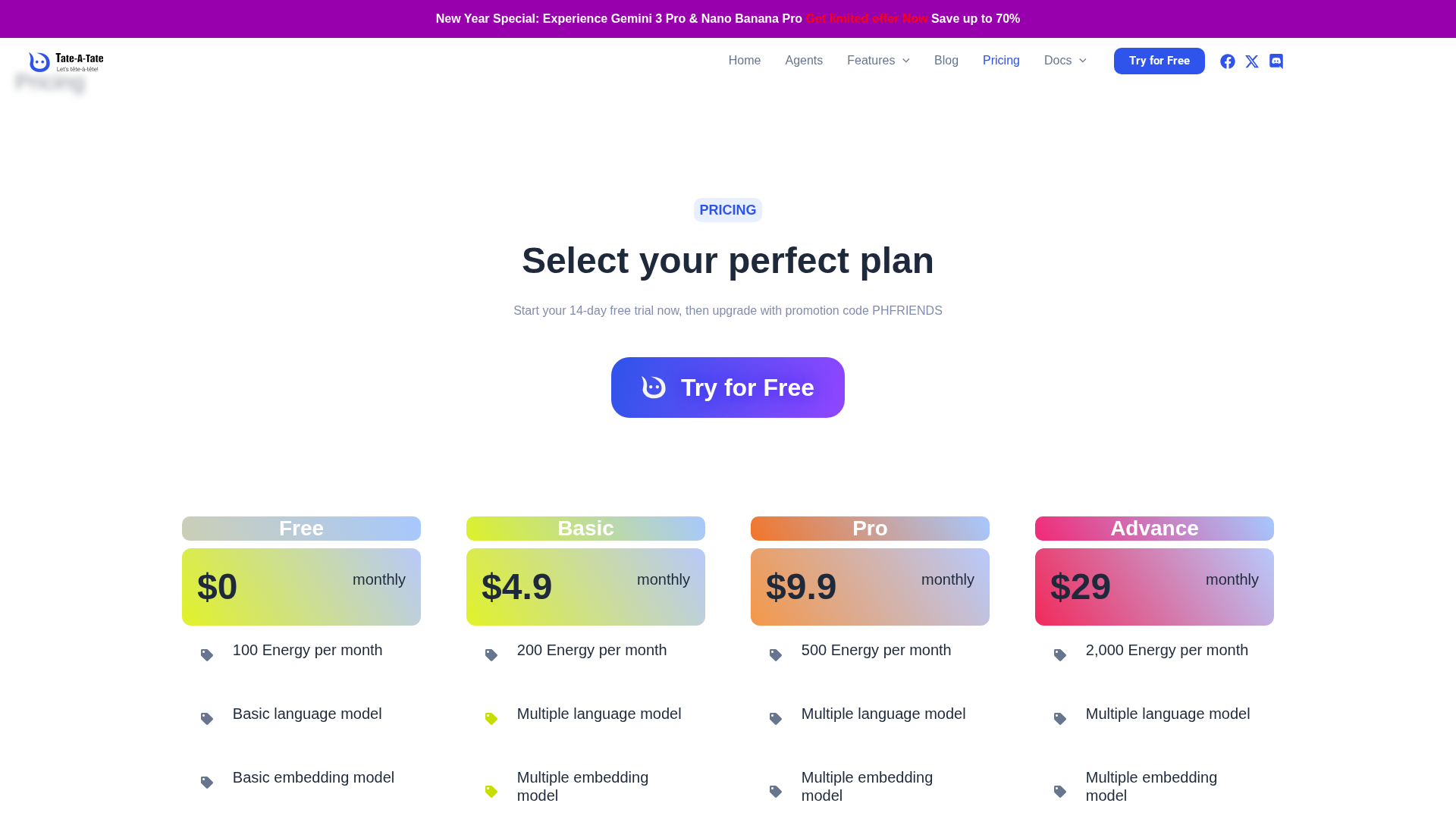
Pricing page for Tate-A-Tate with energy-based plans, scalable AI agents, and a 14-day free trial.
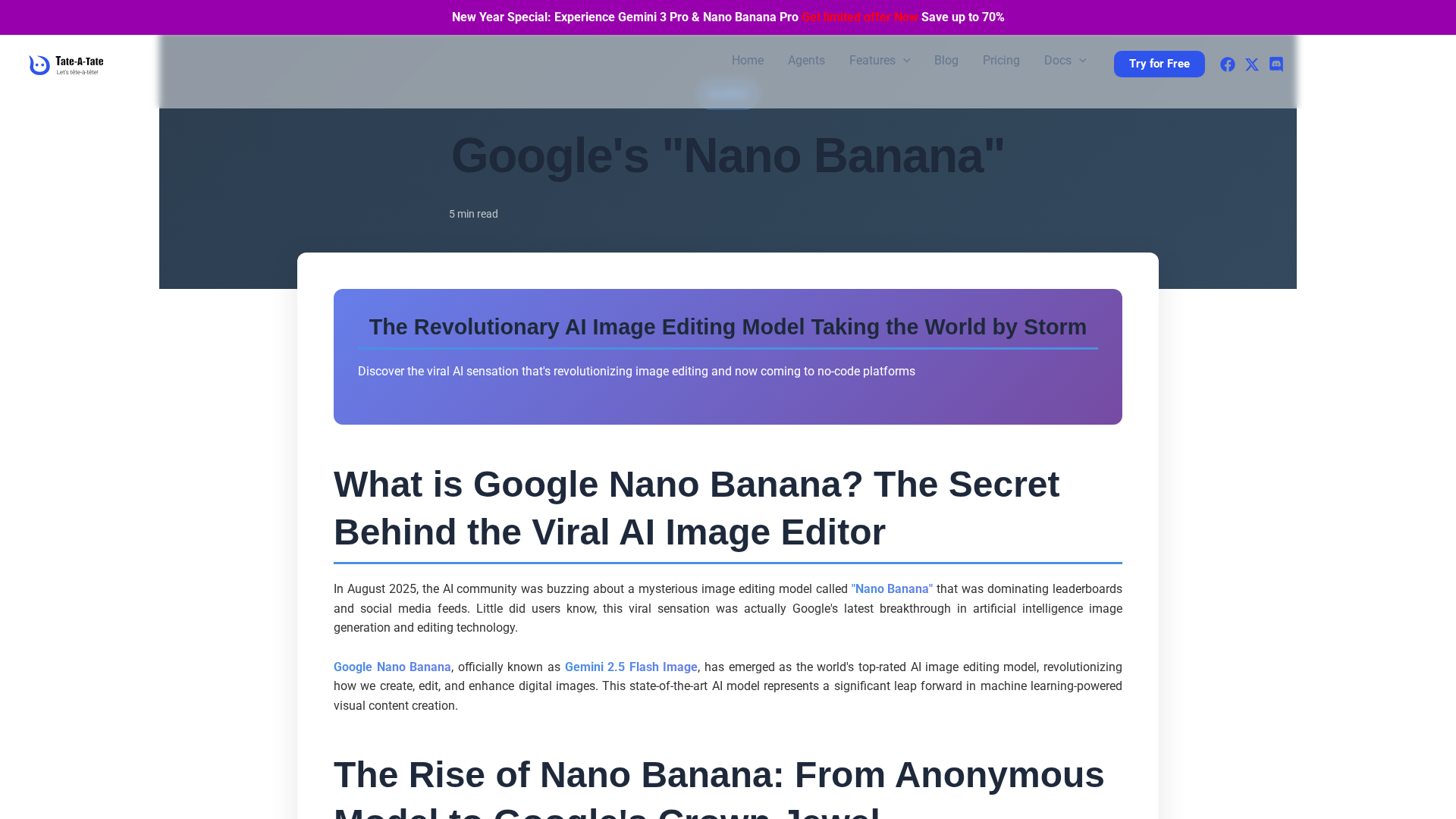
Explore Google's Nano Banana (Gemini 2.5 Flash Image): features, access paths, and the Tate-A-Tate no-code integration.
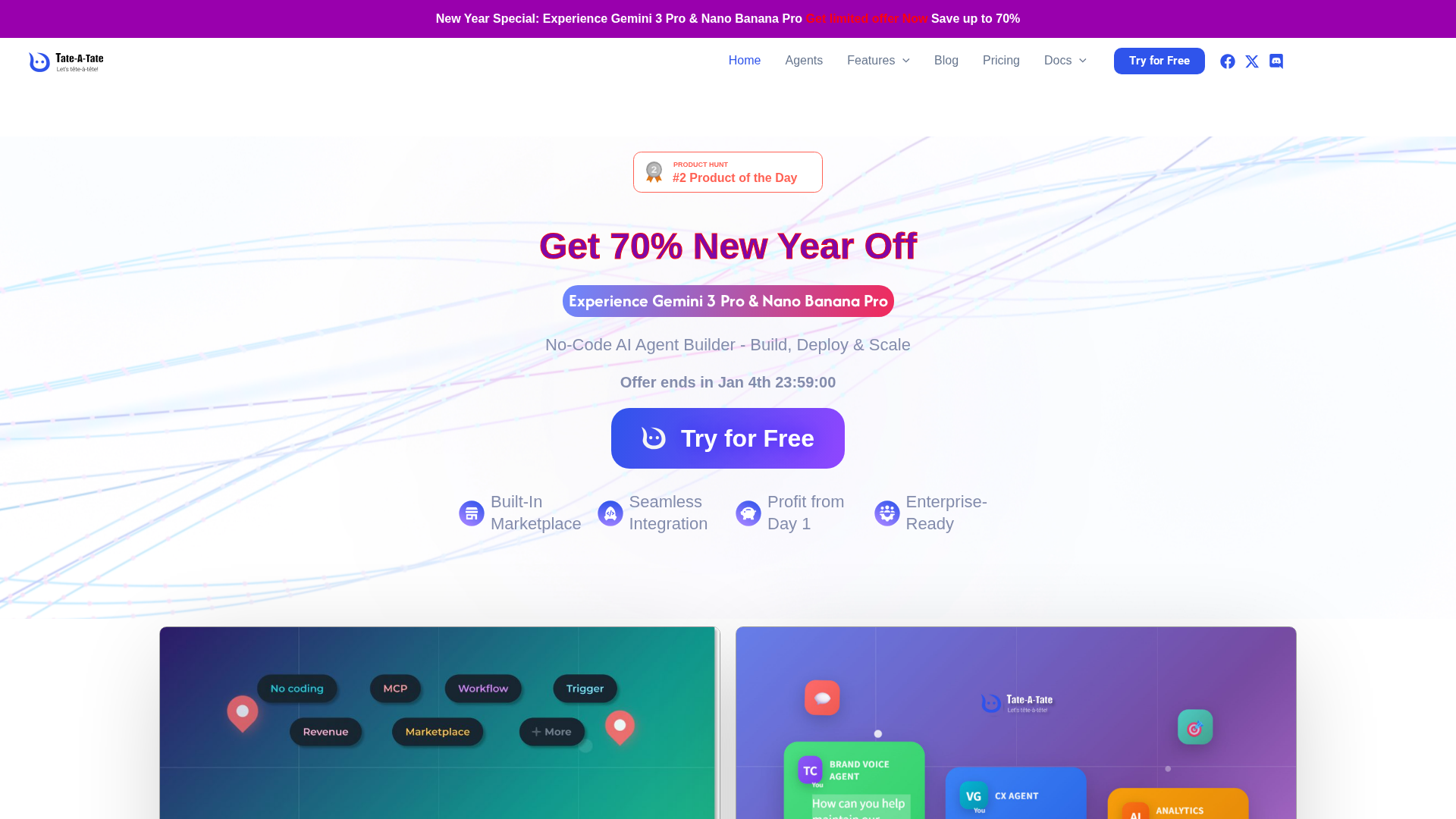
Promotional guide to Tate-A-Tate's no-code AI agent builder with a 70% New Year discount and deployment tutorials.
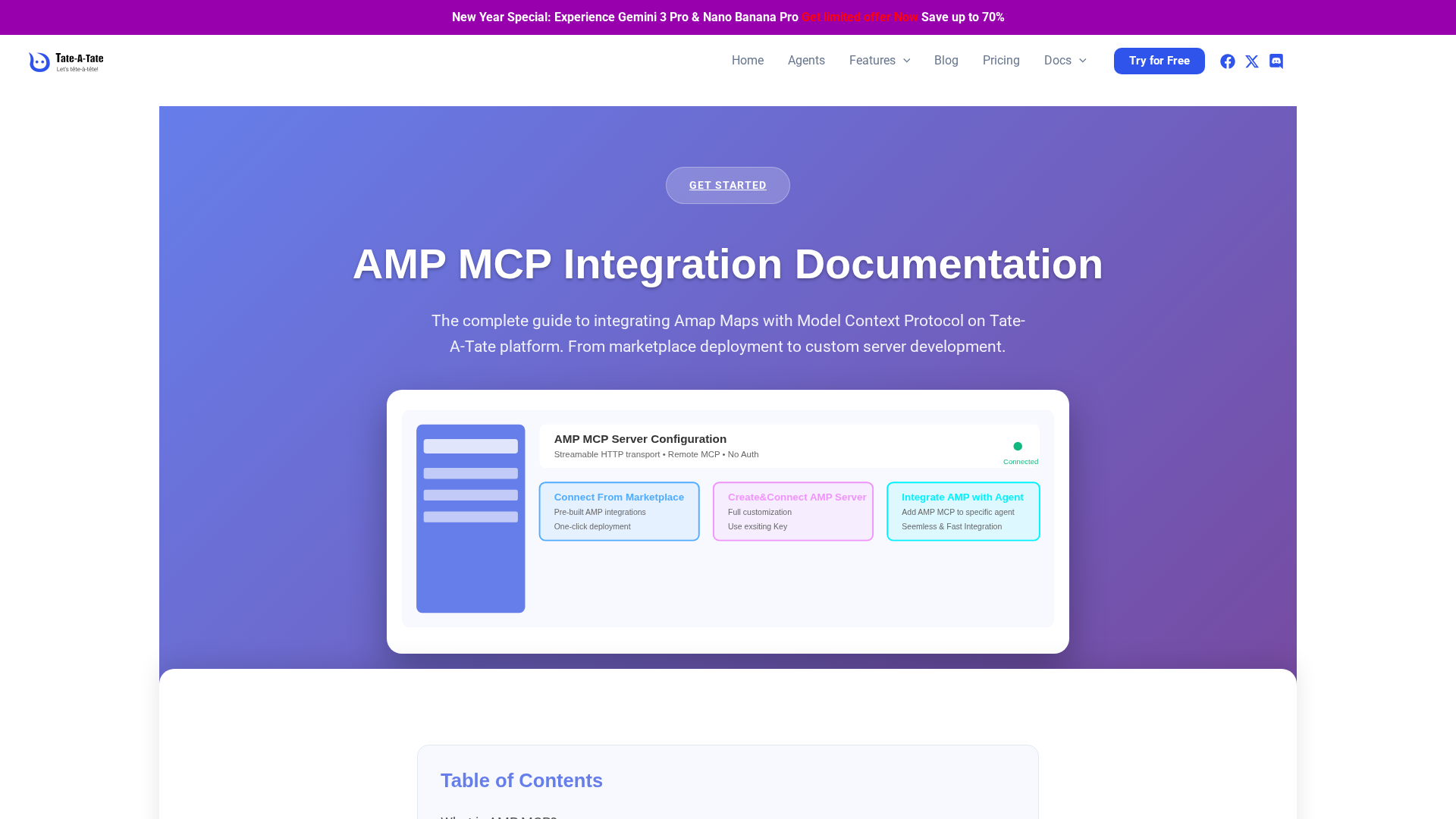
A practical, dual-path guide to integrating AMP MCP with Tate-A-Tate, via marketplace deployment or custom servers.
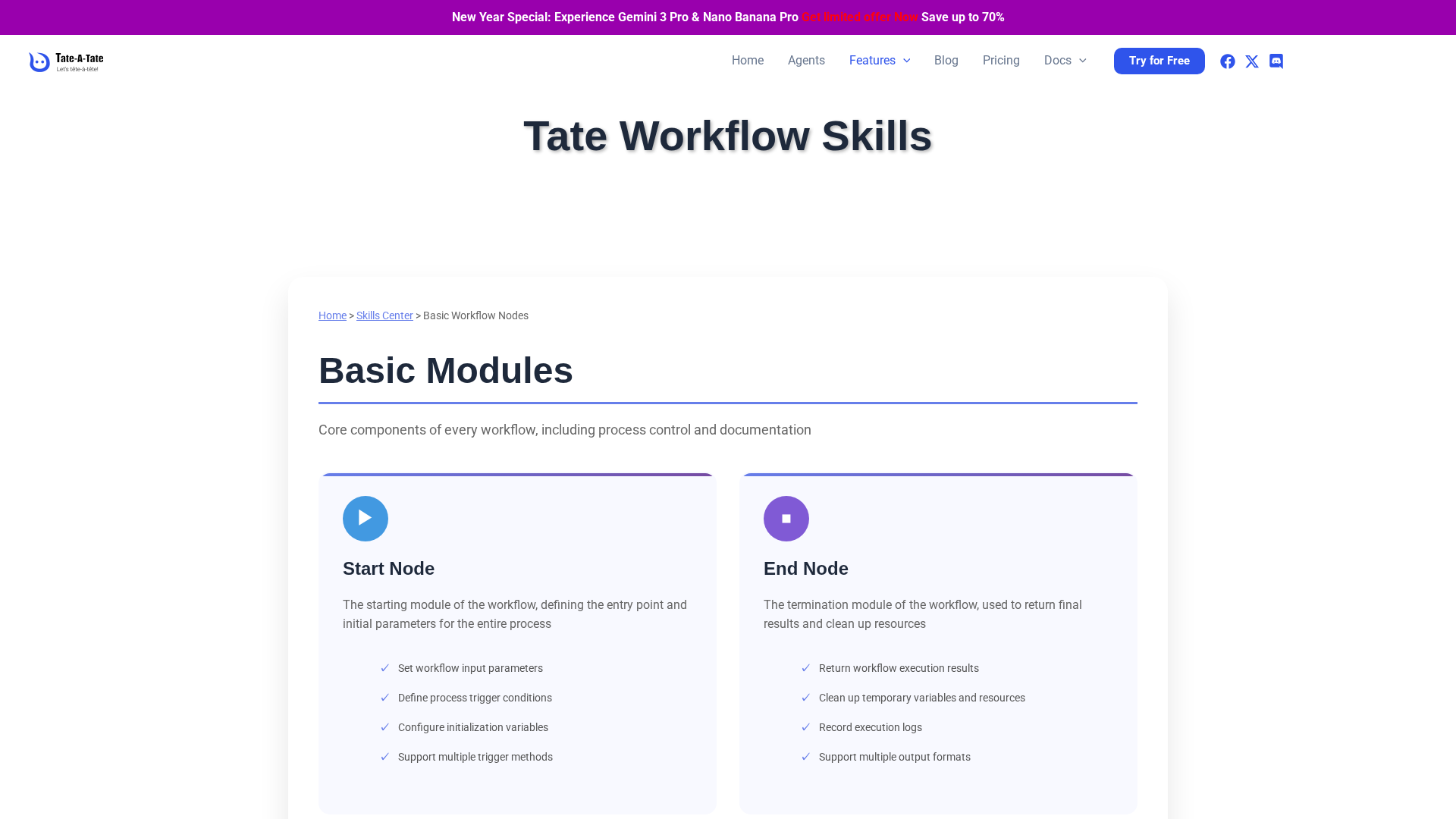
A concise guide to Tate's Basic Workflow Nodes and AI modules for building intelligent workflows.