Topic Overview
This comparison surveys the contemporary landscape of general-purpose AI agent platforms — the frameworks, marketplaces, and automation systems organizations use to design, run, and govern autonomous agents. By late 2025 the market has fragmented around several needs: engineering-first stacks for building reliable agents; turnkey, no-code automation platforms; integrated productivity assistants; and marketplaces for deploying and monitoring multi-agent solutions. Key tool types and examples: LangChain is an engineering platform and open-source framework for building, debugging, evaluating, and deploying stateful agentic LLM applications (including graph/state primitives). AutoGPT represents autonomous-agent runtimes that can be self‑hosted or cloud‑hosted to run long‑running automation workflows. Enterprise offerings such as IBM watsonx Assistant provide no‑code and developer-driven virtual agents and multi-agent orchestration with enterprise governance. Productivity-integrated assistants like Microsoft 365 Copilot embed agent capabilities across office apps. Developer-focused platforms — Replit, GitHub Copilot, Windsurf, and Tabnine — surface agentic features inside IDEs and CI workflows. No‑code marketplaces and platforms (Anakin.ai, Agentverse) and lightweight browser agents (Minion AI) round out the ecosystem. Trends through 2025–2026 include stronger emphasis on observability, safety and governance, multi-model and stateful agent orchestration, hybrid/self‑hosted deployments for data control, and tighter IDE and collaboration integrations. Emerging vendors (e.g., Manus, ELSA) and major model providers (Anthropic, OpenAI) are converging on platform features that balance developer control with plug‑and‑play automation. Choosing between platforms now depends on priorities: engineering rigor and testability, enterprise governance, or fast no‑code deployment and marketplace reach.
Tool Rankings – Top 6

Engineering platform and open-source frameworks to build, test, and deploy reliable AI agents.

Platform to build, deploy and run autonomous AI agents and automation workflows (self-hosted or cloud-hosted).

Enterprise virtual agents and AI assistants built with watsonx LLMs for no-code and developer-driven automation.
AI assistant integrated across Microsoft 365 apps to boost productivity, creativity, and data insights.

AI-powered online IDE and platform to build, host, and ship apps quickly.
An AI pair programmer that gives code completions, chat help, and autonomous agent workflows across editors, theterminal
Latest Articles (88)
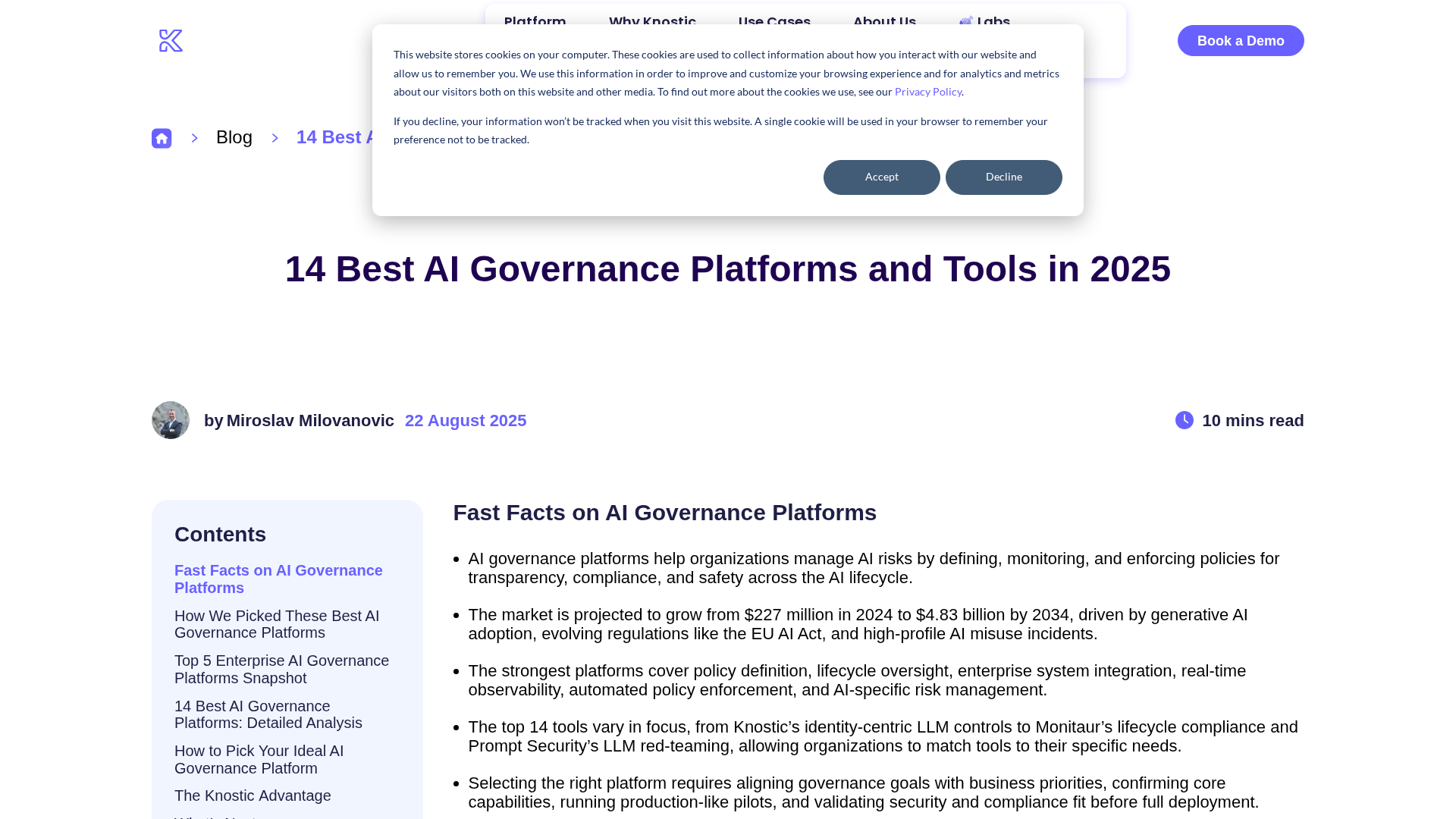
A vendor‑agnostic guide to the 14 best AI governance platforms in 2025, with criteria, comparisons, and practical buying guidance.
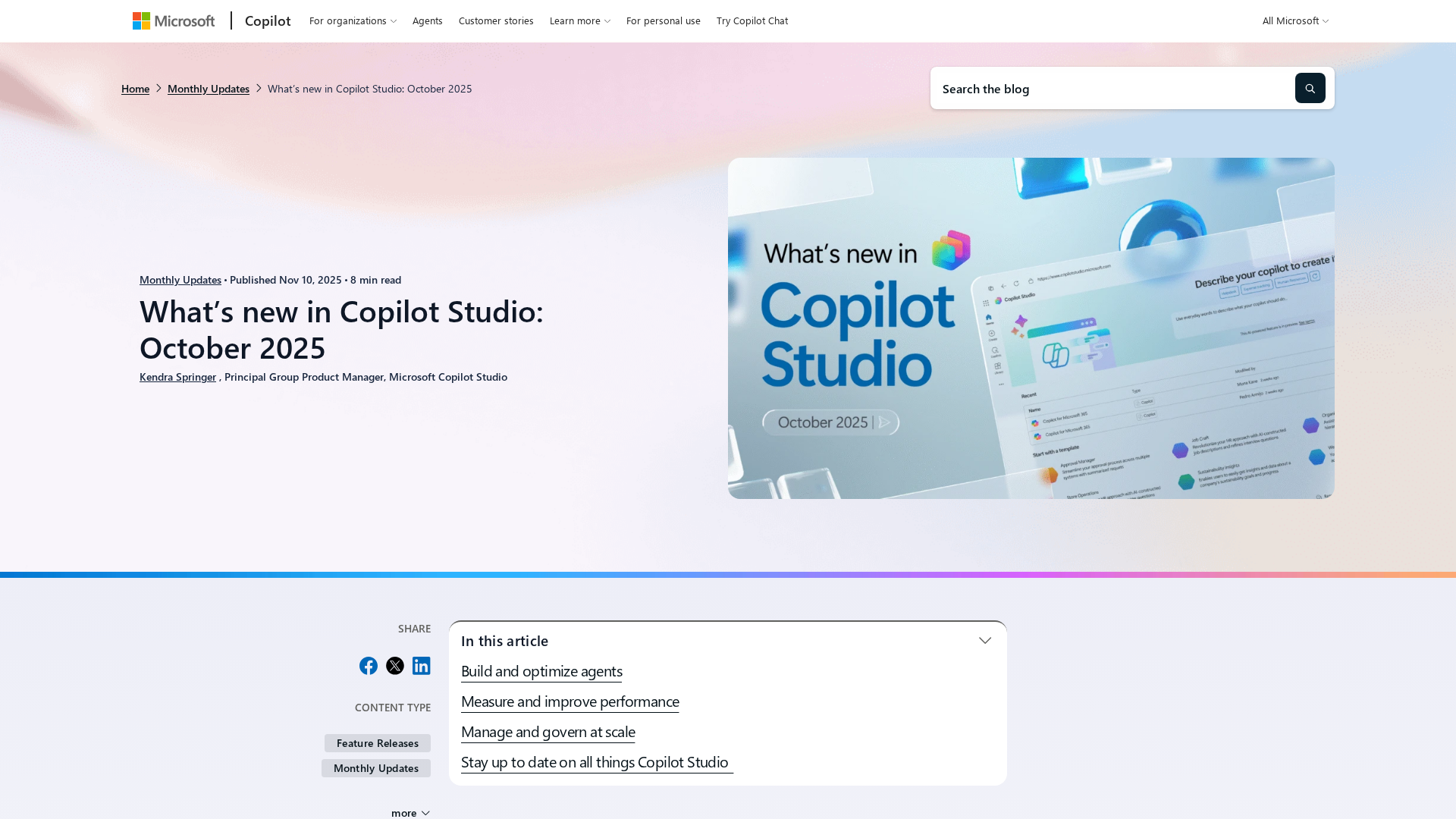
A comprehensive October 2025 roundup of Copilot Studio’s new testing, model, and governance features.
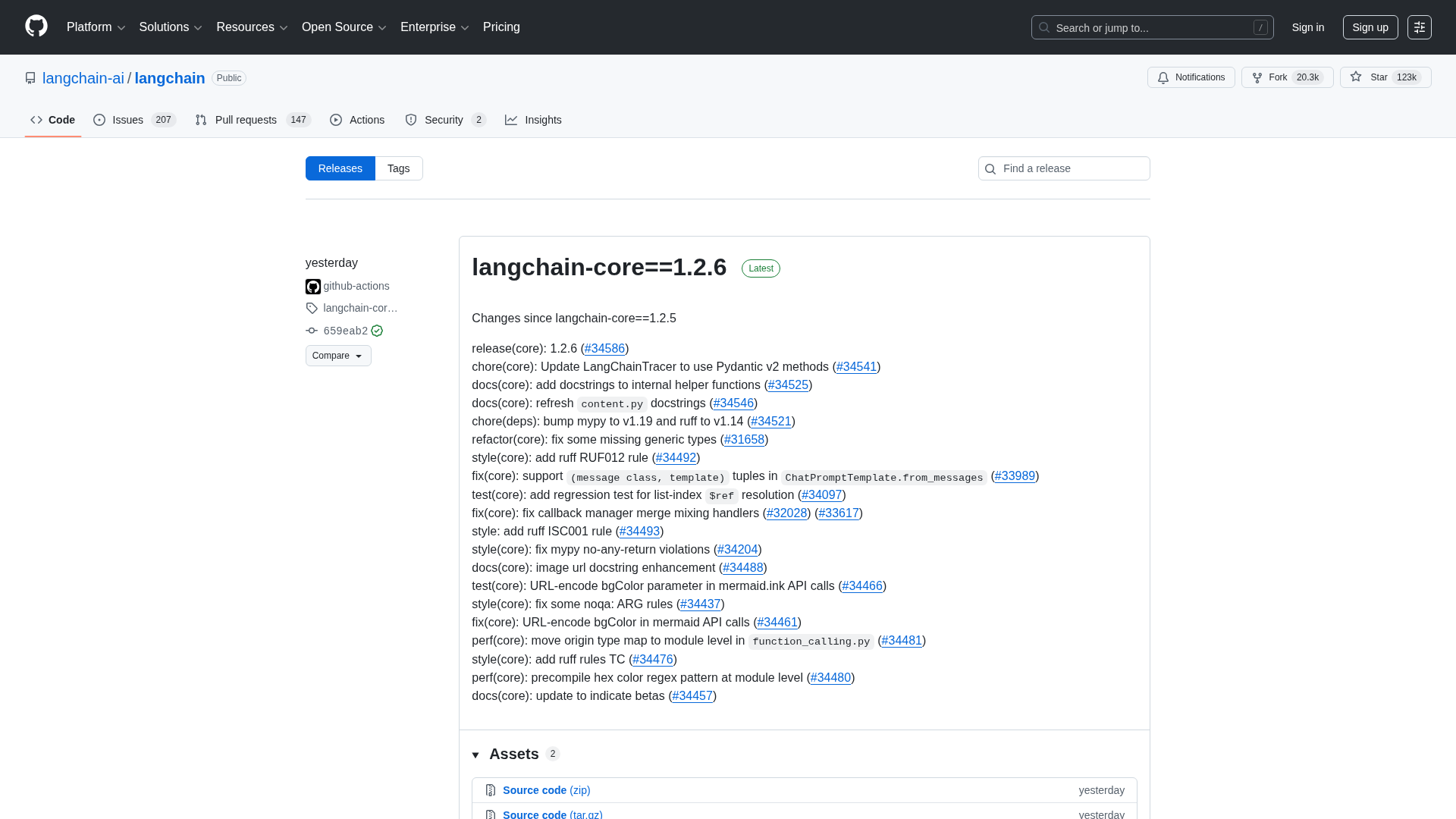
A comprehensive LangChain releases roundup detailing Core 1.2.6 and interconnected updates across XAI, OpenAI, Classic, and tests.

Cannot access the article content due to an access-denied error, preventing summarization.

Adobe nears a $19 billion deal to acquire Semrush, expanding its marketing software capabilities, according to WSJ reports.