Topic Overview
Diffusion-based reasoning models use iterative, noise-to-signal sampling dynamics to perform structured refinement and multi-step reasoning; Mercury 2 is a representative instance of this class aimed at high-throughput inference. As of 2026-02-26, the approach is relevant because production GenAI workloads increasingly demand robust multi-step reasoning, calibrated uncertainty, and cost-efficient batching across thousands of parallel queries. Diffusion methods trade off sampling steps and latency against output fidelity; real-world deployments rely on techniques like distillation, fewer-step samplers, quantization, and hardware-aware batching to meet throughput targets. Tools and platforms in this space play distinct roles: LangChain provides engineering primitives, state management, and evaluation hooks for integrating diffusion reasoning into agentic apps and automated tests; MindStudio and Tate-A-Tate offer no-/low-code visual pipelines to design, test, and operate agents that can call diffusion-based models; AgentGPT enables browser-based experimentation and rapid prototype agents; Finish UP focuses on AI-enabled planning and execution workflows that can leverage iterative refinement from diffusion models. Together these tools address the software, orchestration, and observability gaps needed to run diffusion reasoning at scale. Key considerations when comparing Mercury 2 versus alternatives include latency-per-sample vs sample quality, amenability to distillation into single-pass predictors, support for multimodal inputs, runtime cost on modern accelerators, and tooling for test automation and data tracking. Organizations evaluating diffusion-based reasoning should benchmark throughput under representative loads, validate uncertainty calibration, and prefer platforms that provide integrated evaluation, deployment controls, and dataset/version tracking to manage drift and reproducibility.
Tool Rankings – Top 5

Engineering platform and open-source frameworks to build, test, and deploy reliable AI agents.

No-code/low-code visual platform to design, test, deploy, and operate AI agents rapidly, with enterprise controls and a

A browser-based platform to create and deploy autonomous AI agents with simple goals.

From idea to Al Agent in minutes—zero coding
Go from idea to done with AI-enabled planning & execution 🚀
Latest Articles (37)
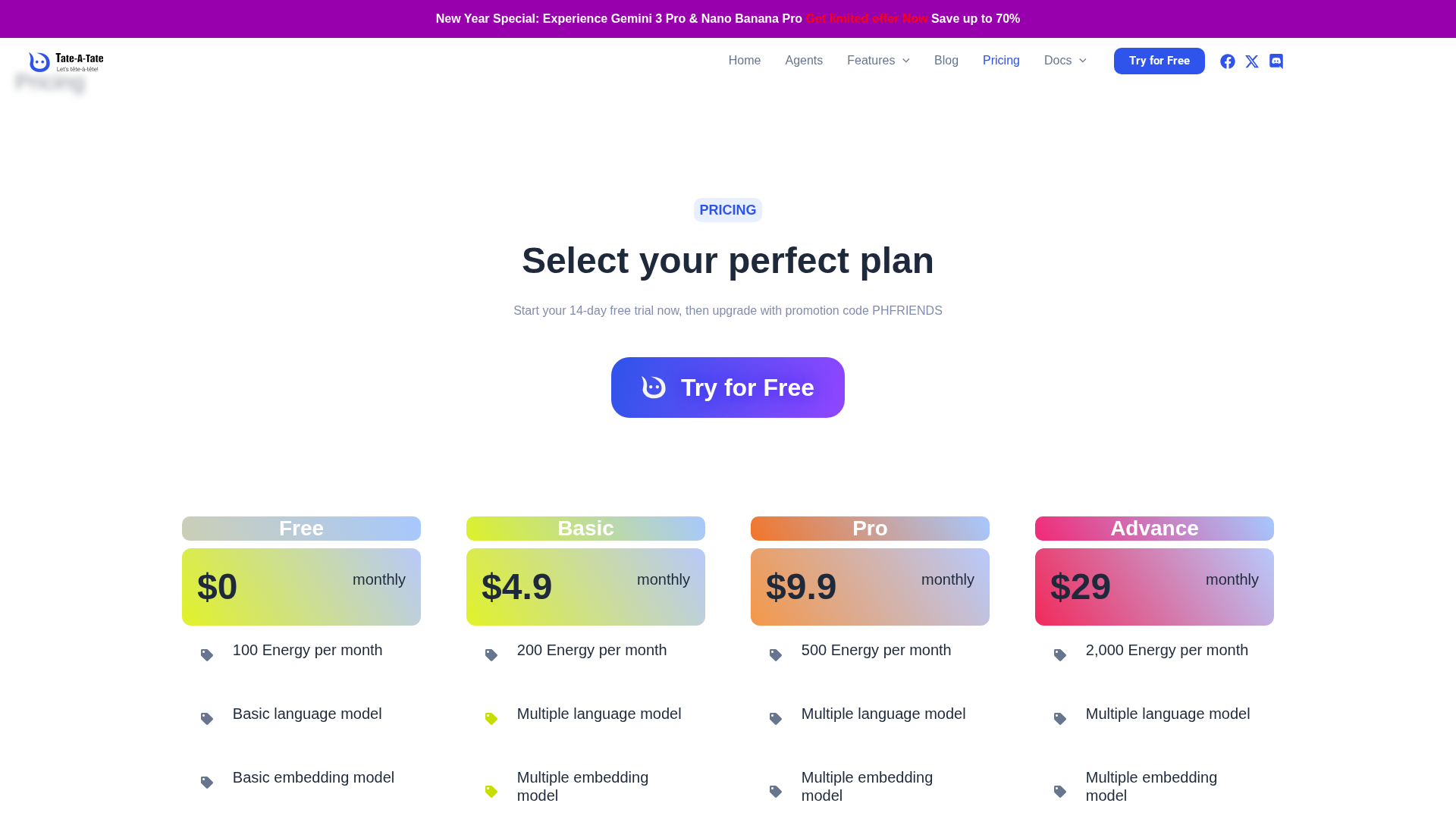
Pricing page for Tate-A-Tate with energy-based plans, scalable AI agents, and a 14-day free trial.
A clear, enterprise-focused comparison showing why Tate outshines Gumloop in AI automation.
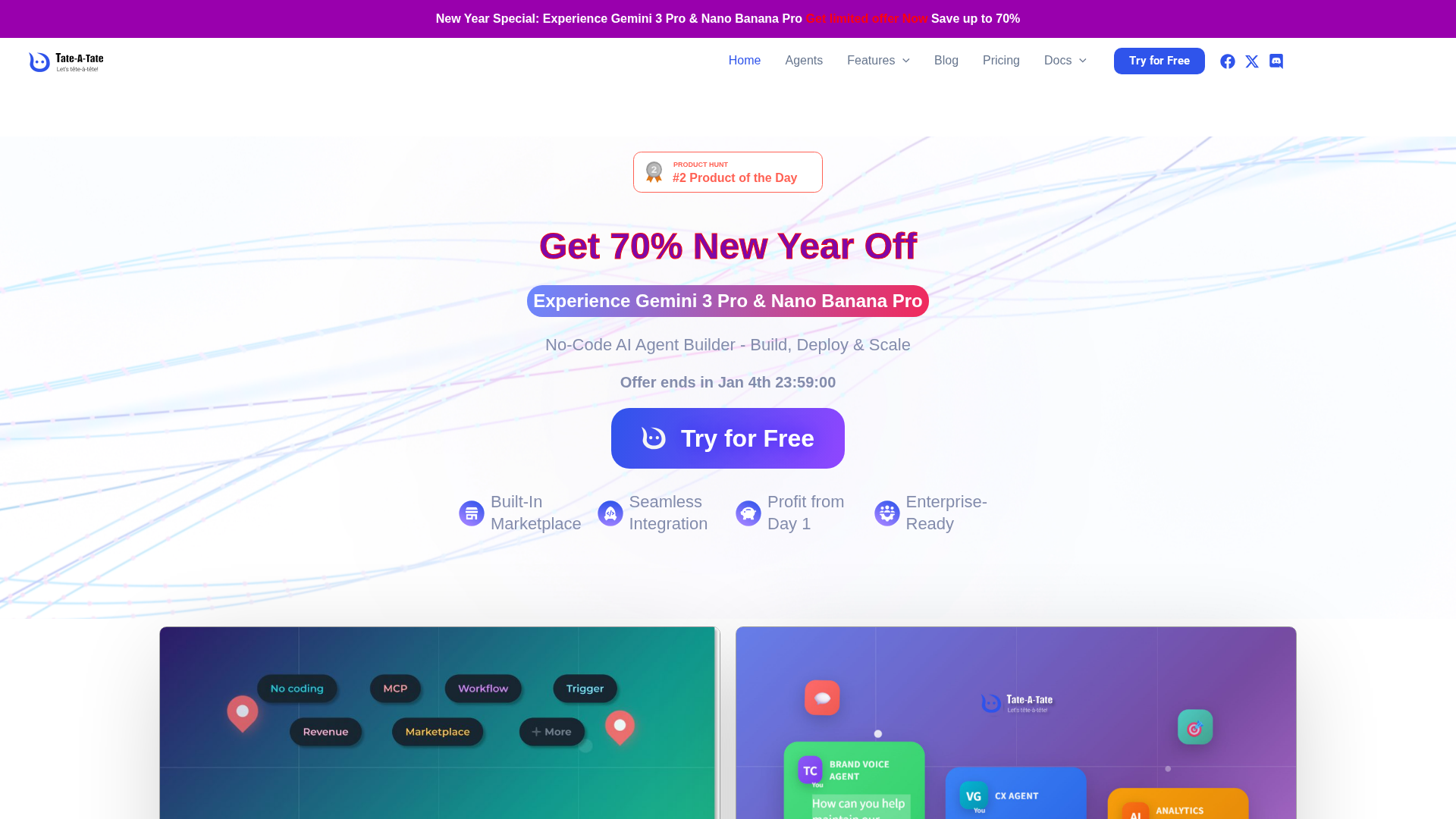
A no-code platform to build, deploy, and monetize AI agents across Web, Discord, Telegram, and API with templates, workflows, and built-in tools.
A missing page reveals Tate-A-Tate’s broad AI tools, integrations, and developer-focused capabilities.
A no-code guide to building HTML-to-PDF workflows for scalable, branded document generation.