
Topic Overview
This topic covers the intersection of high‑performance AI accelerators and the evolving cloud access models that make them practical for production workloads. Hardware trends include large GPU families (e.g., Blackwell‑class architectures), purpose‑built inference silicon and chiplet approaches, and early commercial photonic/optical accelerators — all aimed at improving throughput and energy efficiency for LLM and multimodal inference. Parallel to hardware evolution, access models are fragmenting: hyperscale clouds still dominate, but fractional/rental schemes, spot/marketplace allocations and decentralized capacity markets are growing as ways to reduce capital expense and increase locality for latency‑sensitive workloads. This combination is timely in late 2025 because energy costs, data‑locality and model specialization have made raw FLOPS less decisive than whole‑system efficiency and flexible provisioning. Tools and projects illustrate the stack: Rebellions.ai builds energy‑efficient inference accelerators plus a GPU‑class software stack for hyperscale inference; optical and chiplet vendors push heterogenous silicon that requires new runtimes and compilation flows. On the software and ecosystem side, Activeloop’s Deep Lake provides multimodal data storage and streaming suited for real‑time inference and RAG pipelines; Stable Code supplies compact, instruction‑tuned code LMs for on‑device and edge inference; Windsurf (formerly Codeium) and Warp are developer‑focused platforms (AI‑native IDE/agentic coding and an Agentic Development Environment respectively) that shorten the loop from prompt to deploy on specialized hardware. Decentralized efforts such as Tensorplex Labs explore marketplace and DeFi primitives to tokenize and rent unused accelerator capacity. Understanding how accelerators, software stacks, data infrastructure and new rental models interlock is essential for architects choosing between on‑prem, cloud, edge or decentralized deployments in 2025.
Tool Rankings – Top 6

Energy-efficient AI inference accelerators and software for hyperscale data centers.

AI-native IDE and agentic coding platform (Windsurf Editor) with Cascade agents, live previews, and multi-model support.

Edge-ready code language models for fast, private, and instruction‑tuned code completion.

Agentic Development Environment (ADE) — a modern terminal + IDE with built-in AI agents to accelerate developer flows.

Deep Lake: a multimodal database for AI that stores, versions, streams, and indexes unstructured ML data with vector/RAG
Open-source, decentralized AI infrastructure combining model development with blockchain/DeFi primitives (staking, cross
Latest Articles (46)
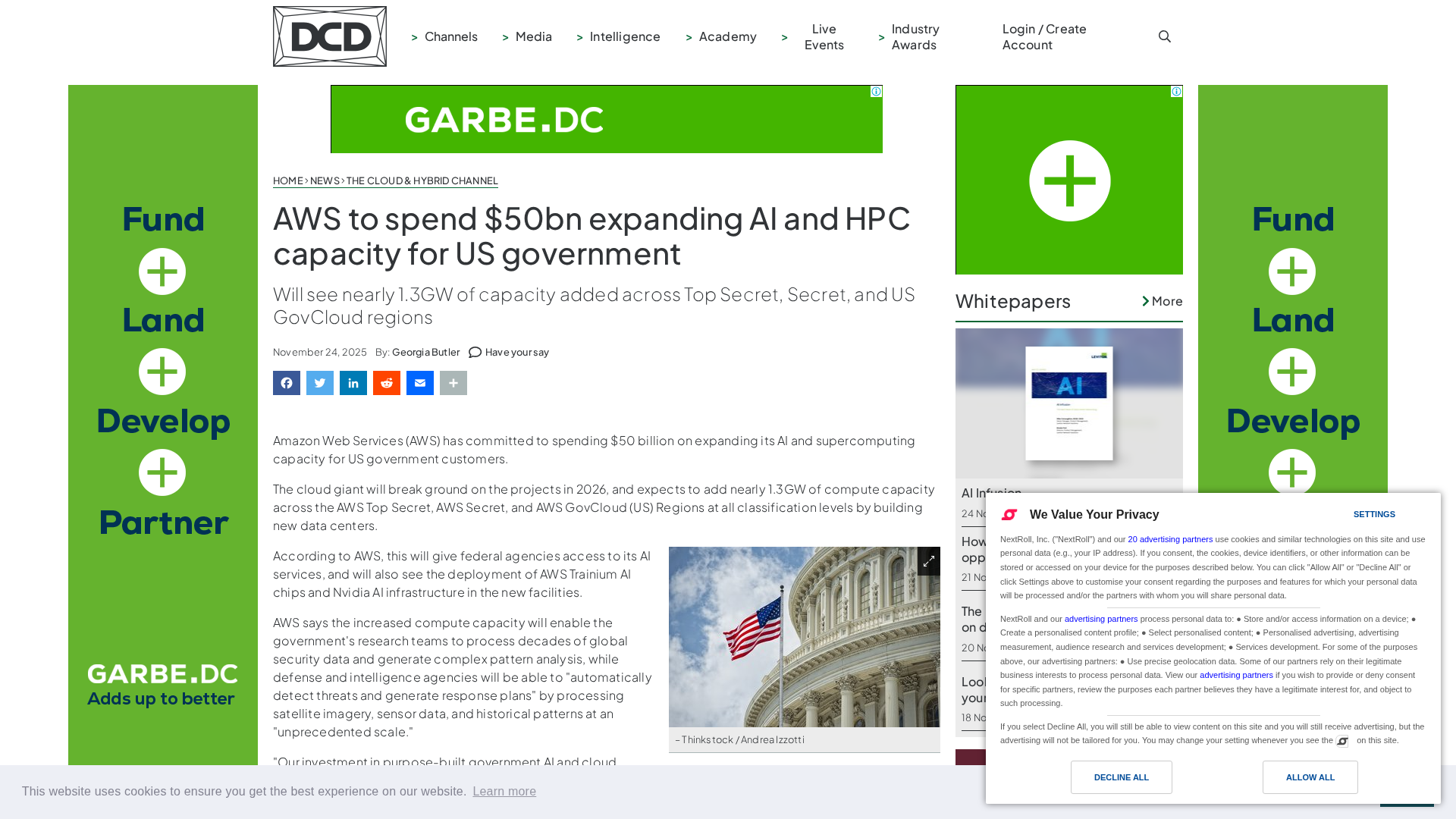
AWS commits $50B to expand AI/HPC capacity for U.S. government, adding 1.3GW compute across GovCloud regions.
How AI agents can automate and secure decentralized identity verification on blockchain-enabled systems.
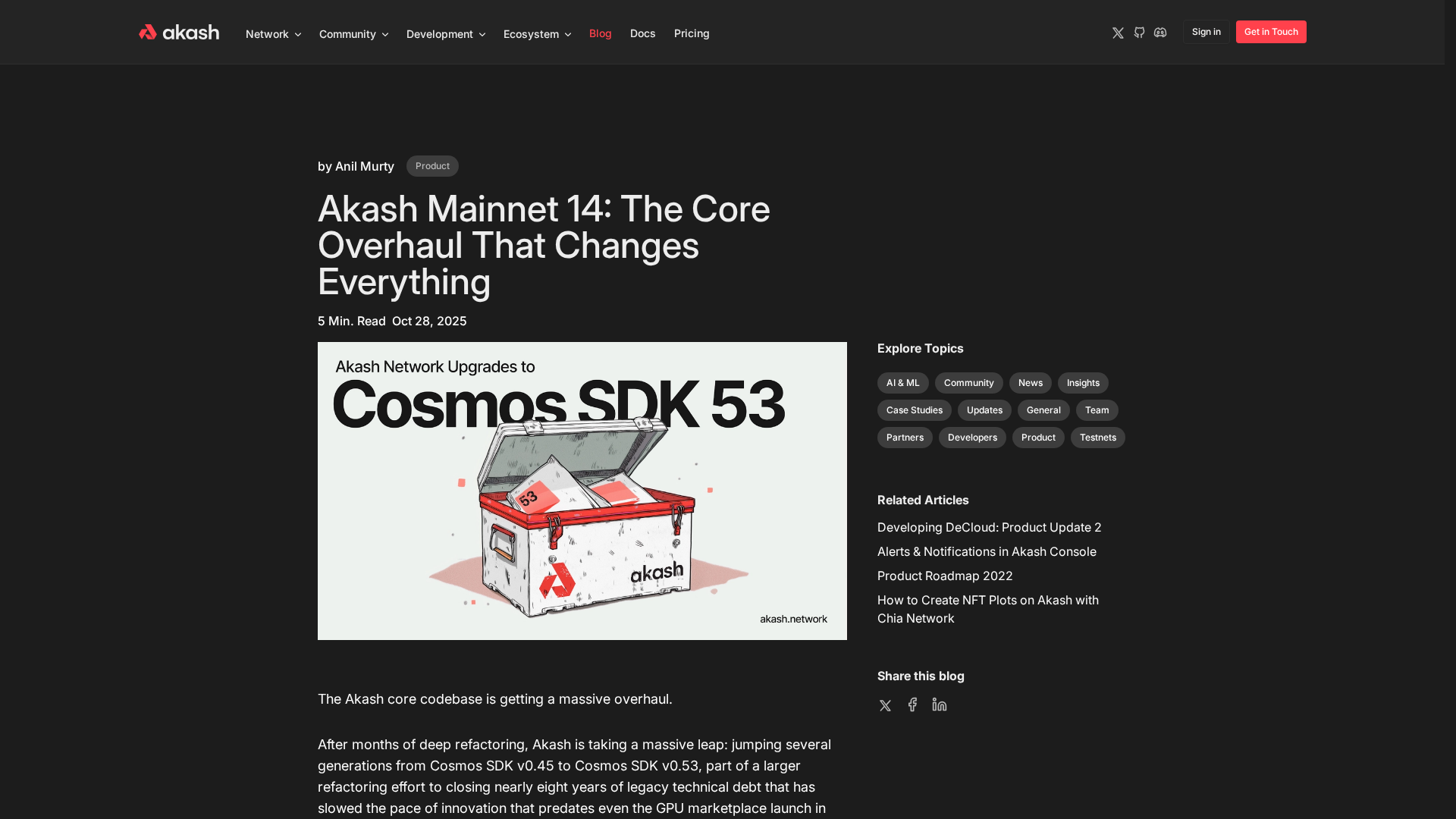
A foundational Core overhauL that speeds up development, simplifies authentication with JWT, and accelerates governance for Akash's decentralized cloud.
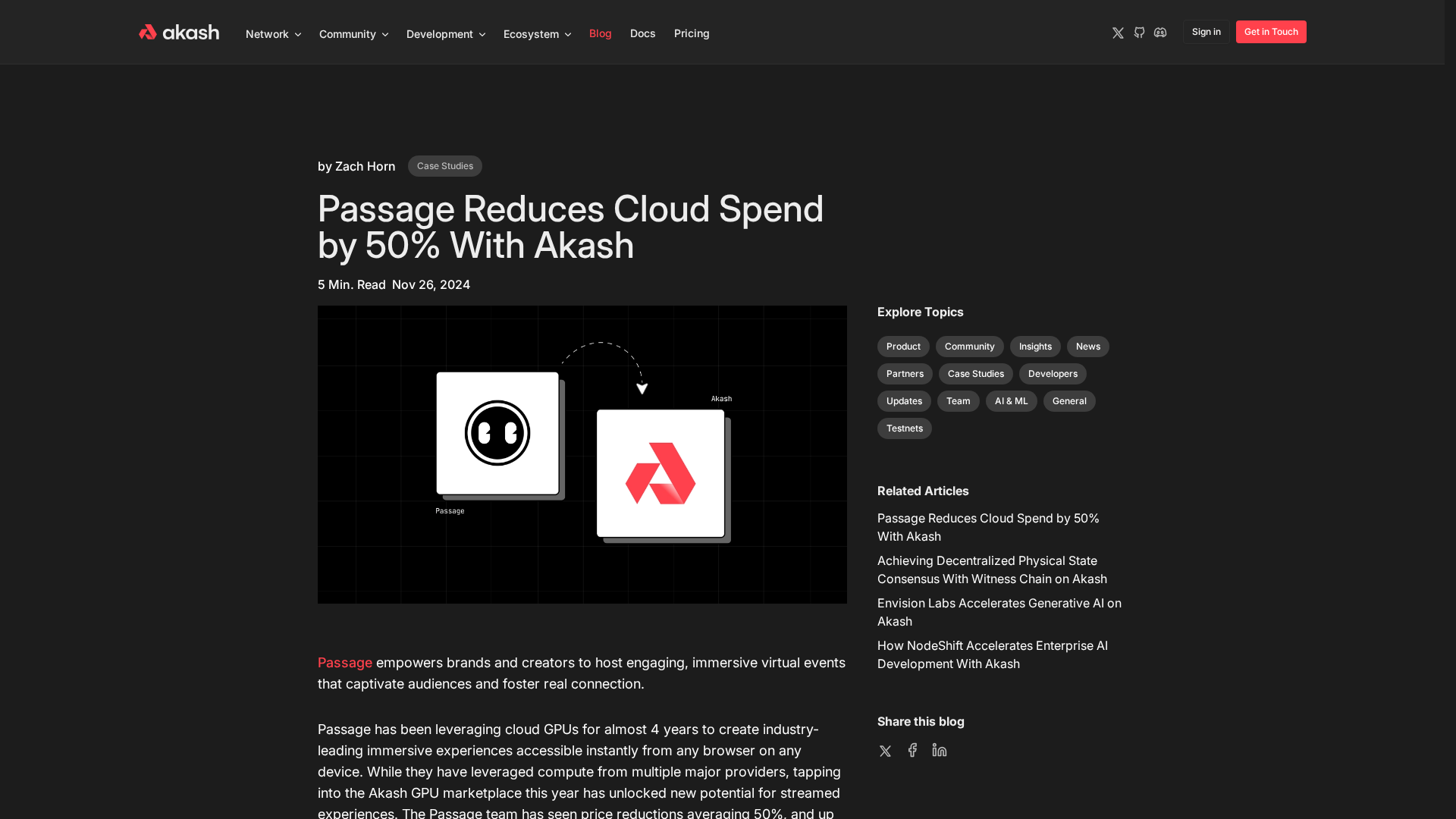
Passage cuts GPU cloud costs by up to 70% using Akash's open marketplace, enabling immersive Unreal Engine 5 events.

Meta may partner with Sify to lease a 500 MW Vishakhapatnam data center in a Rs 15,266 crore project linked to the Waterworth subsea cable.