Topic Overview
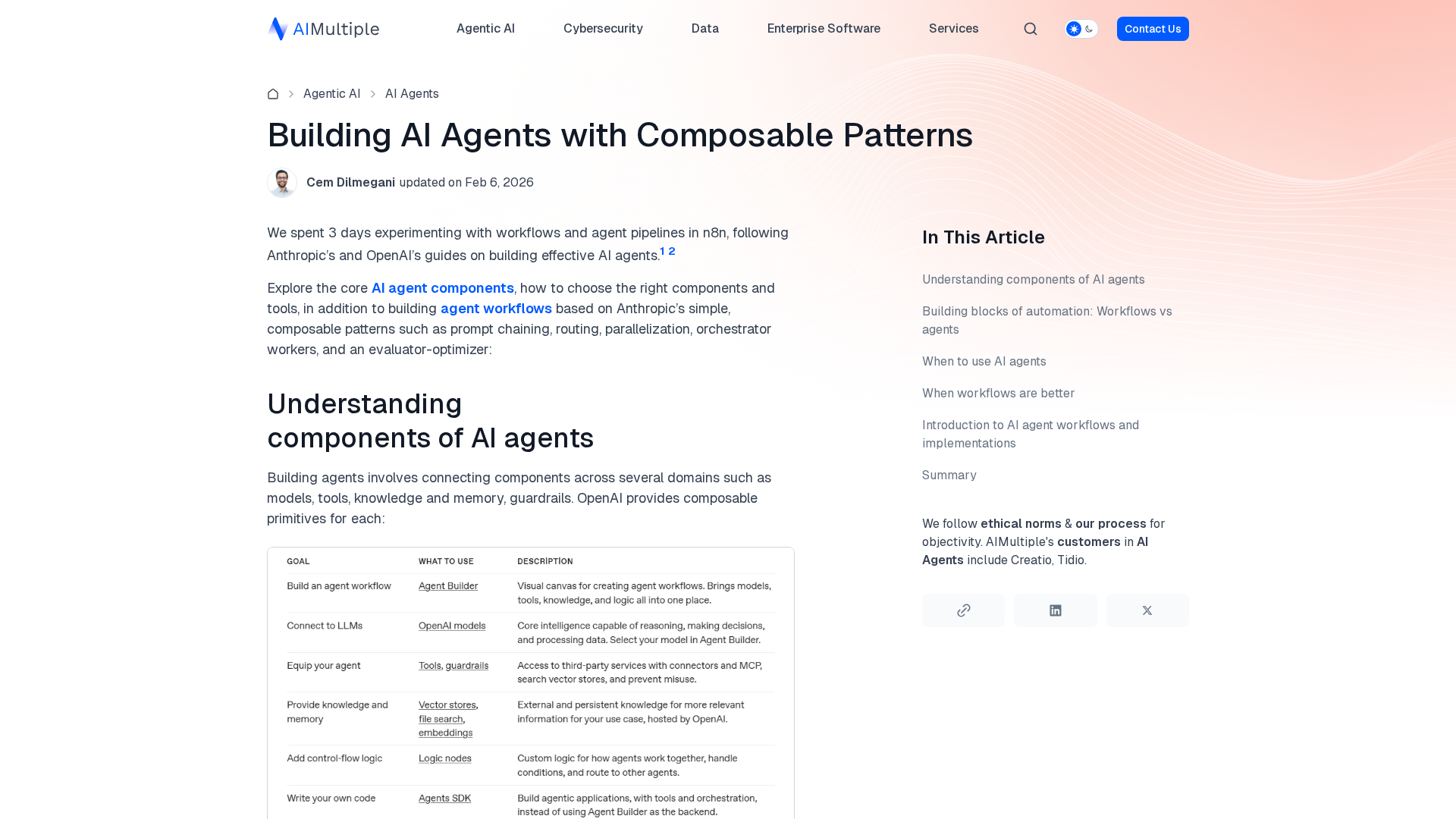
Modular AI agent platforms and templates are the infrastructure and reusable components that let organizations build, deploy and govern autonomous or semi‑autonomous assistants across business workflows. By 2026 this space spans three overlapping categories — agent frameworks (model APIs, orchestration layers and tool‑use patterns), AI agent marketplaces (catalogs of prebuilt agents, connectors and templates), and AI automation platforms (no‑code/low‑code orchestration, governance and deployment for production automation). Key players illustrate different tradeoffs: StackAI targets end‑to‑end enterprise needs with no‑code/low‑code authoring, deployment and governance; Adept focuses on agentic action inside software interfaces (ACT‑style agents) for multistep task automation; IBM watsonx Assistant provides enterprise virtual agents and multi‑agent orchestrations built on watsonx LLMs; Anthropic’s Claude family supplies conversational and developer assistant models used as agent cores; developer‑centric tools like GitHub Copilot and Tabnine show how coding workflows are being automated and governed with private/self‑hosted options. Current trends making this topic timely include: increasing demand for composability (connectors, templates, and orchestration engines), stronger enterprise requirements for provenance, access controls and observability, hybrid and on‑prem deployments for compliance, and marketplaces that speed reuse of vetted agents. Practical concerns — tool‑use reliability, human‑in‑loop checkpoints, alignment and lifecycle governance — now shape platform design as much as model capability. For buyers and builders, the practical questions are interoperability, template libraries, auditability and operational controls: the space is maturing from experimental agents to governed, reusable automation patterns for production use.
Tool Rankings – Top 6
End-to-end no-code/low-code enterprise platform for building, deploying, and governing AI agents that automate work onun
Agentic AI (ACT-1) that observes and acts inside software interfaces to automate multistep workflows for enterprises.

Enterprise virtual agents and AI assistants built with watsonx LLMs for no-code and developer-driven automation.
Anthropic's Claude family: conversational and developer AI assistants for research, writing, code, and analysis.

An AI pair programmer that gives code completions, chat help, and autonomous agent workflows across editors, theterminal

Enterprise-focused AI coding assistant emphasizing private/self-hosted deployments, governance, and context-aware code.
Latest Articles (62)
A vendor‑agnostic guide to the 14 best AI governance platforms in 2025, with criteria, comparisons, and practical buying guidance.

Adobe nears a $19 billion deal to acquire Semrush, expanding its marketing software capabilities, according to WSJ reports.
Wolters Kluwer expands UpToDate Expert AI with UpToDate Lexidrug to bolster drug information and medication decision support.
A practical, step-by-step guide to fine-tuning large language models with open-source NLP tools.

Humain teams with XAI to develop next-generation AI compute power, aiming to accelerate AI workloads.