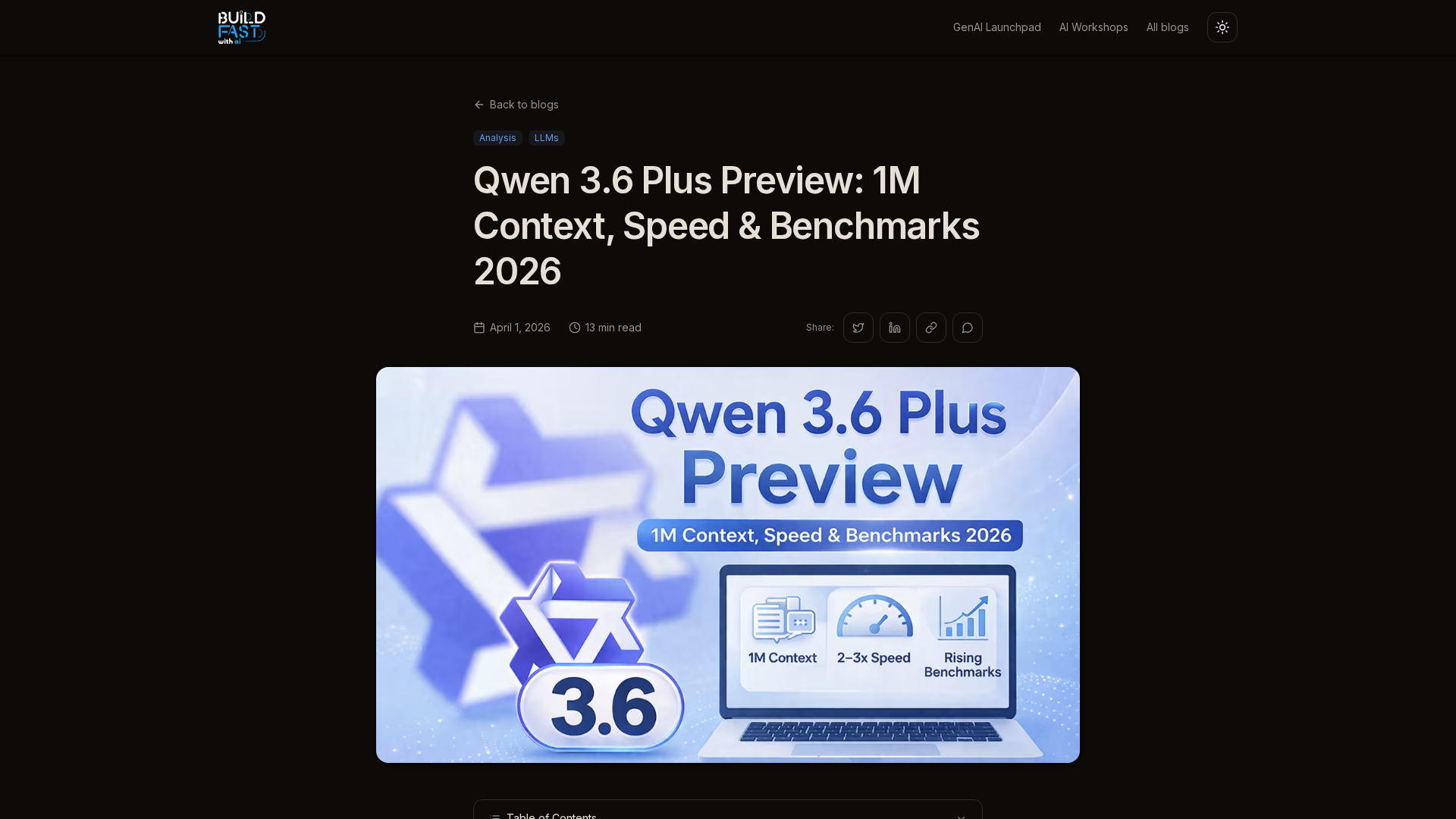
Topic Overview
This topic examines leading large language models—Qwen3.6‑Plus, GPT‑4o and Claude—in the context of coding and complex reasoning, and how they are used across AI code generation tools, code assistants, GenAI test automation and research tooling. In 2026 the field emphasizes models that balance code fluency, multi‑turn reasoning, long‑context handling, and safe/tooled execution rather than raw parameter count alone. Specialized families (e.g., Code Llama, WizardCoder/WizardLM, Seed‑Coder) show that targeted pretraining and instruction tuning remain important for developer workflows. Practically, these LLMs are embedded into products and stacks: GitHub Copilot, Amazon CodeWhisperer/Amazon Q Developer, Replit and Cursor provide IDE/agent integrations for inline completions, chat and autonomous workflows; Qodo focuses on context‑aware code review and automated test generation; EchoComet and Aider emphasize privacy and local inference for on‑device code context; AskCodi routes requests across custom models and providers. This ecosystem creates choices between cloud-hosted, high‑capability models and lighter, local/open alternatives for compliance and latency. Key evaluation axes are code correctness, unit/test generation, multi‑file context, tool use (running linters/tests), and reproducible reasoning for refactors and architecture changes. For teams, the timely considerations in 2026 are: selecting models that integrate with CI and test automation, instrumenting model outputs with verifiable execution, and preferring quality‑first platforms for governance. This comparison helps engineers and researchers understand tradeoffs—model reasoning depth, integration surface, privacy, and tooling—when choosing LLMs and products for production code and complex technical tasks.
Tool Rankings – Top 6

An AI pair programmer that gives code completions, chat help, and autonomous agent workflows across editors, theterminal
Code-specialized Llama family from Meta optimized for code generation, completion, and code-aware natural-language tasks

AI-driven coding assistant (now integrated with/rolling into Amazon Q Developer) that provides inline code suggestions,

AI-first code editor and assistant by Anysphere embedding AI across editor, agents, CLI and web workflows.

AI-powered online IDE and platform to build, host, and ship apps quickly.

Quality-first AI coding platform for context-aware code review, test generation, and SDLC governance across multi-repo,팀
Latest Articles (69)
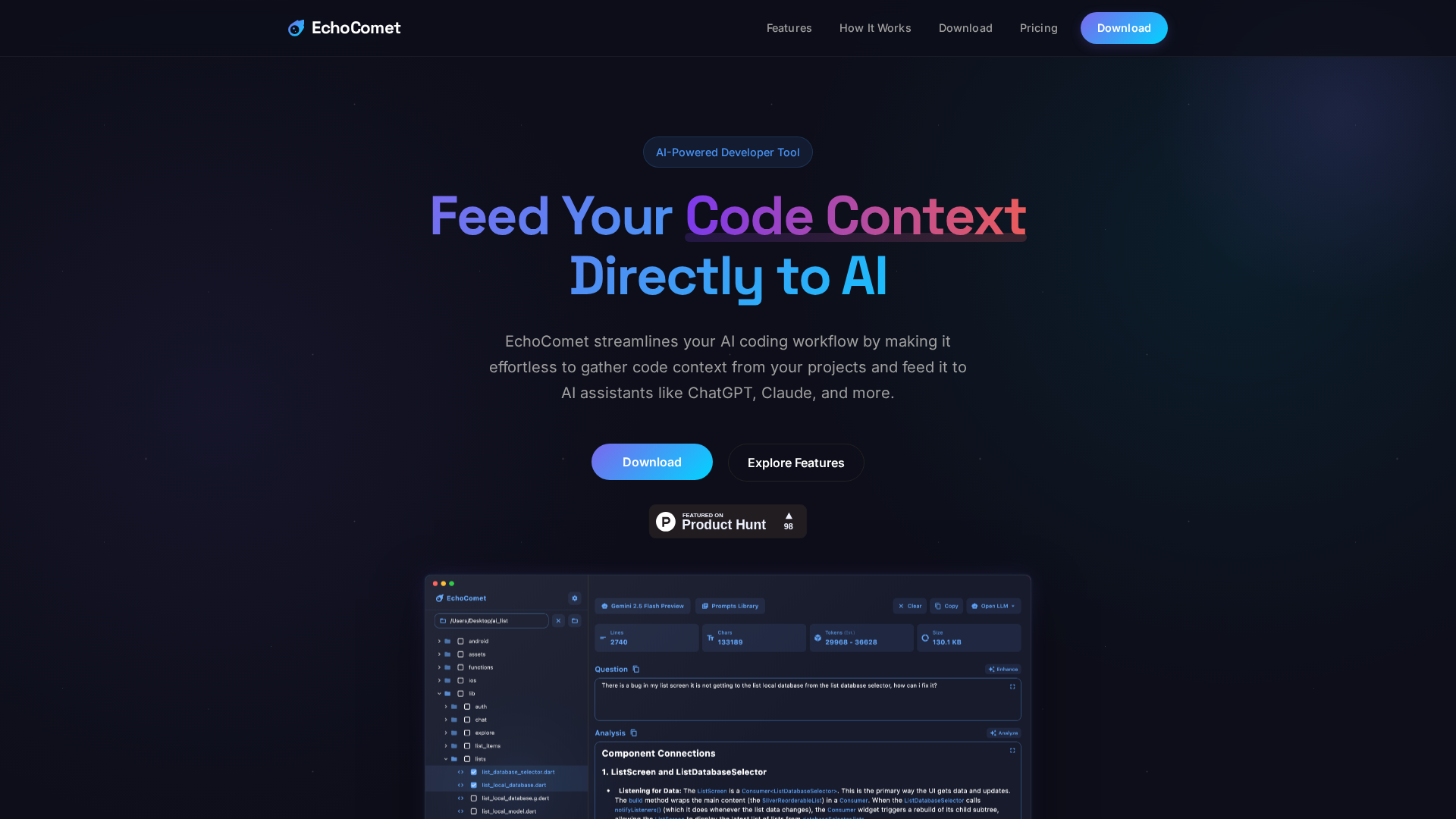
EchoComet lets you gather code context locally and feed it to AI with large-context prompts for smarter, private AI assistance.
EchoComet's contact page provides fast support, license recovery, and device limits for macOS.
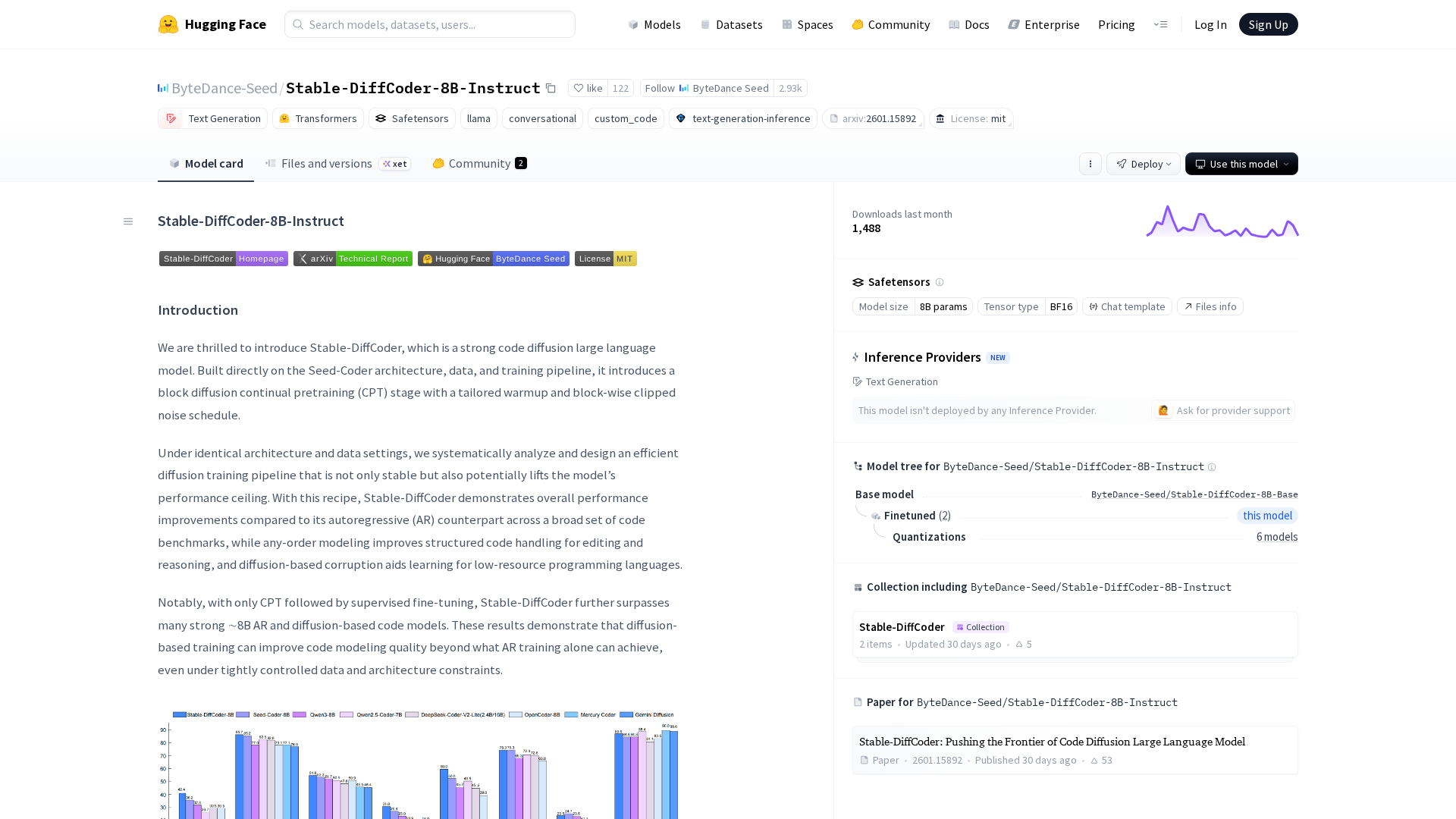
A diffusion-based 8B code model that outperforms autoregressive and DLLM peers across major coding benchmarks.
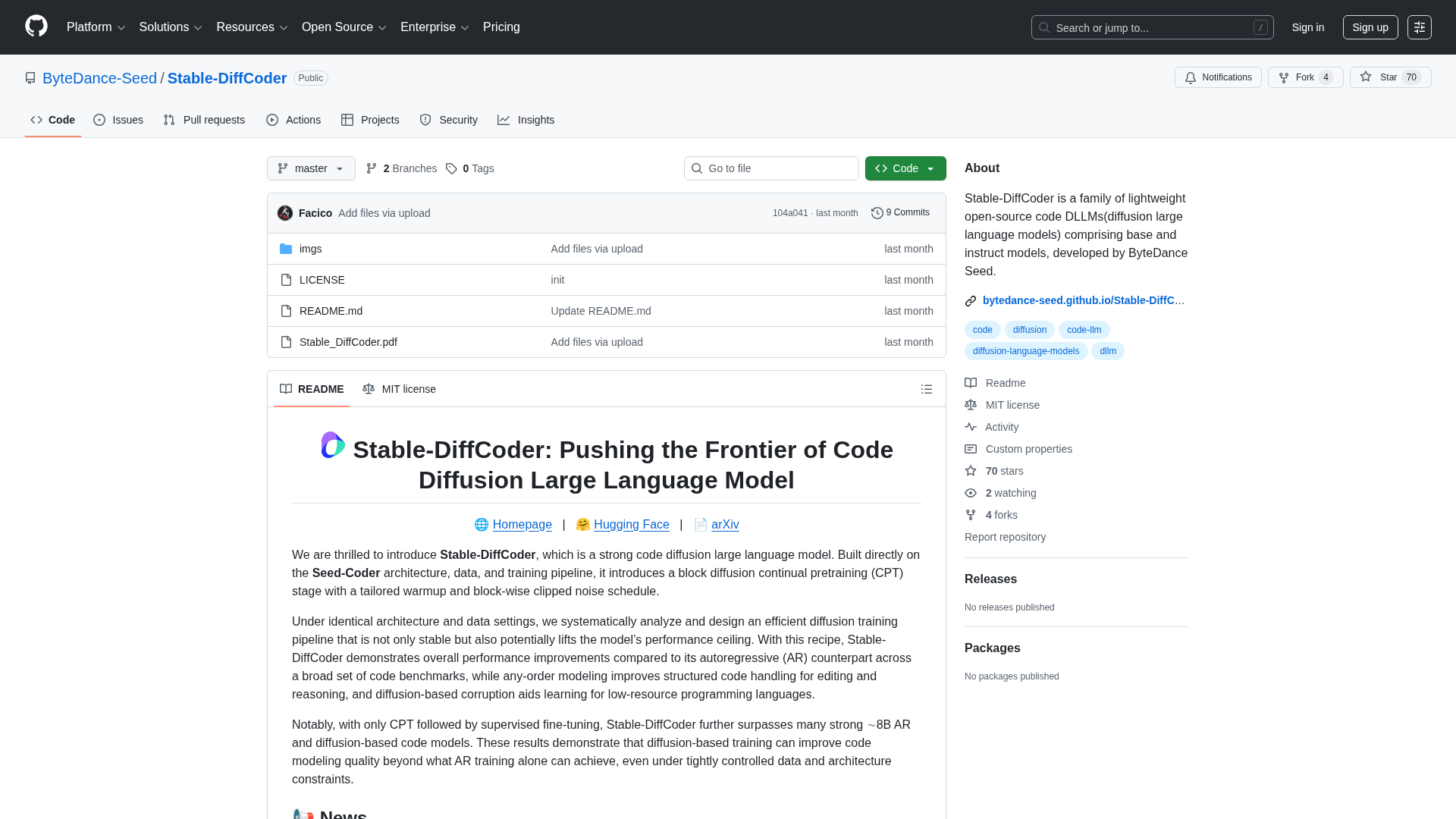
Open-source 8B code diffusion LLMs from ByteDance Seed that outperform autoregressive peers.
A step-by-step guide to building an AI-powered Reliability Guardian that reviews code locally and in CI with Qodo Command.