Topic Overview
This topic compares the evolution and roles of consumer conversational search engines (Perplexity, ChatGPT, Google Bard, Bing AI) and enterprise AI assistants (Microsoft 365 Copilot, IBM watsonx Assistant, Claude family, Cohere and others) as of December 2025. It covers how modern assistants balance web‑grounded answers, citation and retrieval techniques, and integration with enterprise data and workflows. Perplexity emphasizes real‑time, sourced answers and developer APIs for web‑grounded research. ChatGPT, Bard and Bing AI represent generalist conversational interfaces that differ by grounding (browsing, plugins, or search integration), multimodal capabilities, and platform tie‑ins (Edge, Chrome, cloud services). On the enterprise side, Microsoft 365 Copilot embeds assistant capabilities across productivity apps; IBM watsonx Assistant and Kore.ai focus on deployable virtual agents and multi‑agent orchestration with governance and observability; Cohere and Claude provide customizable LLM infrastructure for private models and retrieval‑augmented workflows. Notion, Harvey, PolyAI, Skit.ai and Vellum illustrate adjacent approaches — unified knowledge workspaces, domain‑specific assistants for law, voice‑first contact center agents, and prompt‑driven agent toolkits. Relevance in 2025 stems from broad production deployments: organizations require assistants that can securely access internal data, provide verifiable citations, support compliance and observability, and integrate into app ecosystems. Key trends include retrieval‑augmented generation (RAG), on‑prem/private model options, multi‑agent orchestration, voice and multimodal interfaces, and a stronger focus on governance and explainability. This comparison helps technical buyers and practitioners understand tradeoffs among accuracy, provenance, integration, customization, and governance when choosing conversational search versus enterprise assistant platforms.
Tool Rankings – Top 6
AI-powered answer engine delivering real-time, sourced answers and developer APIs.
AI assistant integrated across Microsoft 365 apps to boost productivity, creativity, and data insights.
Anthropic's Claude family: conversational and developer AI assistants for research, writing, code, and analysis.

Enterprise virtual agents and AI assistants built with watsonx LLMs for no-code and developer-driven automation.

Enterprise-focused LLM platform offering private, customizable models, embeddings, retrieval, and search.
A single, block-based AI-enabled workspace that combines docs, knowledge, databases, automation, and integrations to sup
Latest Articles (106)
A vendor‑agnostic guide to the 14 best AI governance platforms in 2025, with criteria, comparisons, and practical buying guidance.
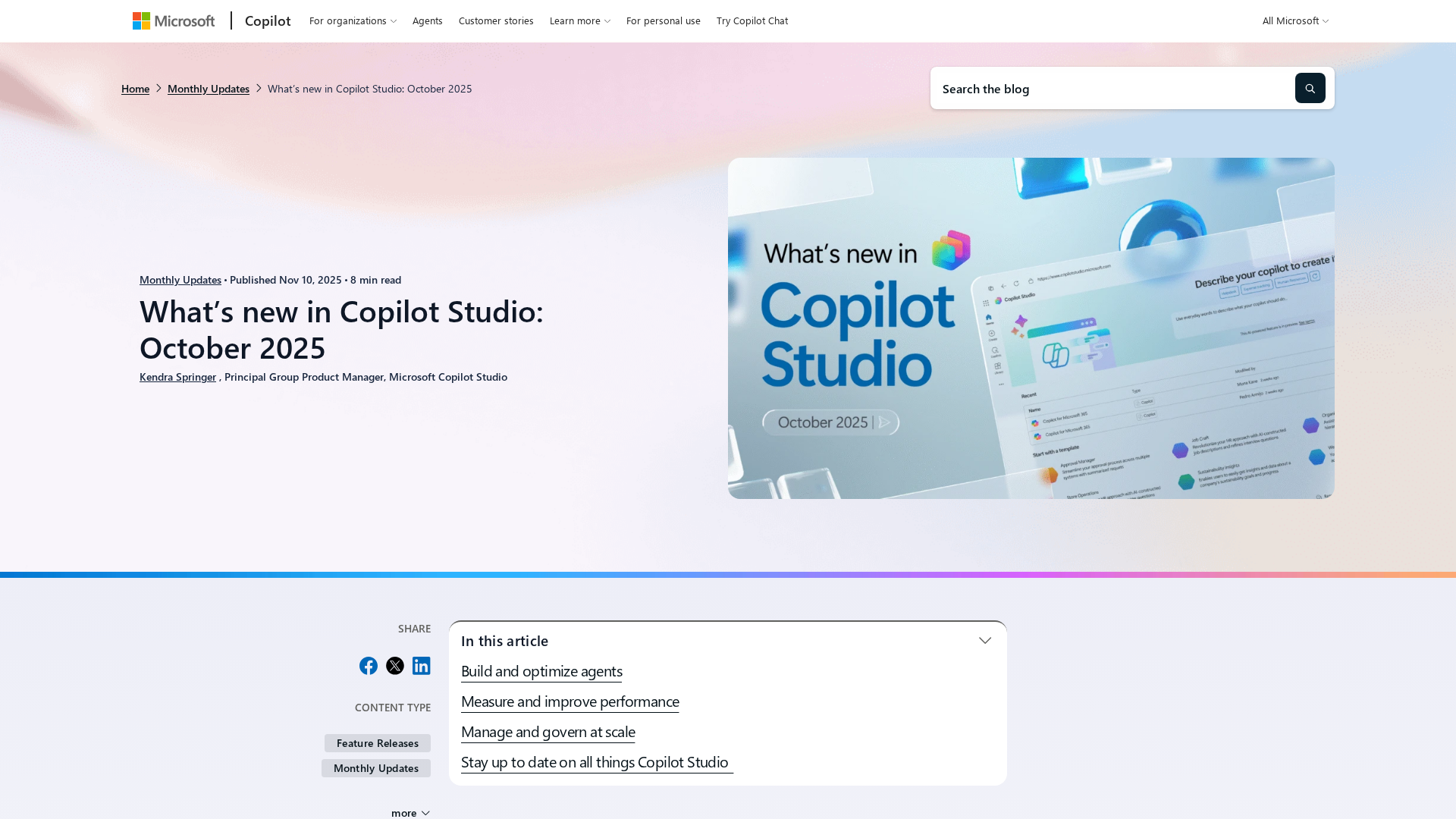
A comprehensive October 2025 roundup of Copilot Studio’s new testing, model, and governance features.
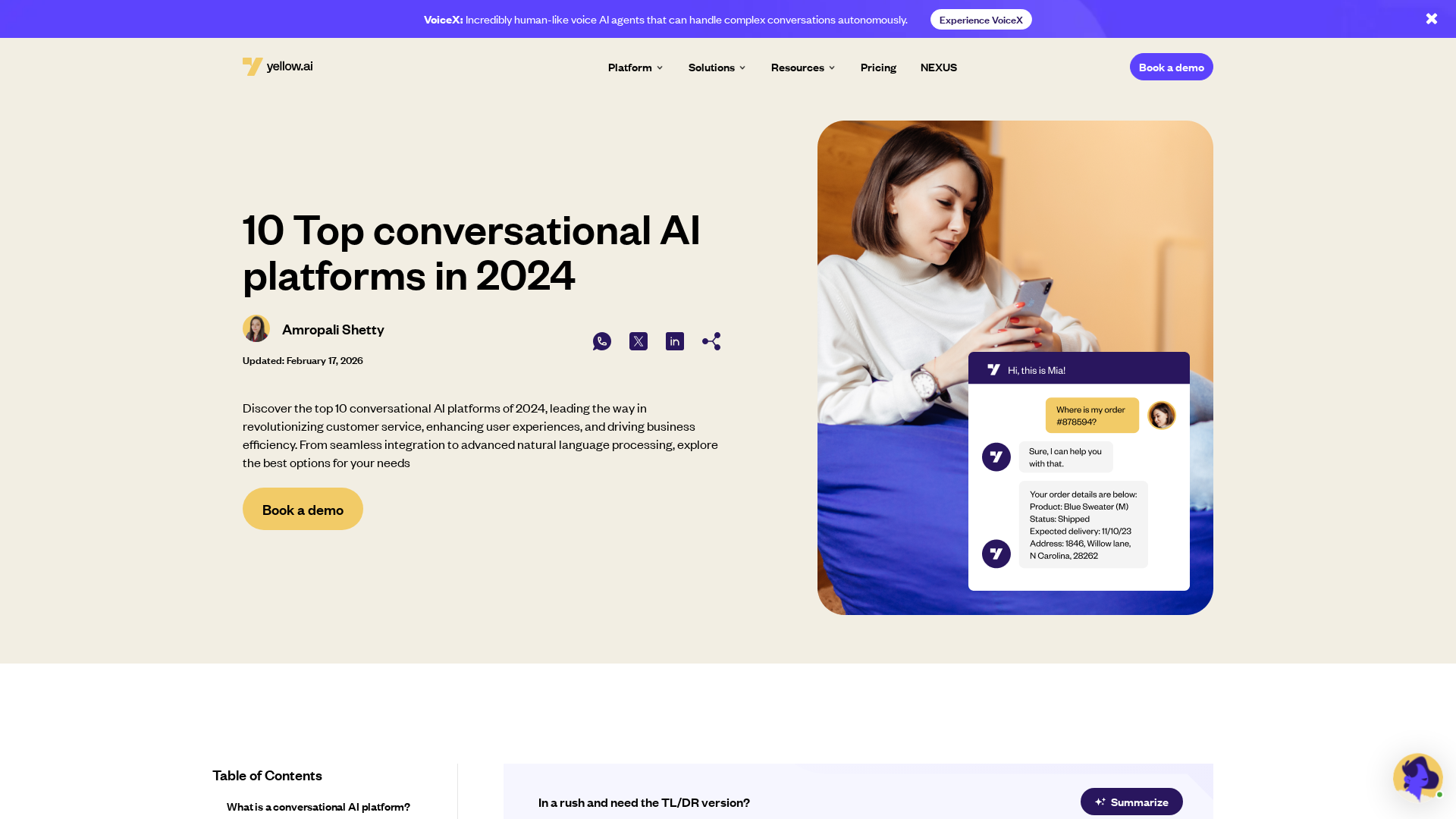
A concise guide to the top 10 conversational AI platforms in 2024, with features, benefits, and use cases.
In-depth look at Gemini 3 Pro benchmarks across reasoning, math, multimodal, and agentic capabilities with implications for building AI agents.

Adobe nears a $19 billion deal to acquire Semrush, expanding its marketing software capabilities, according to WSJ reports.