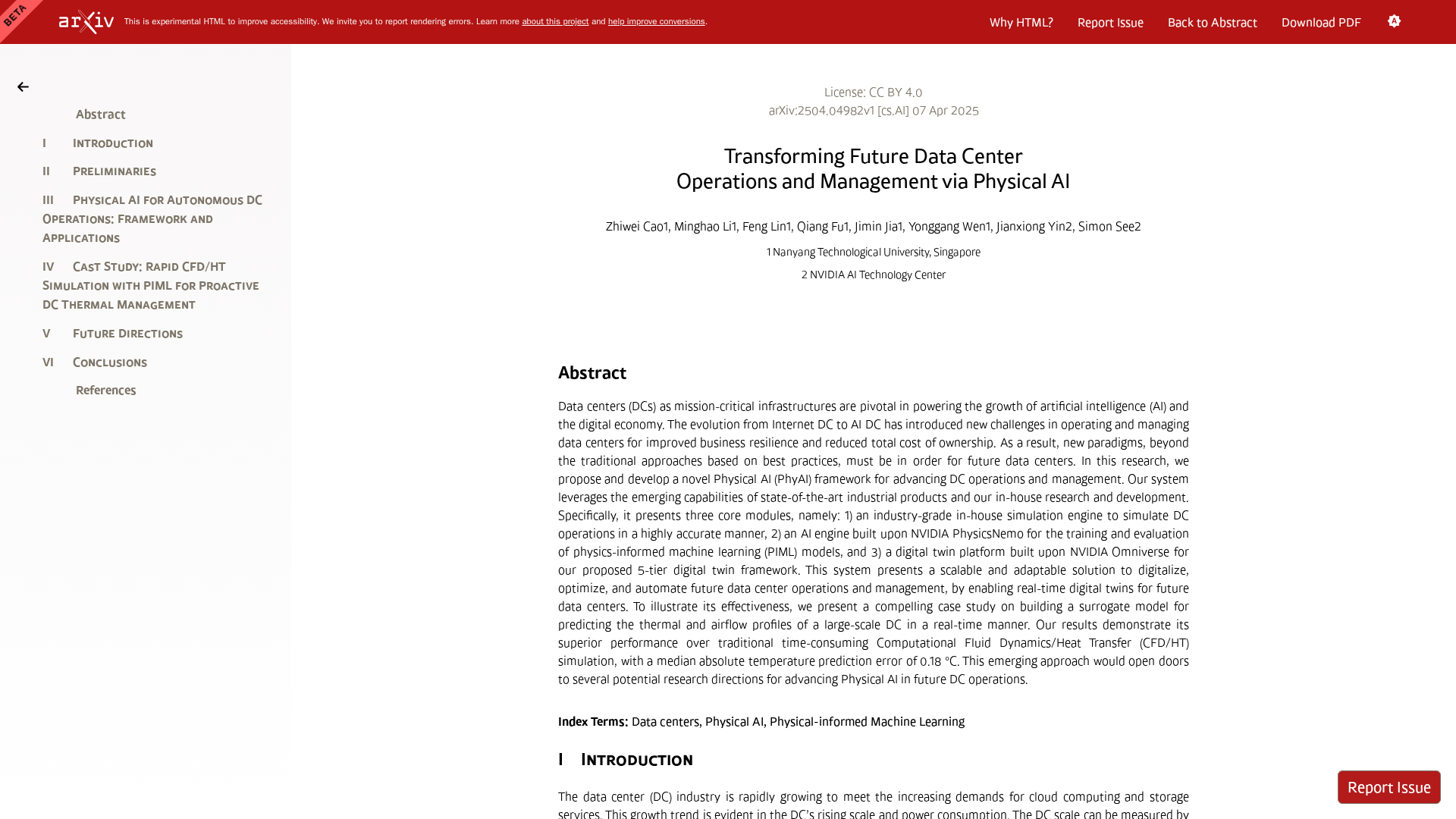
Topic Overview
AI orchestration and digital‑twin platforms bring together agent frameworks, GPU orchestration, data pipelines and 3D simulation to create continuously updated virtual models of physical systems. This topic covers the software layers and integration patterns needed to deploy “physical” AI orchestrators — systems that run agentic workflows inside simulated or real environments, route heavy rendering and model inference to optimal GPUs, and close the loop with instrumentation and retraining pipelines. Relevance in late 2025 stems from three converging trends: widespread adoption of agentic AI for multistep automation, demand for hardware‑agnostic GPU orchestration in hybrid clouds, and increasing use of real‑time 3D models for testing robotics, digital twins and product lifecycle simulations. Practical stacks combine agent engineering (e.g., LangChain for building and testing agents), GPU/resource schedulers (Run:ai, FlexAI) and agent evaluation/orchestration platforms (RagaAI, Lindy). Developer productivity and debugging are accelerated by Agentic Development Environments such as Warp and in‑application automation engines like Adept. Meanwhile, AI data platforms such as OpenPipe collect interactions, support fine‑tuning and host optimized inference so digital twins continually improve. Alternatives to monolithic 3D suites focus on modularity: separate 3D model generation and simulation components from orchestration and data layers so teams can mix open frameworks and managed services. For practitioners, the key considerations are end‑to‑end latency (render + inference), cross‑platform GPU utilization, agent safety and governance, and feedback loops for model updates. This topic helps compare tools and architectures that enable robust, scalable physical AI orchestration and digital‑twin deployments without locking into a single vendor.
Tool Rankings – Top 6

Engineering platform and open-source frameworks to build, test, and deploy reliable AI agents.

Kubernetes-native GPU orchestration and optimization platform that pools GPUs across on‑prem, cloud and multi‑cloud to提高
%201.png)
Software-defined, hardware-agnostic AI infrastructure platform that routes workloads to optimal compute across cloud and

The All‑in‑One Platform to Evaluate, Debug, and Scale AI Agents

No-code/low-code AI agent platform to build, deploy, and govern autonomous AI agents.

Agentic Development Environment (ADE) — a modern terminal + IDE with built-in AI agents to accelerate developer flows.
Latest Articles (95)
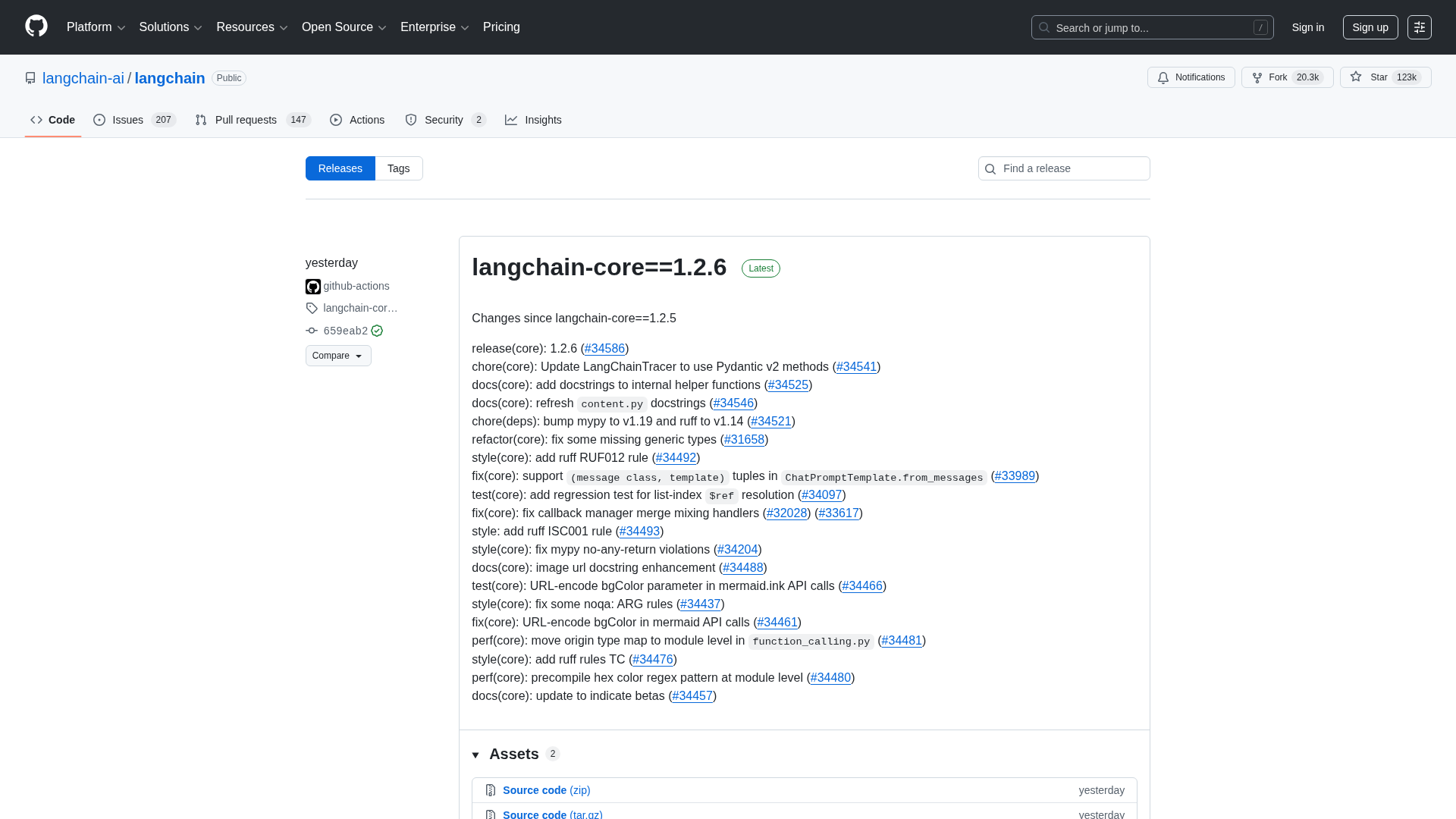
A comprehensive LangChain releases roundup detailing Core 1.2.6 and interconnected updates across XAI, OpenAI, Classic, and tests.

Cannot access the article content due to an access-denied error, preventing summarization.

A deep dive into Akash Network, the decentralized cloud marketplace challenging traditional cloud models.

Analyzes data centers' AI-driven demand, energy and water needs, policy barriers, and routes to equitable digital infrastructure.

Nokia unveils Autonomous Networks Fabric to accelerate AI-powered, zero-touch network automation.