Topic Overview
This topic covers platforms and toolchains that use AI, decentralized infrastructure, and emerging cryptography to convert real‑world assets (RWA) — loans, real estate, funds, receivables — into tokenized on‑chain instruments and to automate issuance, compliance, and lifecycle operations. As of 2026, institutions are moving from pilots to production token issuance, increasing demand for integrated stacks that handle legal document drafting, investor onboarding, valuation, oracle feeds, and smart‑contract generation while meeting auditability and long‑term security requirements. Key components include: LLMs and multimodal models (Google Gemini, Anthropic’s Claude) for drafting prospectuses, automated disclosures, and complex valuation narratives; enterprise assistants (IBM watsonx Assistant, Microsoft 365 Copilot) to orchestrate KYC/AML workflows, investor communications, and internal approvals; agent platforms (Relevance AI, Tektonic AI) to run multi‑agent issuance pipelines that combine neural reasoning with symbolic rules for regulatory logic; privacy‑preserving developer tools (EchoComet) to keep sensitive code and data on‑device; and AI marketplaces and data platforms to source domain models, oracle data, and embeddings for continuous pricing and risk models. Post‑quantum blockchain tools and decentralized AI infrastructure are essential for long‑lived asset security and for hosting verifiable model inference oracles. Practical integrations emphasize hybrid on‑chain/off‑chain patterns, verifiable compute (MPC/Tee), explainability, and auditable logs to satisfy regulators and custodians. While these stacks reduce issuance friction and enable automation, they raise governance, model‑risk, and cryptographic‑lifecycle questions that organizations must address through standards, operational controls, and continuous auditability.
Tool Rankings – Top 6

Enterprise virtual agents and AI assistants built with watsonx LLMs for no-code and developer-driven automation.

Google’s multimodal family of generative AI models and APIs for developers and enterprises.
AI assistant integrated across Microsoft 365 apps to boost productivity, creativity, and data insights.
Anthropic's Claude family: conversational and developer AI assistants for research, writing, code, and analysis.

AI agents and a service layer blending neural and symbolic reasoning to automate enterprise processes; flagship PrepMe:
Feed your code context directly to AI
Latest Articles (105)
A vendor‑agnostic guide to the 14 best AI governance platforms in 2025, with criteria, comparisons, and practical buying guidance.
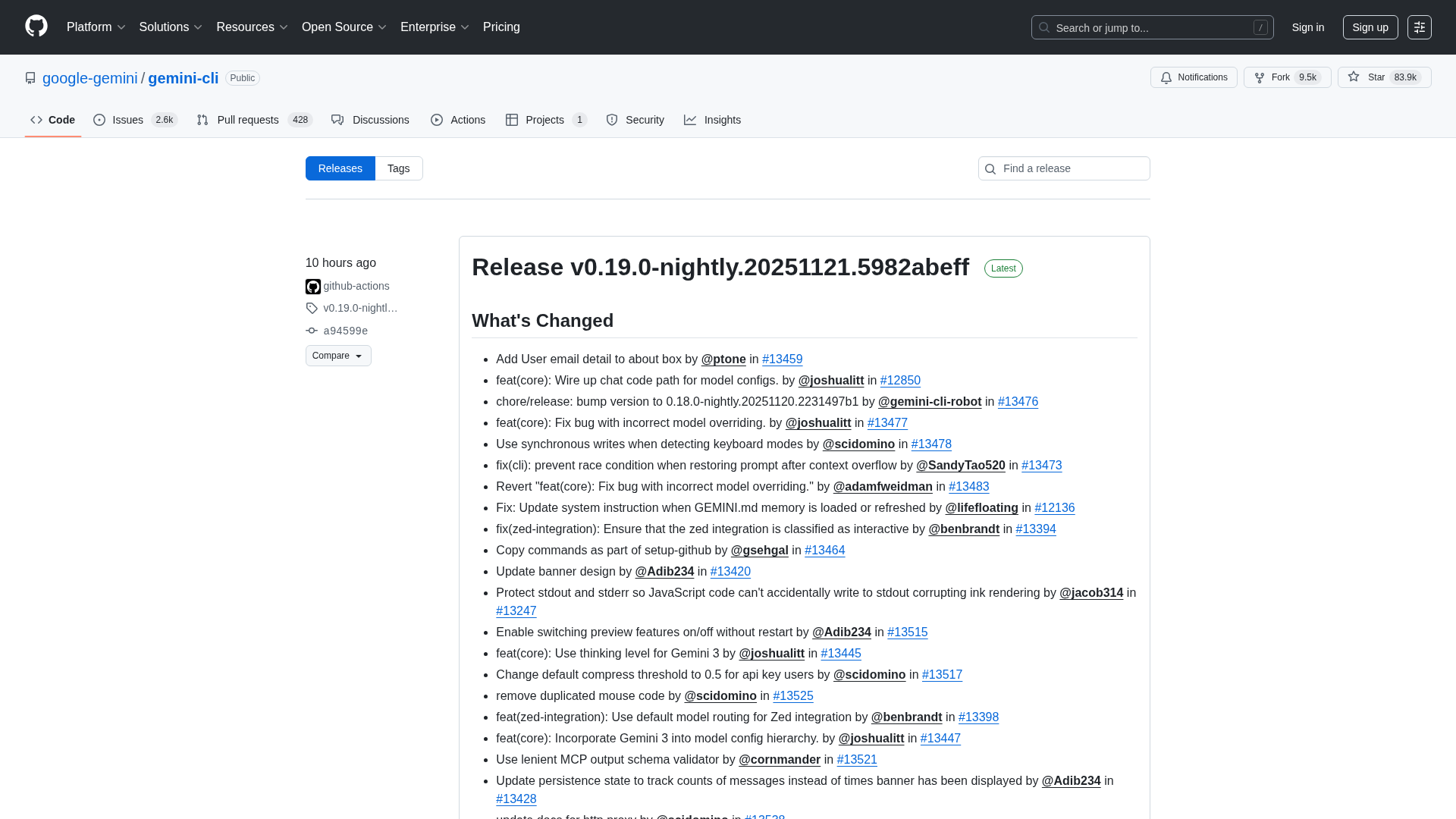
Overview of the Gemini CLI v0.36.0-preview release series, highlighting architectural, CLI, and UI changelogs across multiple pre-release versions.
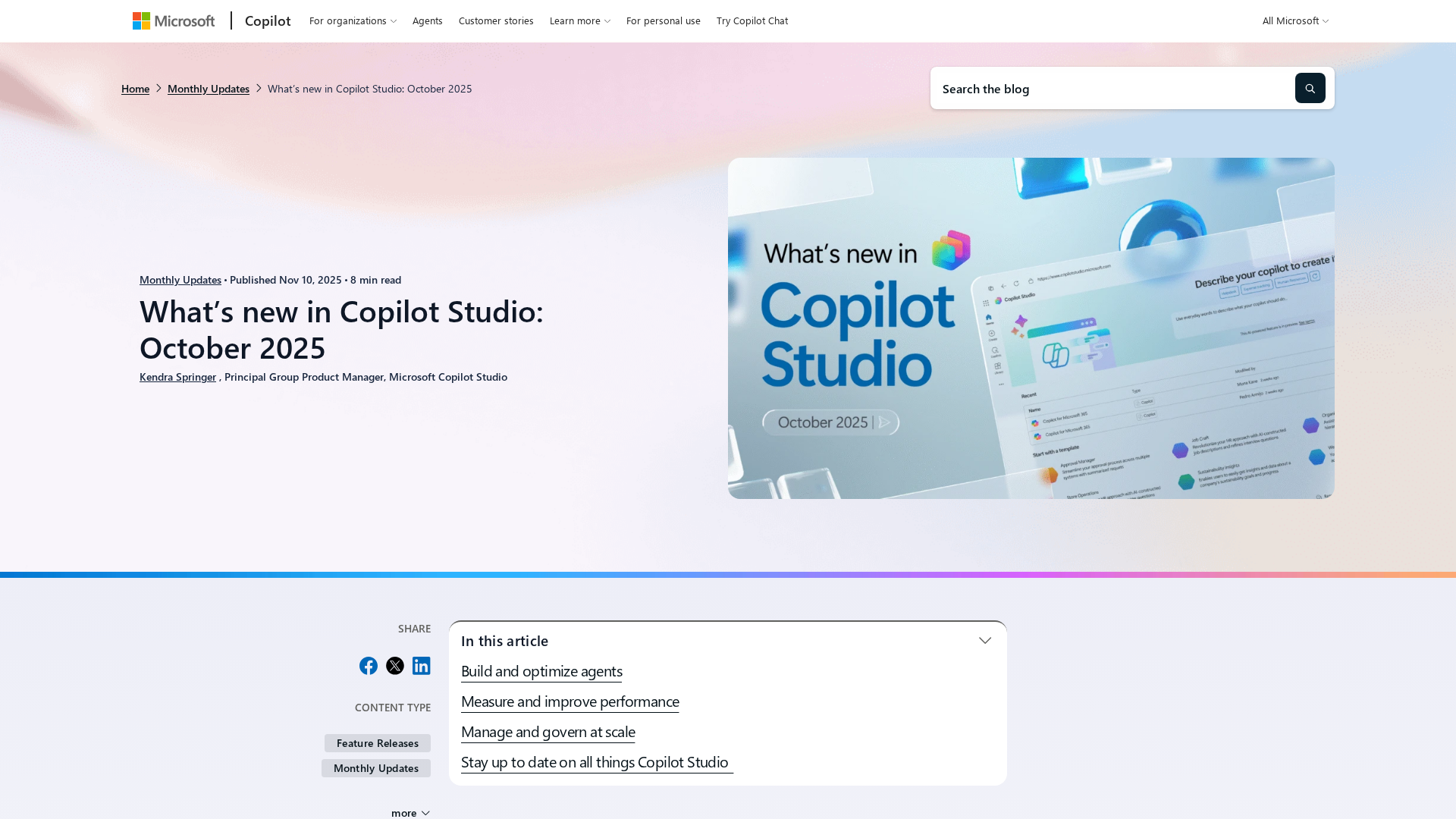
A comprehensive October 2025 roundup of Copilot Studio’s new testing, model, and governance features.
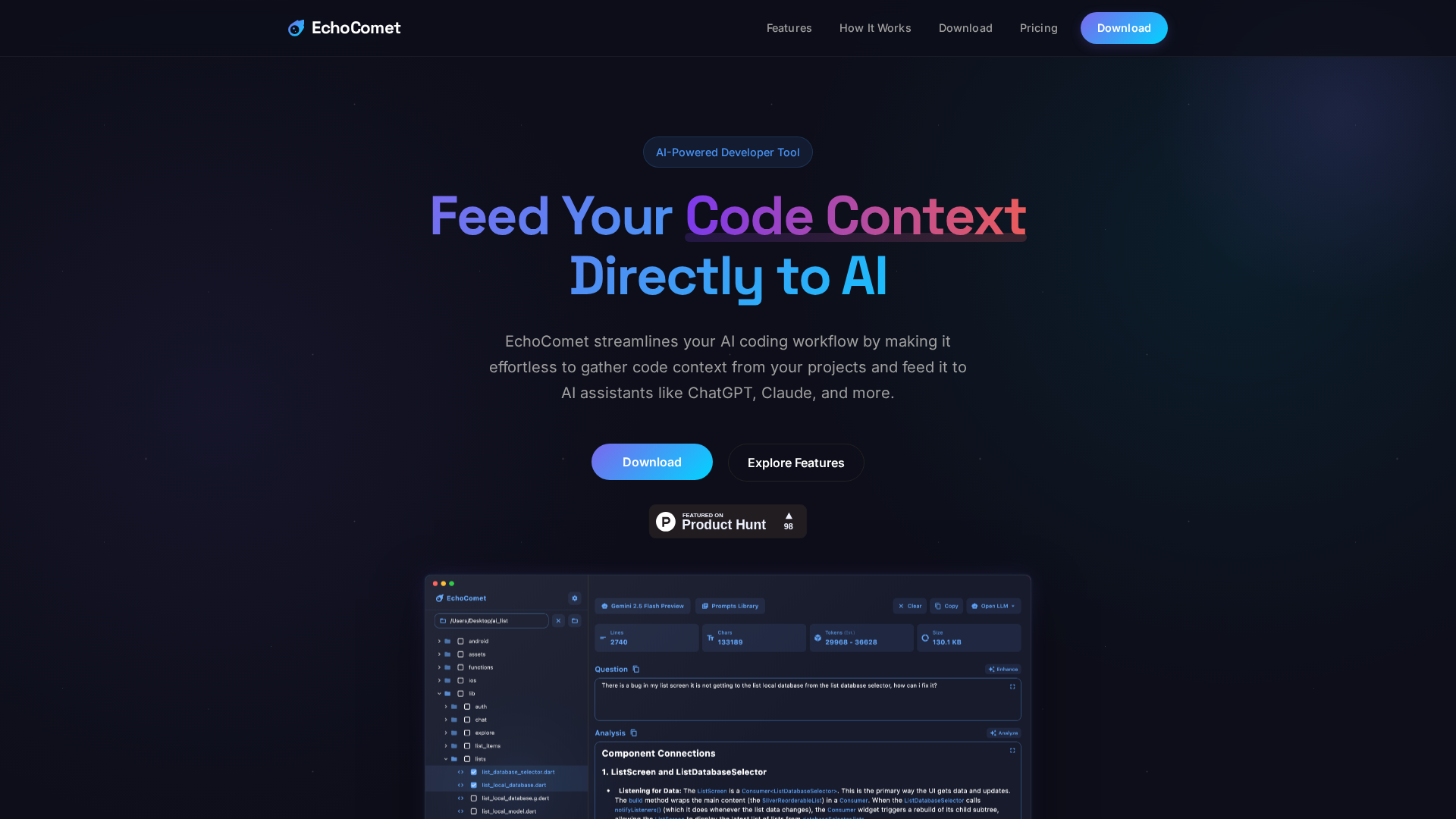
EchoComet lets you gather code context locally and feed it to AI with large-context prompts for smarter, private AI assistance.
EchoComet's contact page provides fast support, license recovery, and device limits for macOS.