
Topic Overview
AI-powered dating and personalization tools combine large language models, embeddings, and autonomous-agent platforms to help users discover matches, craft messages, and manage conversations while delivering individualized recommendations. As of 2026, consumer features like Bumble’s “Bee” sit alongside enterprise-grade building blocks: Cohere and Vertex AI for private, customizable LLMs, embeddings and retrieval; no-code/low-code agent platforms (Lindy, Relevance AI, Nelly) for composing multi-agent workflows; and assistant frameworks (IBM watsonx Assistant, PolyAI) for conversational and voice interactions. Notion and Crescendo.ai illustrate adjacent use cases—knowledge-driven personalization and hybrid human/AI escalation for safety and quality. This topic is timely because dating apps have moved from template-based matches to real-time, contextual personalization—driven by retrieval-augmented generation, fine-tuning, and multi-agent orchestration. Practical applications include profile optimization, conversation starters, intent-aware follow-ups, semantic match-ranking, and moderation/safety automation. Key operational requirements are privacy-preserving deployments (on-prem or private LLMs), transparent consent and data-minimization, bias mitigation, and human-in-the-loop governance for abuse prevention. For product teams and evaluators, the core tool categories to consider are: model platforms (Cohere, Vertex AI) for hosting/customization and embeddings; agent builders (Lindy, Relevance AI, Nelly) for orchestrating task-specific assistants; conversational engines (IBM watsonx, PolyAI) for chat and voice; and hybrid service platforms (Crescendo.ai) for guaranteed-resolution workflows. Integration patterns emphasize RAG, embedding-based search, safety filters, and audit logging. Evaluations should weigh personalization quality against safety, privacy, regulatory compliance, and user control to avoid regressions in trust and platform integrity.
Tool Rankings – Top 6

Enterprise-focused LLM platform offering private, customizable models, embeddings, retrieval, and search.

Unified, fully-managed Google Cloud platform for building, training, deploying, and monitoring ML and GenAI models.

No-code/low-code AI agent platform to build, deploy, and govern autonomous AI agents.

Enterprise-grade no-code/low-code platform to build, deploy, and manage autonomous AI agents and workflows.
Create your own team of AI agents

Enterprise virtual agents and AI assistants built with watsonx LLMs for no-code and developer-driven automation.
Latest Articles (79)
A vendor‑agnostic guide to the 14 best AI governance platforms in 2025, with criteria, comparisons, and practical buying guidance.

Adobe nears a $19 billion deal to acquire Semrush, expanding its marketing software capabilities, according to WSJ reports.
Wolters Kluwer expands UpToDate Expert AI with UpToDate Lexidrug to bolster drug information and medication decision support.
Google says Gmail data isn’t used to train AI and explains opt-out and smart-feature controls.
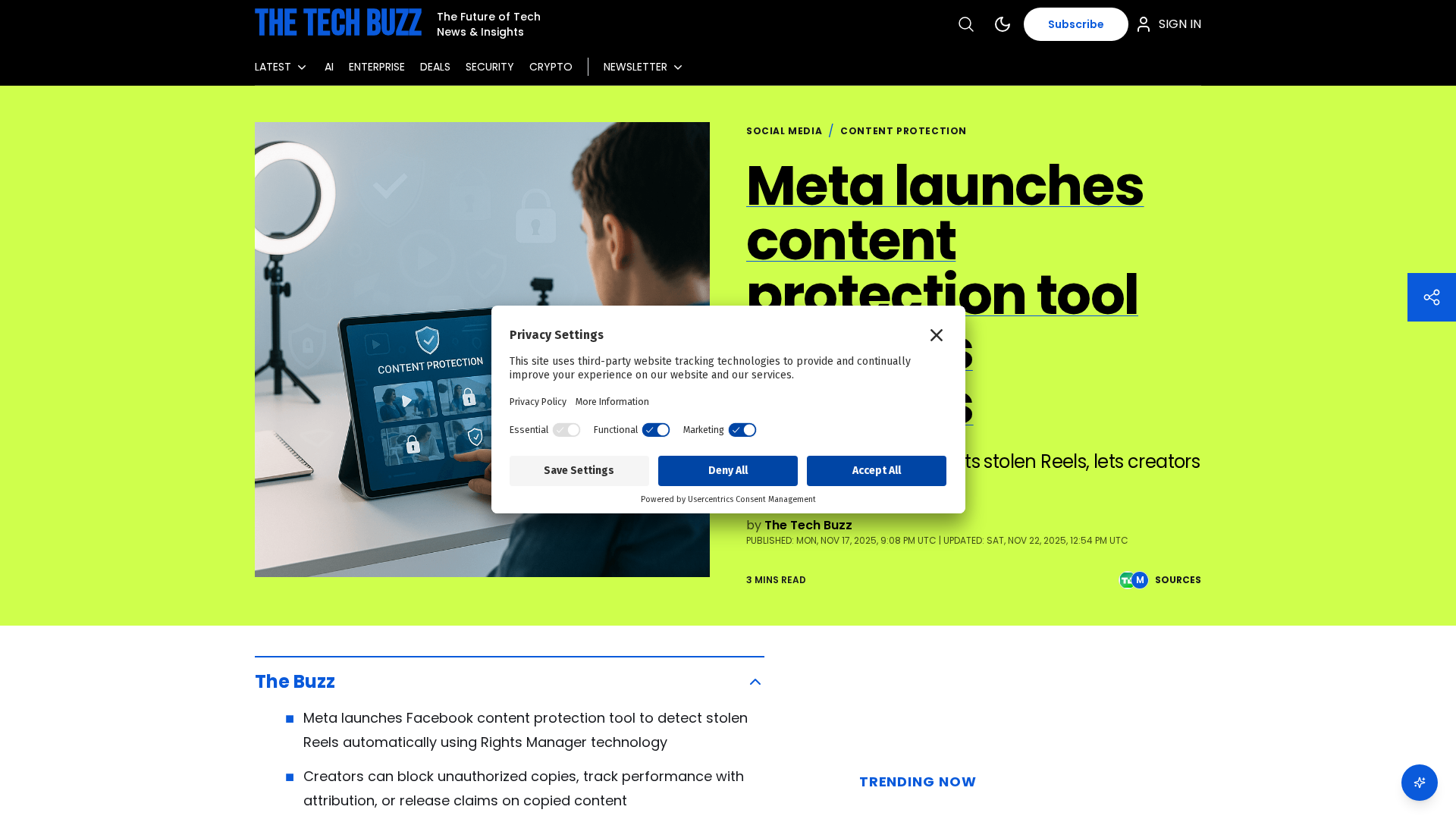
Meta rolls out Facebook Content Protection to detect stolen Reels and give creators options to block, track, or claim across Facebook and Instagram.