Topic Overview
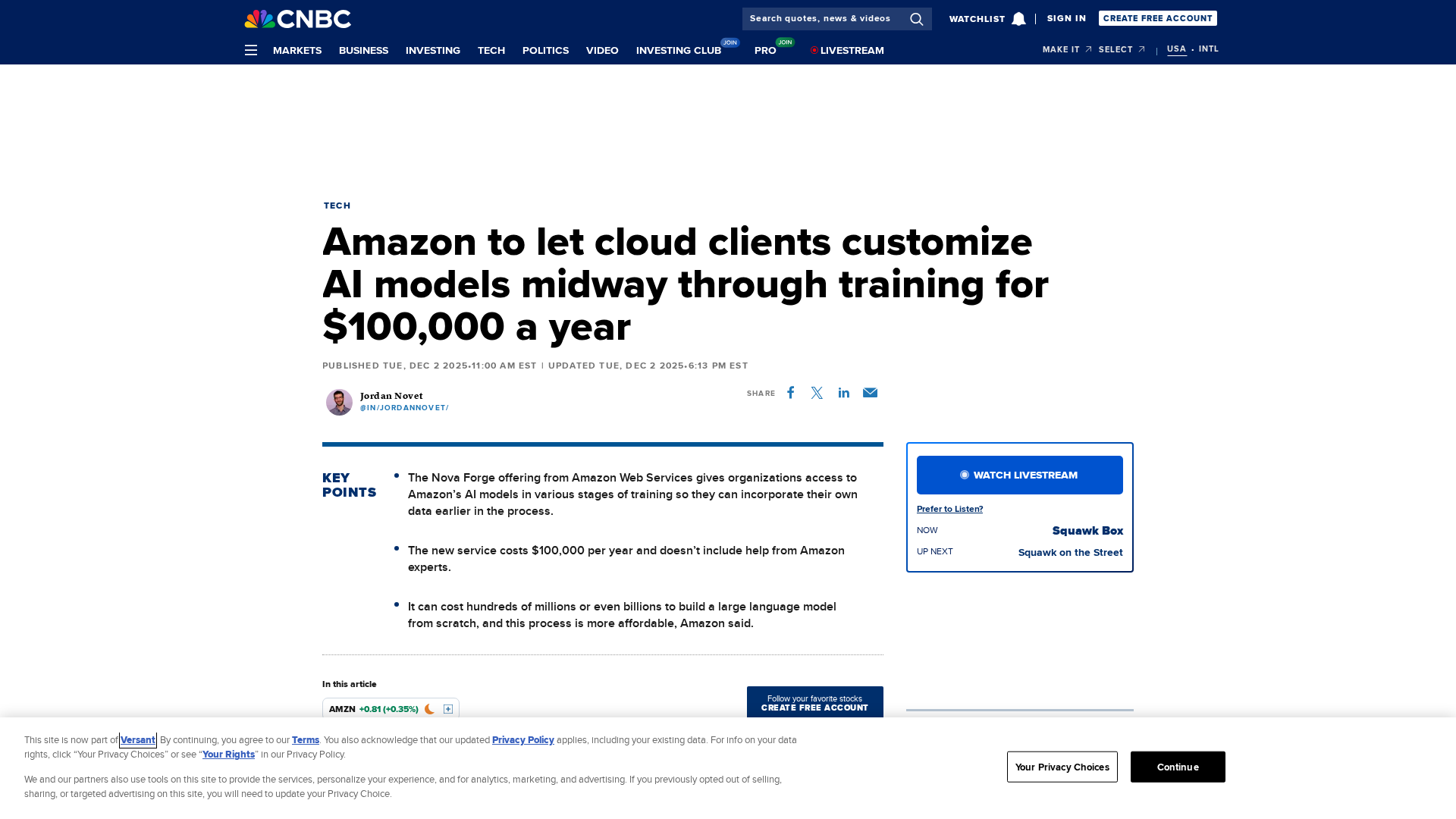
This topic compares Amazon Nova — Amazon’s family of foundation models offered through AWS-managed services — with the ecosystem of developer-focused tools and platforms used to build custom AI applications. It frames the trade-offs between using a managed model offering for fast deployment and the modular stacks that teams assemble for retrieval-augmented generation (RAG), agentic applications, and private code-assistants. Relevance in late 2025 stems from two converging trends: increased demand for production-grade agent and RAG workflows, and tighter enterprise requirements for data governance, self-hosting, and compute optimization. Key components covered include agent frameworks (LangChain for building, testing and deploying stateful AI agents), document- and RAG-focused platforms (LlamaIndex for turning unstructured content into document agents), and GPU orchestration (Run:ai for pooling and optimizing GPUs across on-prem and multi-cloud environments). For developer productivity and code generation, the landscape spans open models and extensions such as CodeGeeX, enterprise-focused private deployments like Tabnine, and integrated editor/agent experiences like Cursor. Enterprise assistant platforms such as IBM watsonx Assistant appear alongside shifts in vendor consolidation (for example, Shape AI’s June 2025 acquisition and subsequent product wind-down). The overview highlights practical decision factors: integration speed and managed scaling with Amazon Nova versus customization, data locality, and governance offered by open frameworks and self-hosted code assistants; infrastructure costs and GPU utilization; and the importance of tooling for evaluation, observability, and multi-agent orchestration. This comparison helps engineering and procurement teams choose an approach consistent with security, cost, and developer velocity priorities.
Tool Rankings – Top 6

Engineering platform and open-source frameworks to build, test, and deploy reliable AI agents.

Developer-focused platform to build AI document agents, orchestrate workflows, and scale RAG across enterprises.

Kubernetes-native GPU orchestration and optimization platform that pools GPUs across on‑prem, cloud and multi‑cloud to提高
Israeli startup acquired by Cyera in June 2025; original product reportedly closed and website unavailable.
AI-based coding assistant for code generation and completion (open-source model and VS Code extension).

Enterprise-focused AI coding assistant emphasizing private/self-hosted deployments, governance, and context-aware code.