Topic Overview
Industrial digital twins and plant AI platforms combine real‑time OT data, 3D simulation, and AI agents to model, monitor, and automate manufacturing and processing plants. This topic covers end‑to‑end stacks that fuse AI data platforms (cleaning, curation, observability), AI automation platforms (LLM/agent orchestration and no‑code assistants), and 3D model generation and simulation tools used to build actionable virtual plants. As of early 2026, adoption is driven by demands for operational resilience, energy efficiency, and faster root‑cause analysis. Key trends include hybrid on‑prem/cloud deployments to protect sensitive process data, GPU‑accelerated simulation for high‑fidelity 3D twins, and multimodal models that ingest sensor streams, CAD assets, and manuals. Data curation and governance have become central: platforms that turn raw logs and PDFs into model‑ready datasets are prerequisites for reliable plant AI. Representative tooling spans multiple layers: DatologyAI and similar data‑curation services prepare training data; PDF.ai and diagram tools like Fluig convert documentation into searchable, structured knowledge; IBM watsonx Assistant and MindStudio enable enterprise virtual agents and no‑code automation for operators; LangChain and PolyAI support developer‑driven agent orchestration and voice‑first interfaces; Together AI supplies GPU training/inference infrastructure; JetBrains AI Assistant boosts developer productivity during integration. 3D generation and simulation stacks (including NVIDIA’s real‑time tools and rival offerings) underpin visualization, what‑if simulation and closed‑loop testing. Putting these elements together yields plant AI that supports predictive maintenance, SOP automation, and scenario testing, but success depends on disciplined data pipelines, model validation against plant physics, latency‑aware architectures, and clear governance to manage risk and ensure operational safety.
Tool Rankings – Top 6

Enterprise virtual agents and AI assistants built with watsonx LLMs for no-code and developer-driven automation.

An open-source framework and platform to build, observe, and deploy reliable AI agents.

A full-stack AI acceleration cloud for fast inference, fine-tuning, and scalable GPU training.

No-code/low-code visual platform to design, test, deploy, and operate AI agents rapidly, with enterprise controls and a
In‑IDE AI copilot for context-aware code generation, explanations, and refactorings.

Voice-first conversational AI for enterprise contact centers, delivering lifelike multilingual agents across voice, chat
Latest Articles (79)
A vendor‑agnostic guide to the 14 best AI governance platforms in 2025, with criteria, comparisons, and practical buying guidance.

Baseten launches an AI training platform to compete with hyperscalers, promising simpler, more transparent ML workflows.
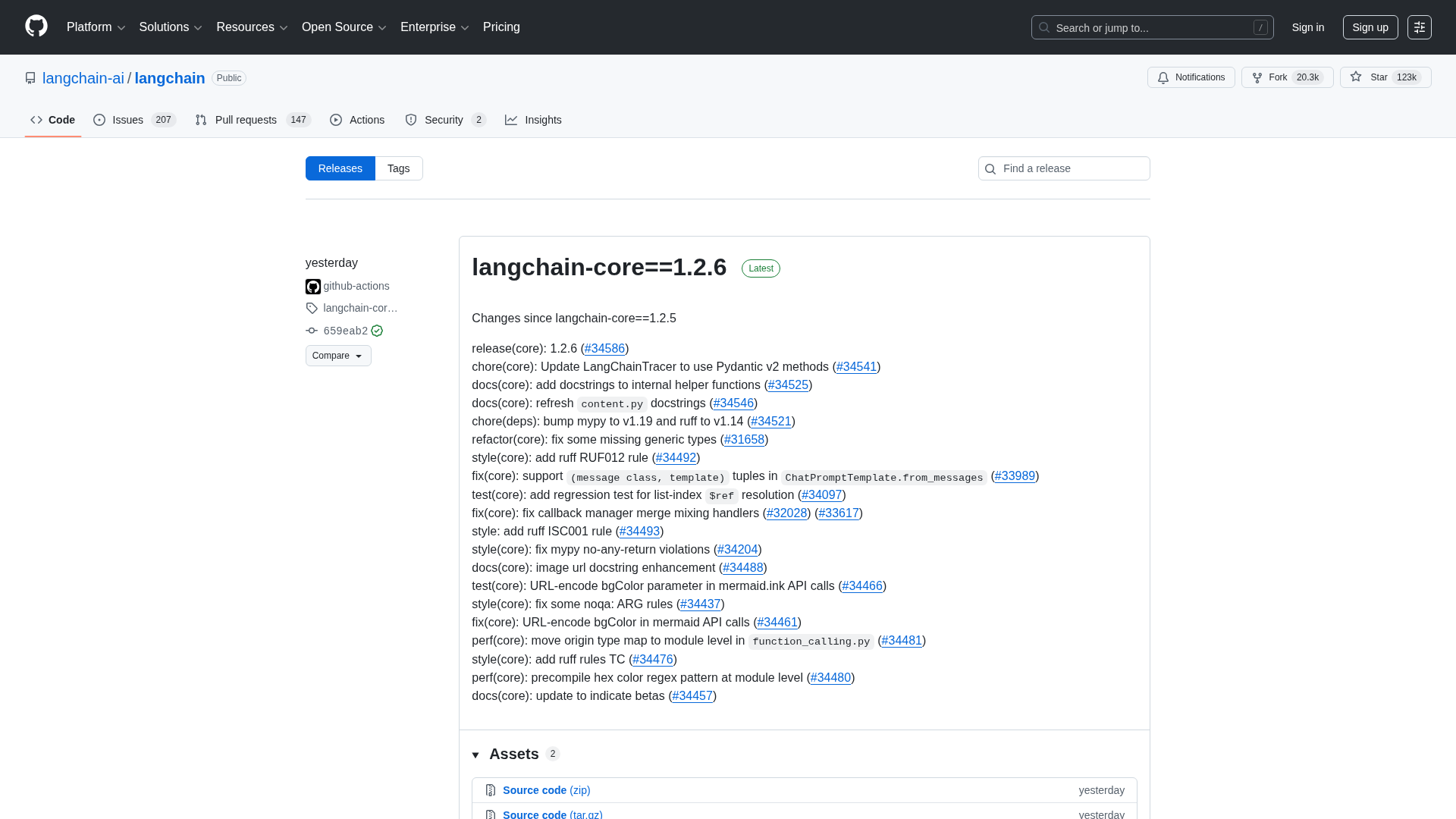
A comprehensive LangChain releases roundup detailing Core 1.2.6 and interconnected updates across XAI, OpenAI, Classic, and tests.
A reproducible bug where LangGraph with Gemini ignores tool results when a PDF is provided, even though the tool call succeeds.
A CLI tool to pull LangSmith traces and threads directly into your terminal for fast debugging and automation.