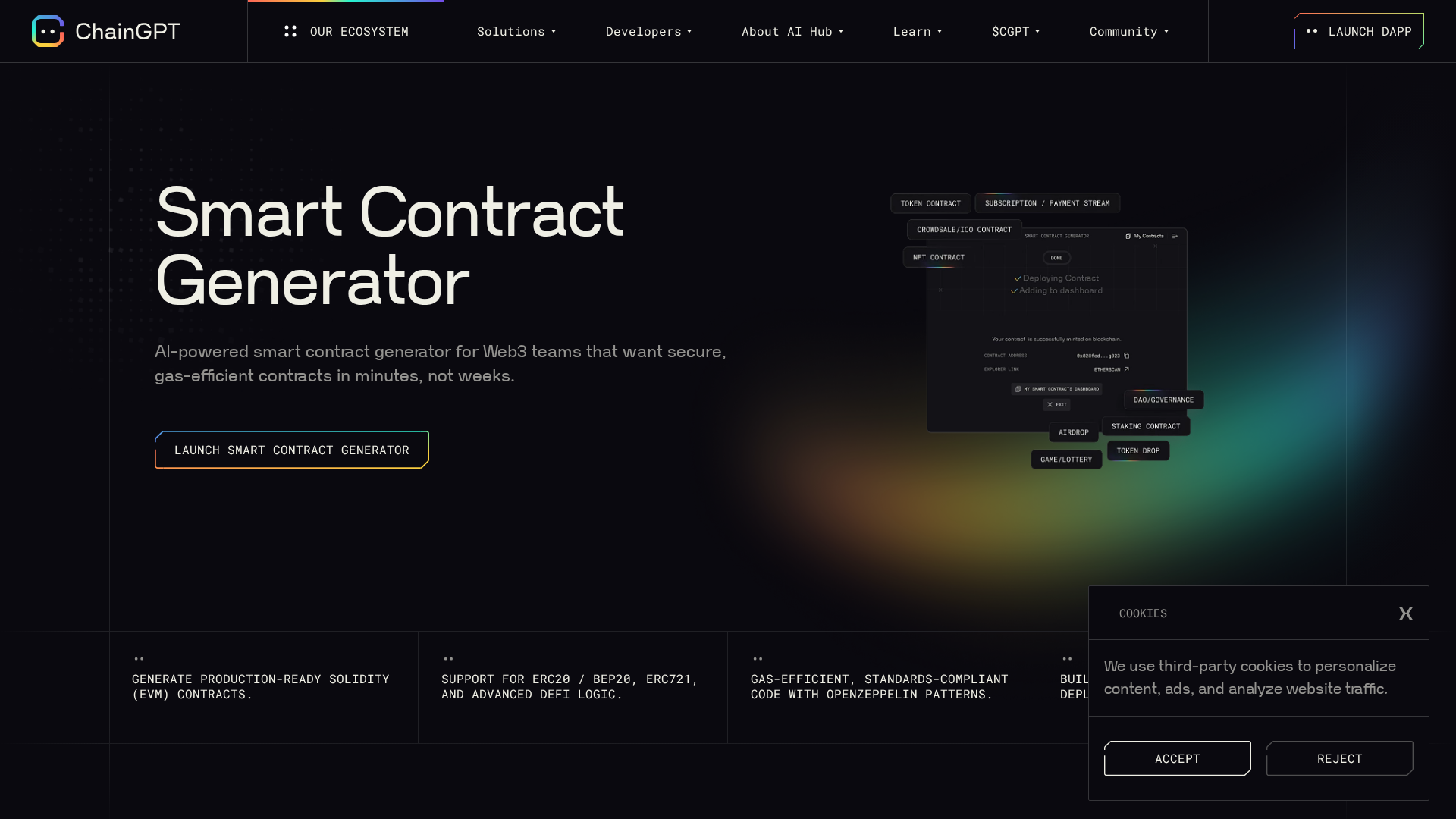
Topic Overview
Natural‑language Web3 app builders (NL2Web3) let users describe decentralized applications in plain English and translate those descriptions into code, smart contracts, UIs, and deployment scripts by composing large language models, agent orchestration, and low‑code tooling. This topic covers systems such as Sonic Labs Spawn and third‑party NL2Web3 platforms that sit at the intersection of AI agent marketplaces, agent frameworks, and low‑code workflow platforms. These builders combine components: agent frameworks (e.g., LangChain) provide the scaffolding for multi‑step reasoning and tool use; developer assistants and pair‑programmers (GitHub Copilot, Aider, Windsurf/Cascade) accelerate code generation and iterative debugging; web‑native IDEs with hosting and agents (Replit) and no‑code/autonomous agent platforms (AgentGPT, AutoGPT) simplify testing and deployment; and code models (StarCoder, CodeGeeX) and enterprise copilots (Tabnine) supply the underlying generation capabilities. Together they enable faster prototyping of contracts, frontends, RPC integrations, and deployment pipelines while exposing new risks and engineering tradeoffs. As of 2026, NL2Web3 is timely because mature agent orchestration, cheaper model inference, and improved code models have lowered the barrier to end‑to‑end dApp synthesis. Key considerations include on‑chain safety (formal verification, testnets), wallet and key management, deterministic transaction generation, gas and cross‑chain orchestration, and governance/permissioning of autogenerated code. Practical adoption tends to pair NL interfaces with human review, CI/CD, and observability. Evaluating NL2Web3 platforms therefore requires assessing their agent framework integrations, model provenance, security controls, deployment pipelines, and marketplace of reusable agents/templates.
Tool Rankings – Top 6

An open-source framework and platform to build, observe, and deploy reliable AI agents.

An AI pair programmer that gives code completions, chat help, and autonomous agent workflows across editors, theterminal

AI-powered online IDE and platform to build, host, and ship apps quickly.

A browser-based platform to create and deploy autonomous AI agents with simple goals.
Platform to build, deploy and run autonomous AI agents and automation workflows (self-hosted or cloud-hosted).

AI-native IDE and agentic coding platform (Windsurf Editor) with Cascade agents, live previews, and multi-model support.
Latest Articles (50)
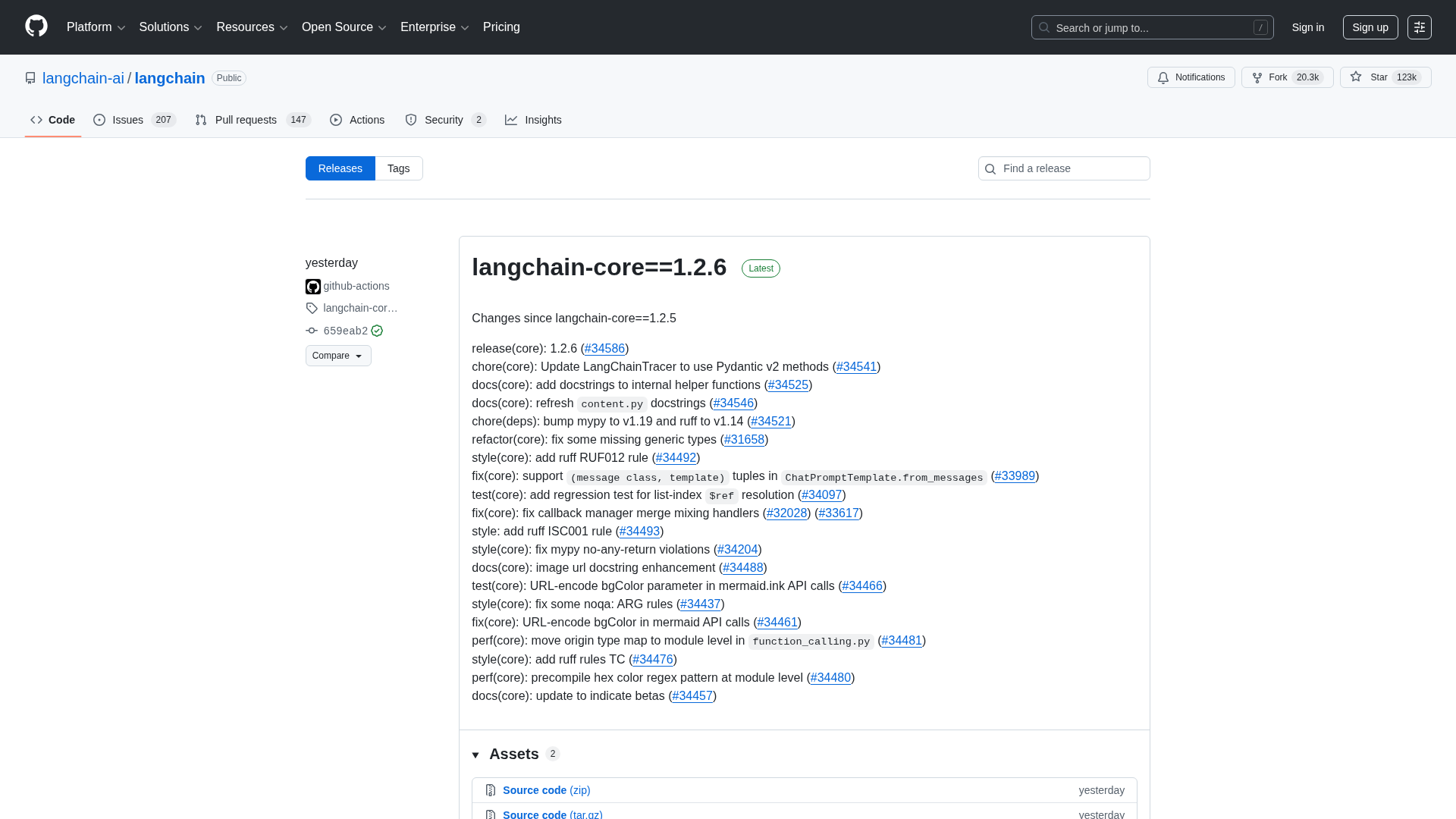
A comprehensive LangChain releases roundup detailing Core 1.2.6 and interconnected updates across XAI, OpenAI, Classic, and tests.
A reproducible bug where LangGraph with Gemini ignores tool results when a PDF is provided, even though the tool call succeeds.
A CLI tool to pull LangSmith traces and threads directly into your terminal for fast debugging and automation.
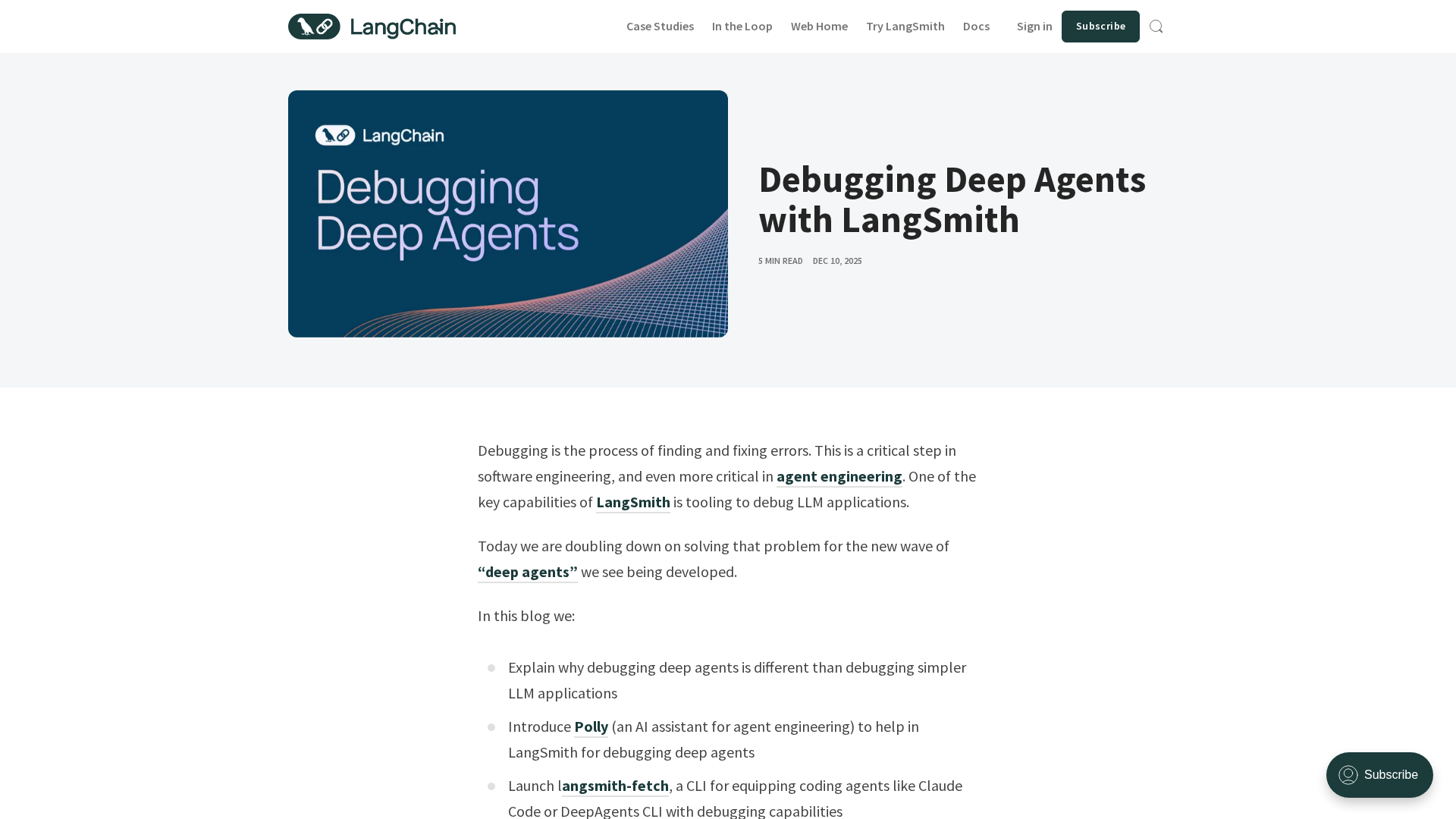
A practical guide to debugging deep agents with LangSmith using tracing, Polly AI analysis, and the LangSmith Fetch CLI.
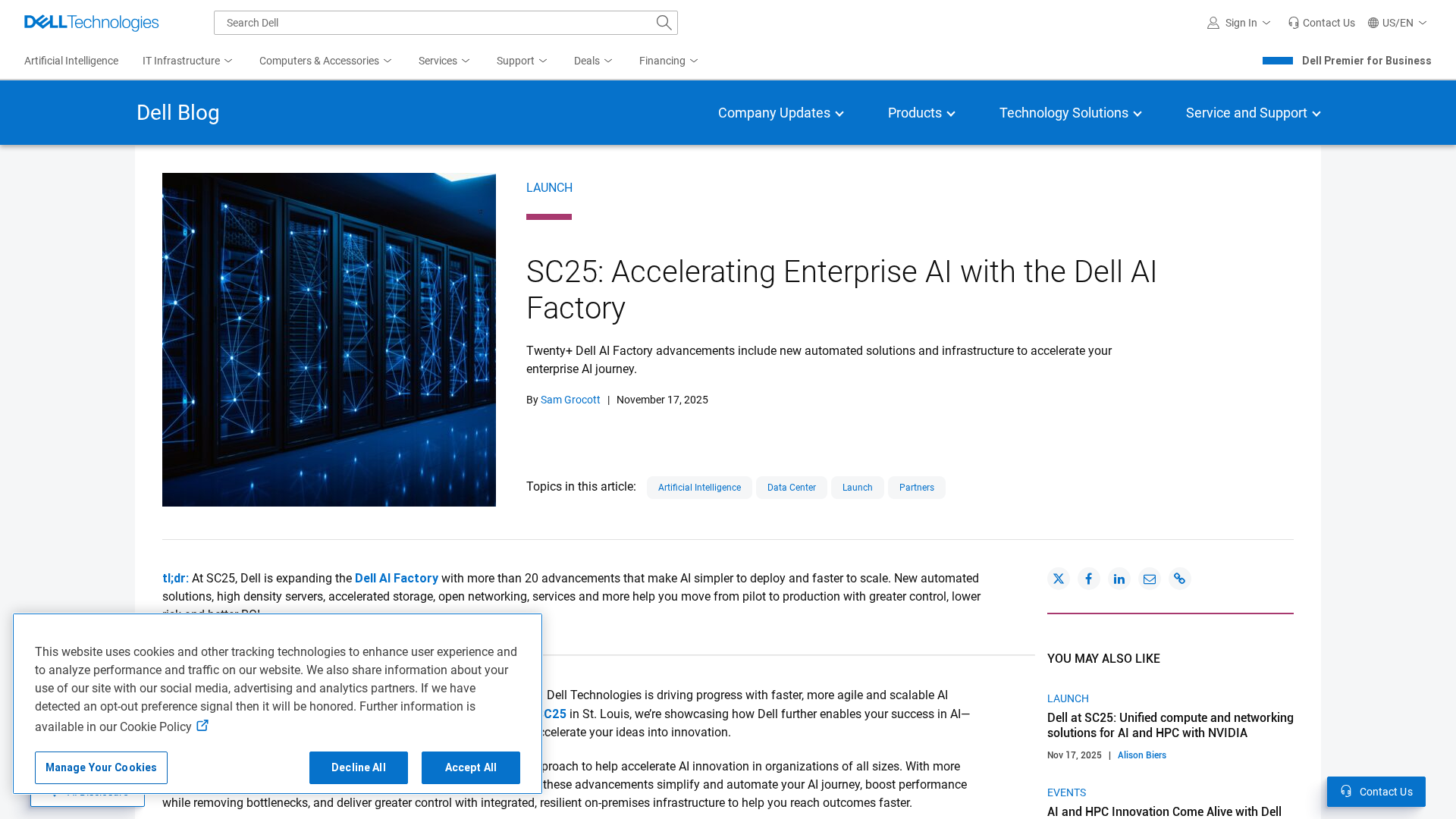
Dell unveils 20+ advancements to its AI Factory at SC25, boosting automation, GPU-dense hardware, storage and services for faster, safer enterprise AI.