Topic Overview
This topic covers the leading enterprise large language models and the surrounding tooling used to generate code, run multi‑step agentic workflows, and embed autonomous developer assistants into production systems. By late 2025, models such as Opus 4.5, Gemini 3 Flash, and Latent‑X2 are being evaluated for their throughput, context-window size, code understanding, and suitability for low‑latency, secure deployments. Parallel to raw model capability, organizations are choosing between hosted copilots and self‑hosted pipelines to balance productivity, privacy, and governance. Key categories include AI code generation tools and code assistants (GitHub Copilot, Code Llama, Tabnine, Tabby, Replit) that provide inline completions, whole‑function suggestions, and IDE/chat integrations; agent frameworks and engineering stacks (LangChain, Continue, AutoGPT, Cline) for building, testing, and orchestrating multi‑step agents; and platforms for packaging and distributing agents (MindStudio, Flowpoint, AI agent/tool marketplaces). Enterprise offerings such as Anthropic’s Claude family and IBM watsonx Assistant focus on conversational developer assistants and no‑code/multi‑agent orchestration with enterprise controls. Practical tradeoffs driving adoption include model latency, fine‑tuning and retrieval augmentation, auditability, on‑prem or private hosting, and composition with agent orchestrators. Teams evaluating Opus 4.5, Gemini 3 Flash, or Latent‑X2 should consider integrations (IDE plugins, CI/CD, observability), agent safety and governance, and whether marketplace or open‑source toolchains better match their compliance and customization needs. This landscape emphasizes interoperable stacks—models plus agent frameworks and secure deployments—over single‑vendor lock‑in.
Tool Rankings – Top 6
Anthropic's Claude family: conversational and developer AI assistants for research, writing, code, and analysis.

Enterprise virtual agents and AI assistants built with watsonx LLMs for no-code and developer-driven automation.

An AI pair programmer that gives code completions, chat help, and autonomous agent workflows across editors, theterminal
Code-specialized Llama family from Meta optimized for code generation, completion, and code-aware natural-language tasks

Enterprise-focused AI coding assistant emphasizing private/self-hosted deployments, governance, and context-aware code.
.avif)
Open-source, self-hosted AI coding assistant with IDE extensions, model serving, and local-first/cloud deployment.
Latest Articles (96)
A vendor‑agnostic guide to the 14 best AI governance platforms in 2025, with criteria, comparisons, and practical buying guidance.
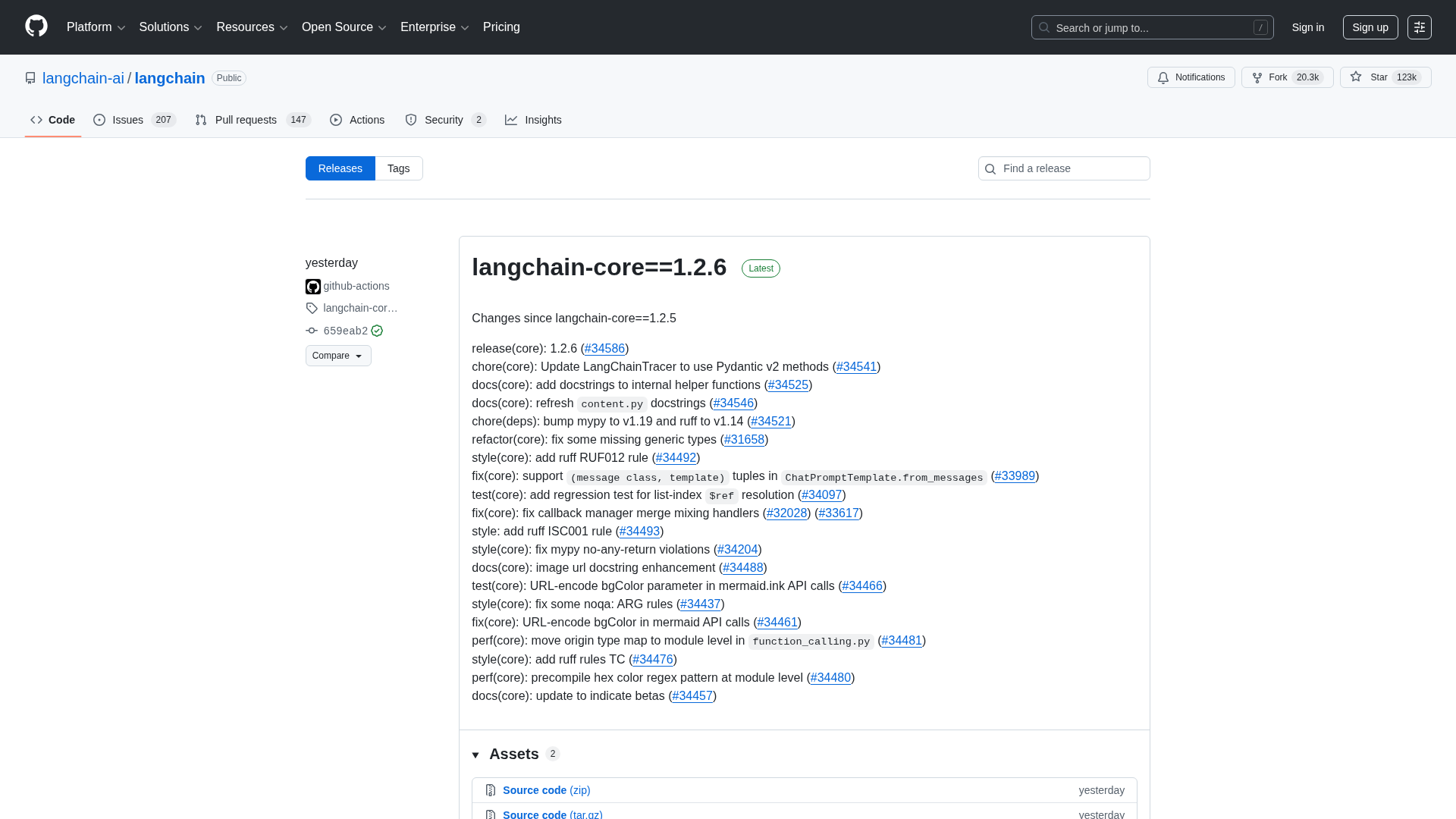
A comprehensive LangChain releases roundup detailing Core 1.2.6 and interconnected updates across XAI, OpenAI, Classic, and tests.

Cannot access the article content due to an access-denied error, preventing summarization.

Adobe nears a $19 billion deal to acquire Semrush, expanding its marketing software capabilities, according to WSJ reports.
Wolters Kluwer expands UpToDate Expert AI with UpToDate Lexidrug to bolster drug information and medication decision support.