Topic Overview
This topic maps the current roadmap and competitive dynamics between anticipated next‑generation large models (successors to GPT‑4o/GPT‑5 in public discourse) and Anthropic’s ongoing Claude evolution, and explains what that means for AI research tools, genAI test automation, and AI tool marketplaces. The conversation centers on three parallel trends: increasing multimodal capability and on‑device efficiency; deeper vertical specialization (notably code and developer workflows); and stronger product integration for safety, governance, and agentic applications. Key tool families illustrate these trends: Anthropic’s Claude family (conversational and developer assistants) represents a safety‑and‑alignment focused trajectory; code‑specialized models like Meta’s Code Llama, Salesforce CodeT5, StarCoder, Stable Code, and EchoComet target developer productivity, local privacy, and fast inference; and search/QA tools such as Phind optimize multimodal retrieval for coding queries. Platform and operational layers — Relevance AI for no‑code agent orchestration, Xilos for agentic infrastructure, and marketplaces that surface models and plugins — shape how models are deployed in production. Test and quality tooling (Qodo, Amazon CodeWhisperer integration, and automated test generation flows) demonstrate rising demand for model‑aware SDLC governance and automated validation. As of 2026‑03‑11 this topic is timely because model research is bifurcating: large, generalist conversational models compete with specialized, efficient code and edge models while governance, evaluation, and composability become commercial differentiators. For teams evaluating next‑gen LLMs, the practical decision points are capability vs cost, on‑prem/privacy needs, toolchain integration (IDE, CI/CD, agents), and available governance/test frameworks — not just raw model size.
Tool Rankings – Top 6
Anthropic's Claude family: conversational and developer AI assistants for research, writing, code, and analysis.
Code-specialized Llama family from Meta optimized for code generation, completion, and code-aware natural-language tasks
AI-powered search for developers that returns visual, interactive, and multimodal answers focused on coding queries.

Official research release of CodeT5 and CodeT5+ (open encoder–decoder code LLMs) for code understanding and generation.

StarCoder is a 15.5B multilingual code-generation model trained on The Stack with Fill-in-the-Middle and multi-query ува

Edge-ready code language models for fast, private, and instruction‑tuned code completion.
Latest Articles (90)
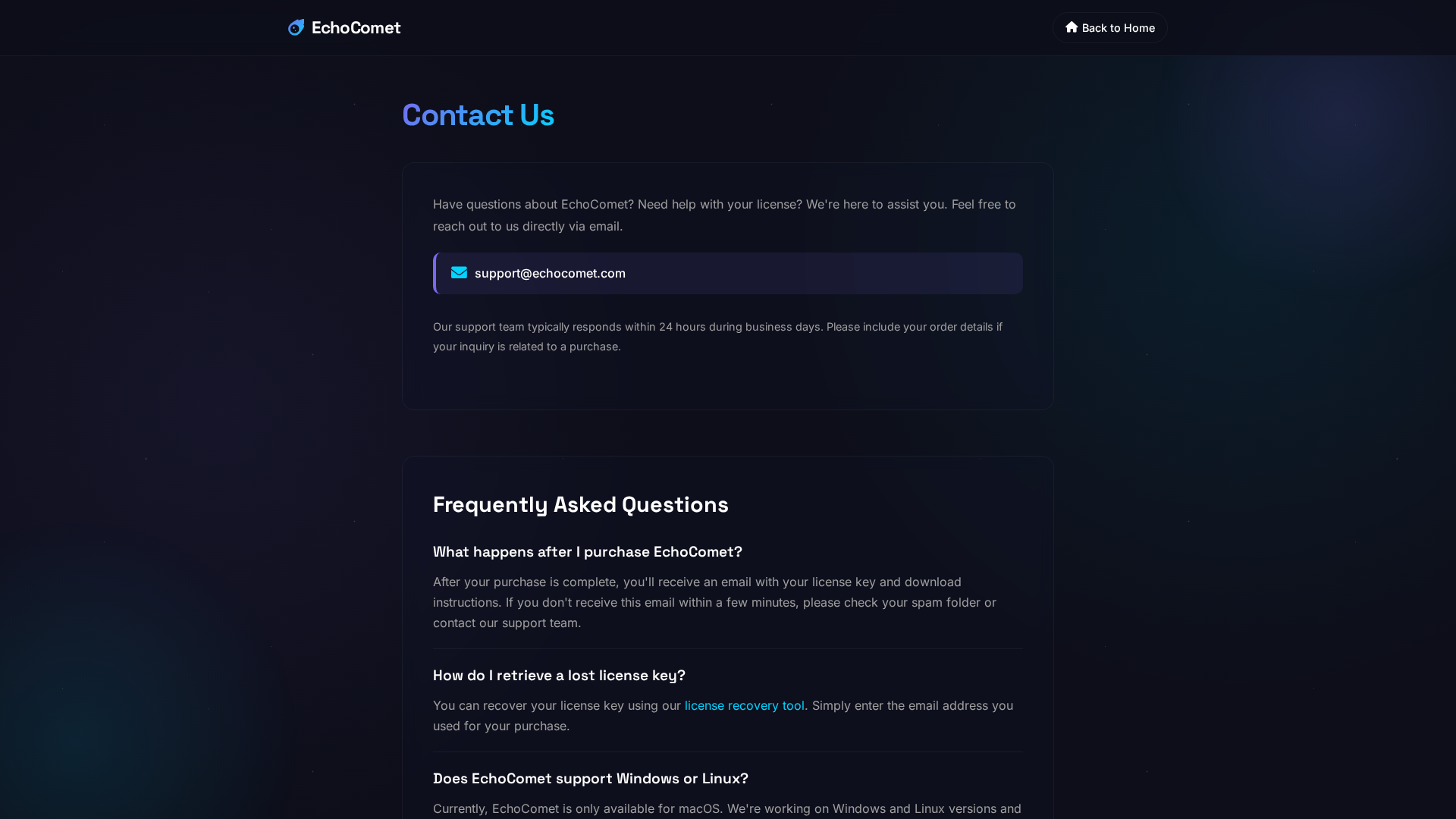
EchoComet's contact page provides fast support, license recovery, and device limits for macOS.
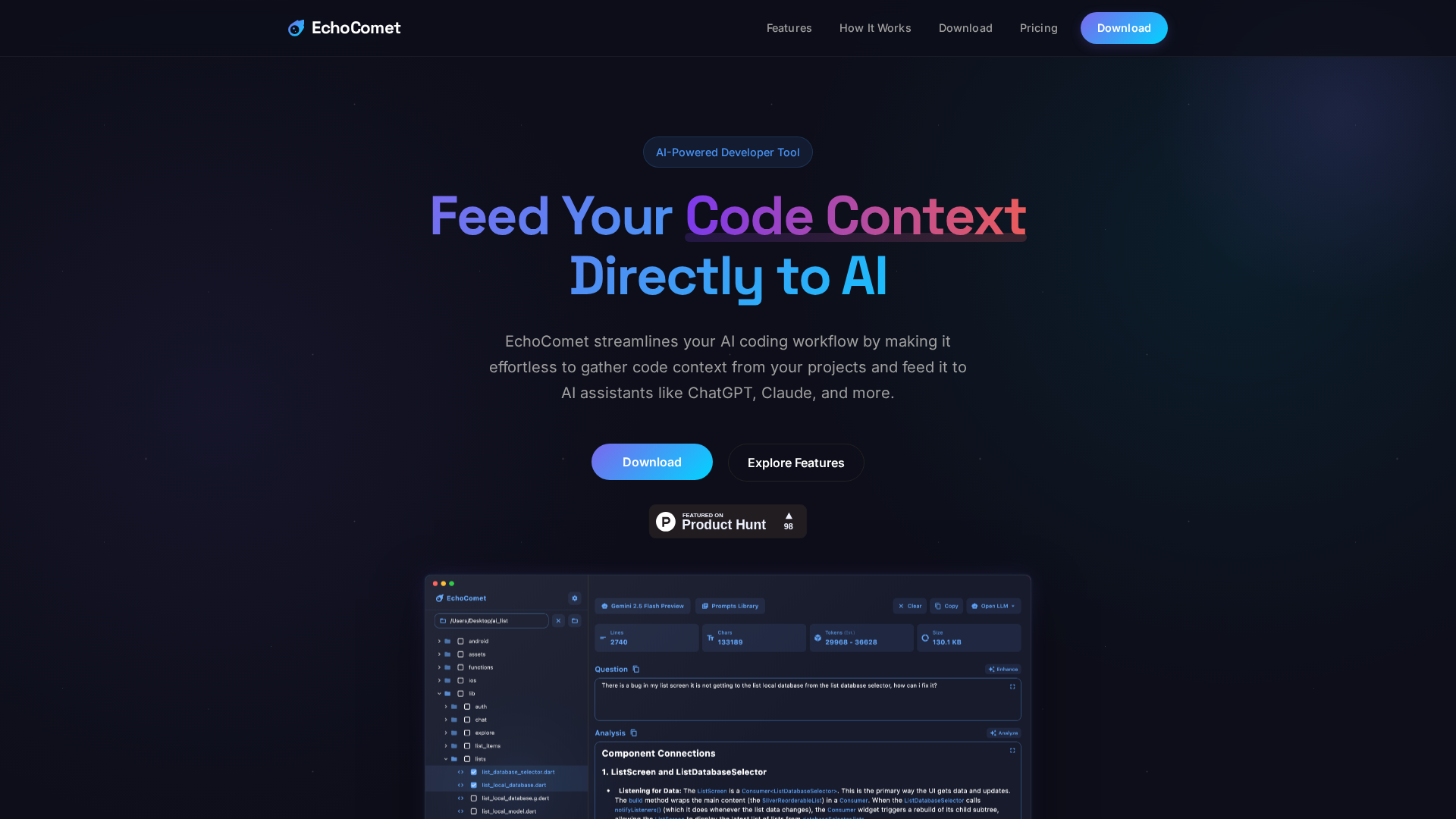
EchoComet lets you gather code context locally and feed it to AI with large-context prompts for smarter, private AI assistance.
OpenAI’s bypass moment underscores the need for governance that survives inevitable user bypass and hardens system controls.
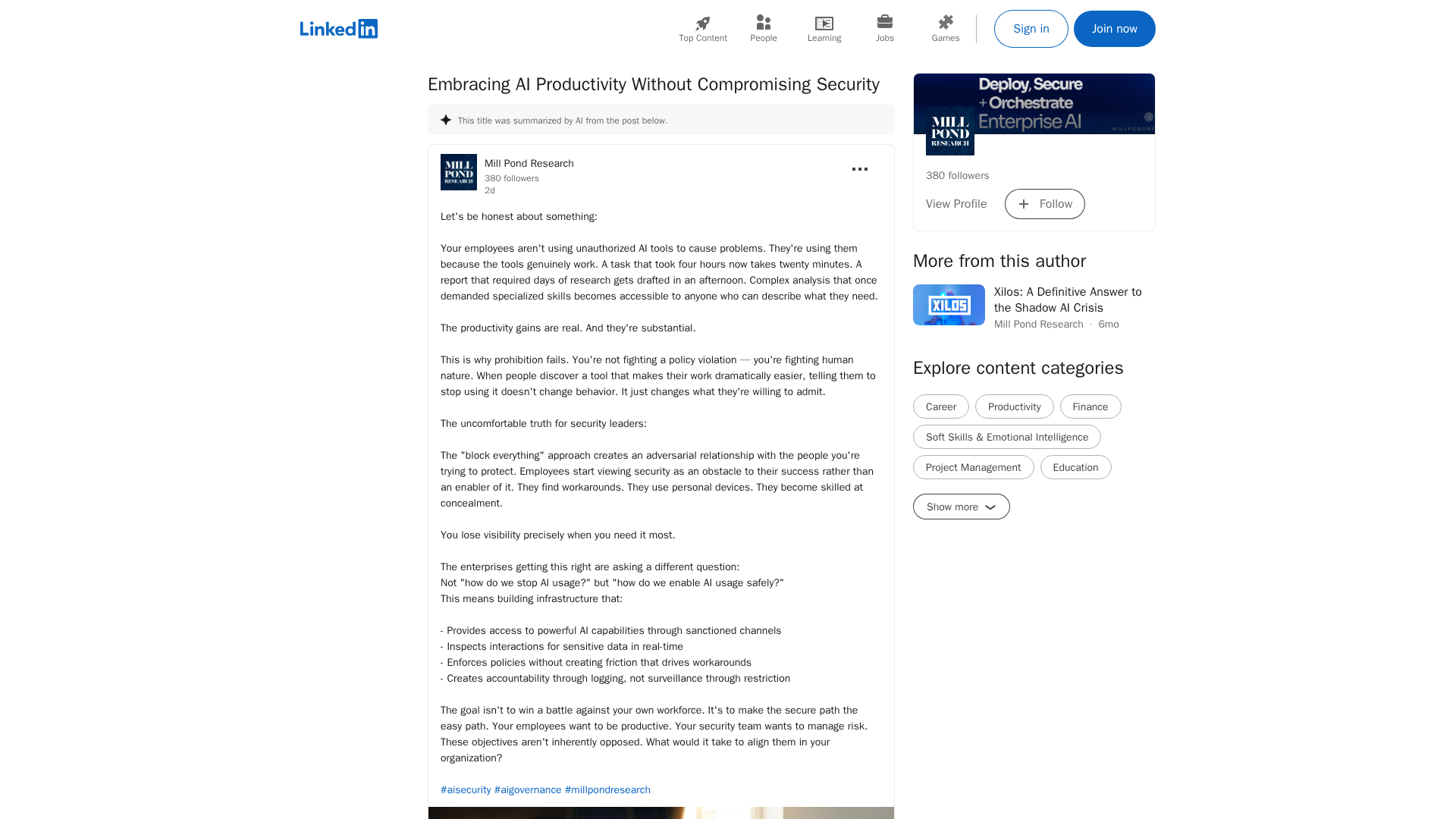
A call to enable safe AI use at work via sanctioned access, real-time data protections, and frictionless governance.
Explores the human role behind AI automation and how Bell Cyber tackles AI hallucinations in security operations.