Topic Overview
This topic examines AI assistants and chatbots designed with privacy, safety, and regulatory compliance as primary requirements — from consumer voice assistants to enterprise virtual agents and contact‑center bots. By 2026, deployments increasingly combine private model hosting, retrieval‑augmented generation with guarded retrieval, and centralized governance to limit data exposure, enforce policies, and produce auditable behavior. Key categories include personal AI assistants (on‑device or private cloud, where Siri’s post‑2023 evolution emphasizes more on‑device processing and tighter data controls), customer service chatbots and voice agents (Observe.AI’s real‑time assist and voice AI capabilities), enterprise assistant platforms (IBM watsonx Assistant for no‑code and developer workflows; StackAI for low‑code agent orchestration), and AI security/governance stacks (Monitaur for industry‑specific policy, monitoring, validation and vendor governance). Infrastructure and model providers such as Together AI and Cohere enable private, customizable models, secure embeddings, and fine‑tuning for compliance. Perplexity AI represents web‑grounded, citation‑driven answer engines useful where sourced outputs and traceability matter. Niche tools like Patra show how assistants are embedded into workflows (Slack → Jira) without exposing unnecessary data. Trends to watch: stronger regulatory pressure and standards, adoption of private endpoints and on‑prem options, centralized monitoring and QA pipelines, and storage/access controls for retrieval data and embeddings. Evaluations should prioritize where models run (on‑device vs cloud), governance features (policy enforcement, monitoring, vendor risk), and evidence‑producing outputs (citations, provenance). This landscape favors platforms that combine secure infrastructure, transparent retrieval, and operational governance over raw capability alone.
Tool Rankings – Top 6

Enterprise virtual agents and AI assistants built with watsonx LLMs for no-code and developer-driven automation.
End-to-end no-code/low-code enterprise platform for building, deploying, and governing AI agents that automate work onun

Insurance-focused enterprise AI governance platform centralizing policy, monitoring, validation, vendor governance and证e

A full-stack AI acceleration cloud for fast inference, fine-tuning, and scalable GPU training.

Enterprise conversation-intelligence and GenAI platform for contact centers: voice agents, real-time assist, auto QA, &洞

Enterprise-focused LLM platform offering private, customizable models, embeddings, retrieval, and search.
Latest Articles (72)
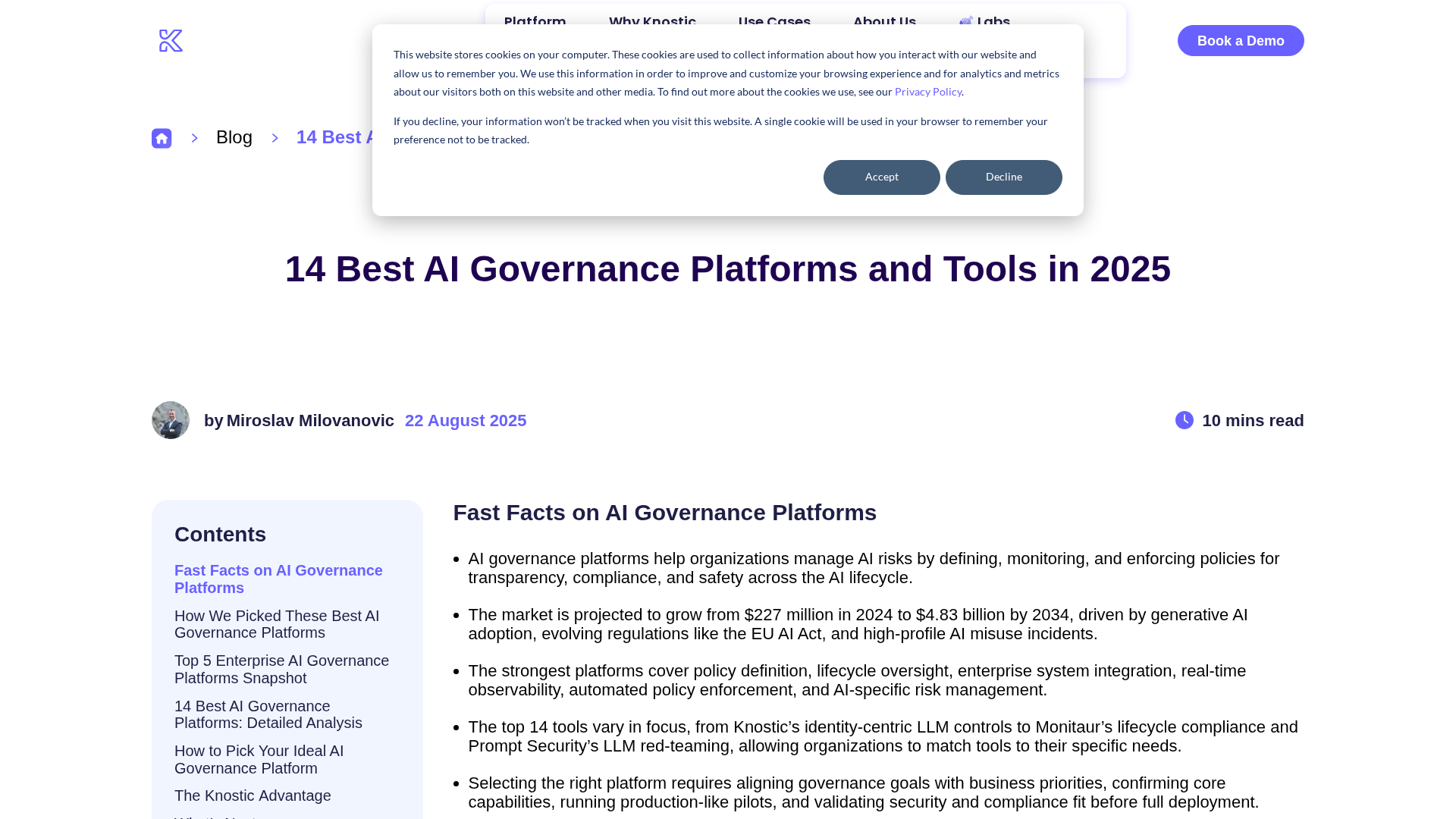
A vendor‑agnostic guide to the 14 best AI governance platforms in 2025, with criteria, comparisons, and practical buying guidance.
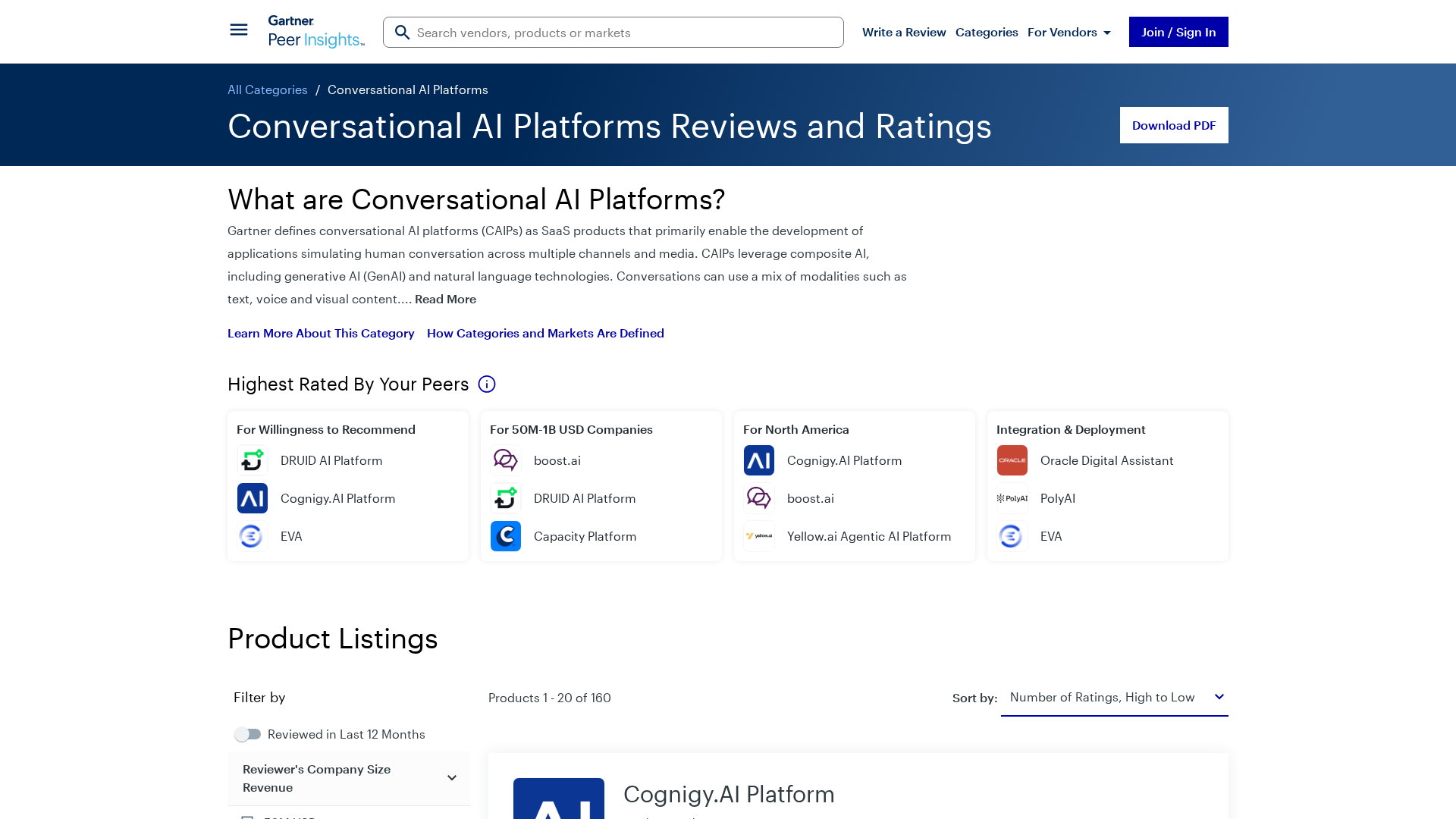
Gartner’s market view on conversational AI platforms, outlining trends, vendors, and buyer guidance.

Baseten launches an AI training platform to compete with hyperscalers, promising simpler, more transparent ML workflows.

Adobe nears a $19 billion deal to acquire Semrush, expanding its marketing software capabilities, according to WSJ reports.
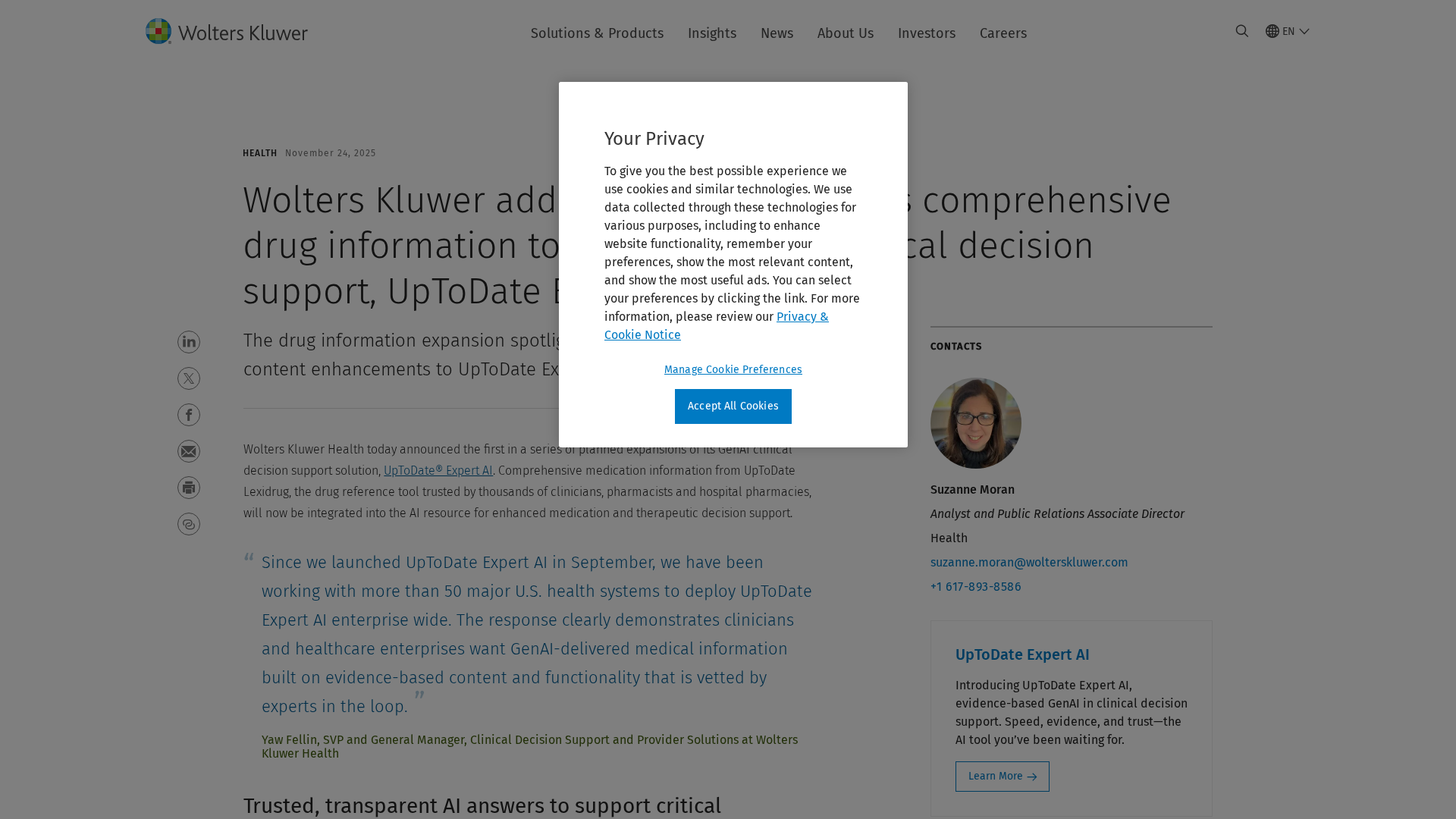
Wolters Kluwer expands UpToDate Expert AI with UpToDate Lexidrug to bolster drug information and medication decision support.