Topic Overview
This topic covers the vendors, platforms, and toolchains used to build industrial digital twins and GenAI-driven optimization stacks — systems that pair physics-based or data-driven simulation models with real-time sensor streams, ML pipelines, and agentic automation to improve asset performance, scheduling, and safety. It is timely as of 2026 because GenAI capabilities (stateful agents, multimodal models, and production-grade orchestration frameworks) have become widely adopted in industrial settings, pushing digital twins beyond visualization into conversational operations, autonomous workflows, and closed-loop optimization. Key categories include AI tool marketplaces (for buying and integrating prebuilt agents and twin components), AI data platforms (for ingesting, normalizing, and labeling time-series and context data), generative AI resources (LLMs and multimodal models used for reasoning, natural-language interfaces, and synthetic-data generation), and GenAI test automation (for validating agent behavior, safety constraints, and regulatory compliance). Representative tools in this space: IBM watsonx Assistant for enterprise virtual agents and multi-agent orchestrations; LangChain as an engineering framework for building, testing, and deploying reliable LLM agents; Automaited and AutoGPT for creating enterprise-scale agentic workflows and autonomous automation; Agentverse as a marketplace and deployment layer for agents; MindStudio for no-/low-code design and operations of agents; and GPTConsole for developer-centric SDKs, CLI and lifecycle management. Practical trade-offs to consider are model governance, latency and edge deployment, data lineage and labeling, simulation fidelity, and automated testing of agentic behavior. Organizations evaluating digital-twin and industrial GenAI stacks should prioritize integration with existing OT/IT systems, robust data platforms, and reproducible test automation to ensure safe, auditable, and operationally effective deployments.
Tool Rankings – Top 6

Enterprise virtual agents and AI assistants built with watsonx LLMs for no-code and developer-driven automation.

Engineering platform and open-source frameworks to build, test, and deploy reliable AI agents.
Enterprise platform of AI Agents for agentic automation: workflow automation, document processing and integrations.

Platform to build, deploy and run autonomous AI agents and automation workflows (self-hosted or cloud-hosted).
Cloud platform and marketplace for building, deploying, listing and monitoring autonomous AI agents.

No-code/low-code visual platform to design, test, deploy, and operate AI agents rapidly, with enterprise controls and a
Latest Articles (56)
A vendor‑agnostic guide to the 14 best AI governance platforms in 2025, with criteria, comparisons, and practical buying guidance.
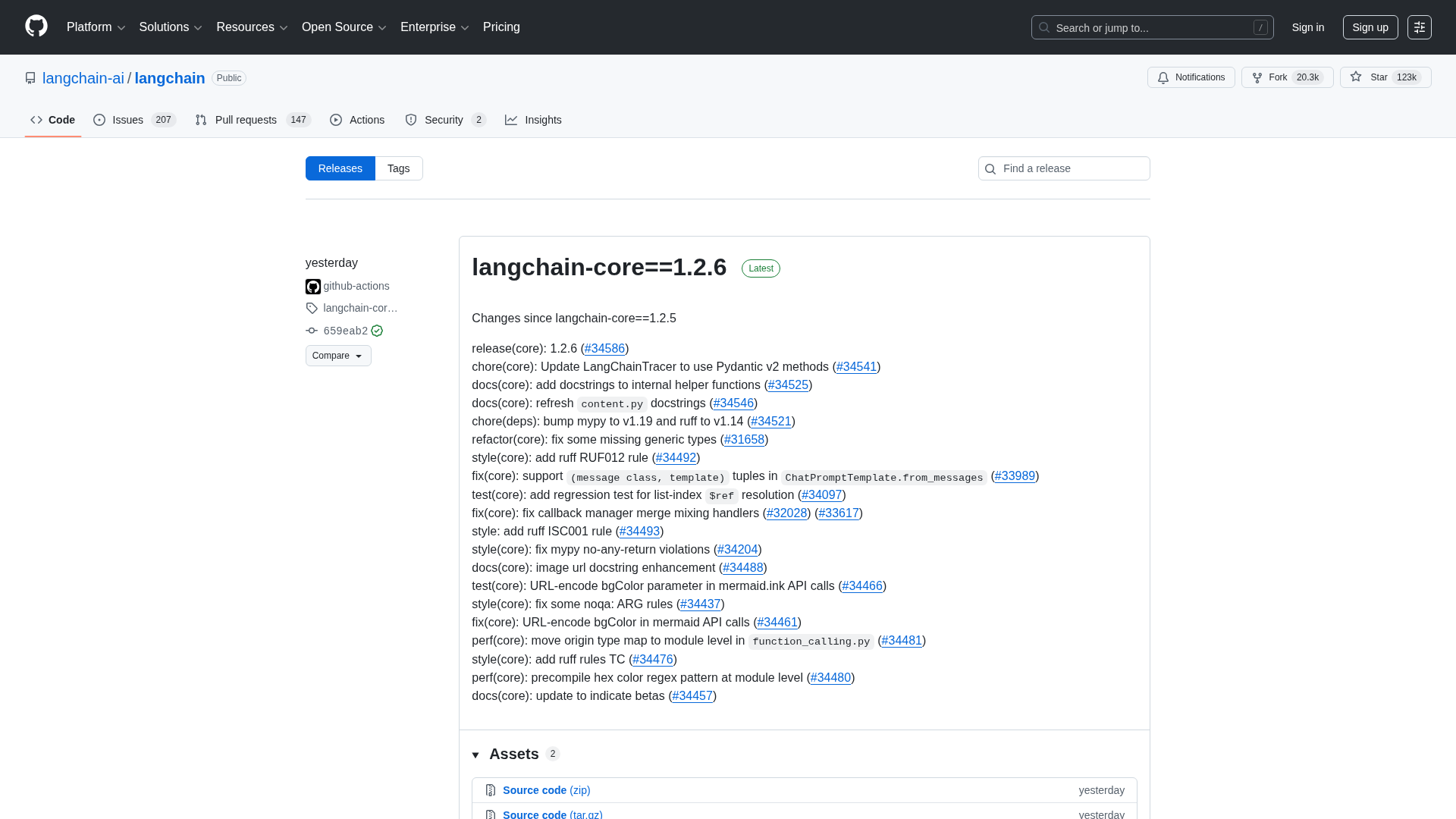
A comprehensive LangChain releases roundup detailing Core 1.2.6 and interconnected updates across XAI, OpenAI, Classic, and tests.

Cannot access the article content due to an access-denied error, preventing summarization.
Adobe nears a $19 billion deal to acquire Semrush, expanding its marketing software capabilities, according to WSJ reports.
Wolters Kluwer expands UpToDate Expert AI with UpToDate Lexidrug to bolster drug information and medication decision support.