Topic Overview
Conversational AI & Assistant Platforms covers the spectrum of modern conversational agents used as personal assistants, customer-service chatbots, and AI meeting assistants. The space is shaped by large multimodal models (e.g., Google Gemini) and safety‑oriented conversational families (e.g., Anthropic’s Claude), while enterprise products (IBM watsonx Assistant, PolyAI, Yellow.ai) package those models into governed virtual agents for CX and internal automation. Workspace integrations (Notion, CAPTAIN) and meeting-focused assistants emphasize knowledge continuity, task automation, and searchable conversation records. Platforms such as StackAI and Tektonic AI target operationalization: no-code/low-code builders, multi-agent orchestration, and hybrid neural–symbolic pipelines to automate business processes and connect LLMs to data and workflows. Voice-first providers like PolyAI highlight multilingual, omnichannel contact center deployment, while enterprise vendors stress governance, observability, and integration with existing systems. Meanwhile, OS-level assistant redesigns (e.g., Siri updates and equivalents) push expectations for tighter app integration, on-device capabilities, and privacy-conscious features for personal productivity. This topic is timely because organizations are moving from experimentation to production: teams must evaluate trade-offs across multimodality, latency, data governance, customization, and developer experience. Key evaluation axes include model capability, deployment options (cloud vs on-device), no-code vs developer tooling, voice support, and enterprise controls. Understanding these distinctions helps buyers choose the right mix of personal assistants, customer service bots, and meeting agents for their needs, and informs product teams building conversational features into workflows and contact centers.
Tool Rankings – Top 6
Anthropic's Claude family: conversational and developer AI assistants for research, writing, code, and analysis.

Google’s multimodal family of generative AI models and APIs for developers and enterprises.

Enterprise virtual agents and AI assistants built with watsonx LLMs for no-code and developer-driven automation.
A single, block-based AI-enabled workspace that combines docs, knowledge, databases, automation, and integrations to sup

Voice-first conversational AI for enterprise contact centers, delivering lifelike multilingual agents across voice, chat

Enterprise agentic AI platform for CX and EX automation, building autonomous, human-like agents across channels.
Latest Articles (119)
A vendor‑agnostic guide to the 14 best AI governance platforms in 2025, with criteria, comparisons, and practical buying guidance.
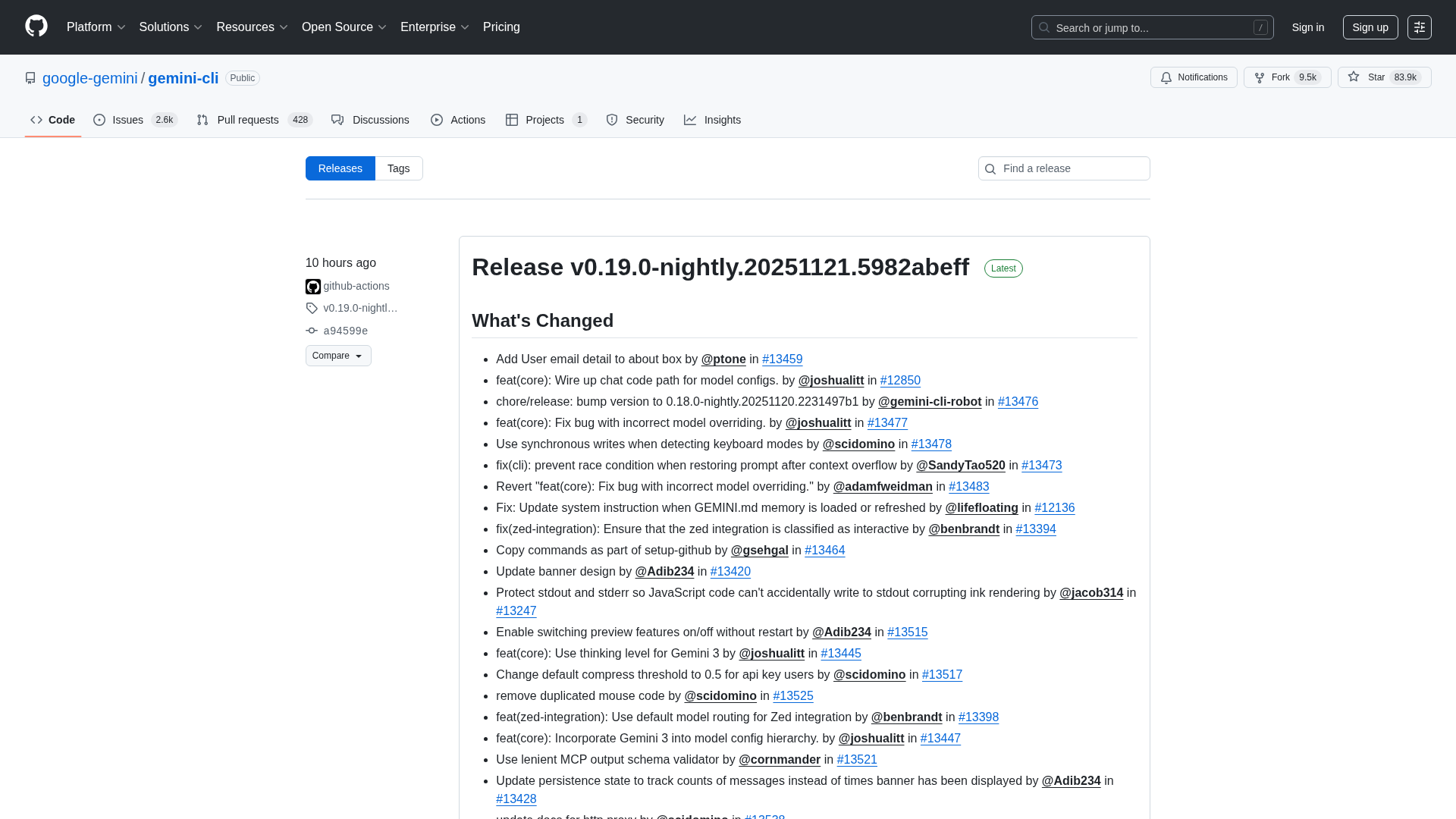
Overview of the Gemini CLI v0.36.0-preview release series, highlighting architectural, CLI, and UI changelogs across multiple pre-release versions.
CAPTAIN is an AI cognitive assistant integrated in Notion, guiding problem-solving, technical advisory, and interactive navigation.
Adobe nears a $19 billion deal to acquire Semrush, expanding its marketing software capabilities, according to WSJ reports.
Wolters Kluwer expands UpToDate Expert AI with UpToDate Lexidrug to bolster drug information and medication decision support.