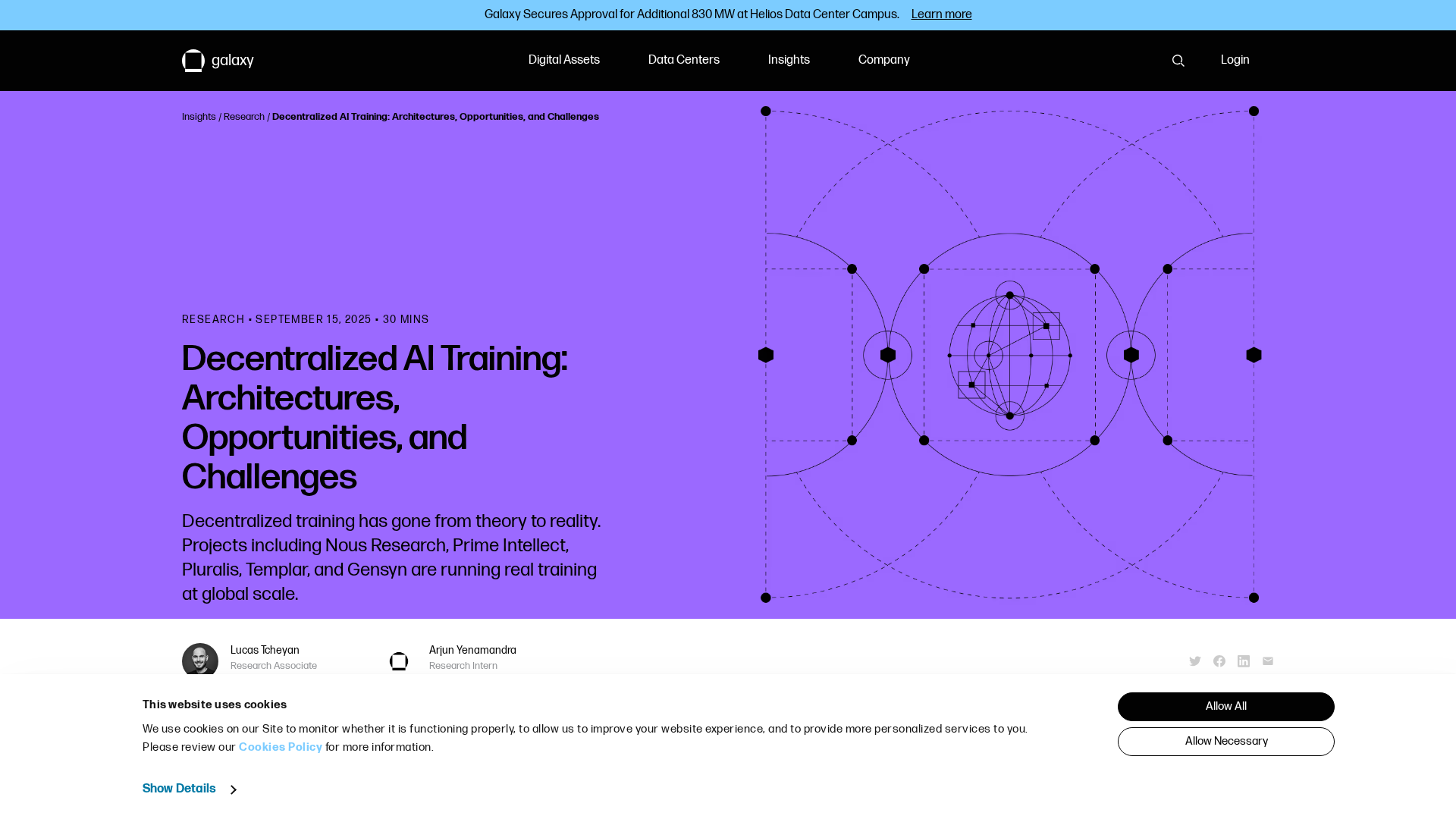
Topic Overview
This topic covers the intersection of decentralized LLMs and on‑chain AI platforms: open‑source models, cost‑efficient training pipelines, marketplaces for models and data, and governance tools that make distributed AI practical and auditable. Interest in running and training models outside closed clouds has grown alongside improved open weights, model‑centric data curation, and lower‑cost GPU access. Key components include decentralized infrastructure and marketplaces for model and dataset exchange; AI data platforms and extraction tools that supply high‑quality training signals; cloud and acceleration services that enable scalable fine‑tuning and inference; and governance solutions for compliance, monitoring, and provenance. Representative tools illustrate the stack: Seed‑Coder demonstrates a model‑centric approach where the model helps curate its own training data; Code Llama and Salesforce CodeT5 are examples of open, specialized LLMs targeted at code generation and understanding; PulpMiner automates high‑quality, structured data extraction from webpages to feed training pipelines; Together AI and Vertex AI provide the scalable compute, serverless inference, and fine‑tuning workflows needed to train and deploy models cost‑effectively; Monitaur exemplifies governance platforms for monitoring policy, vendor risk, and validation in regulated environments. By 2026 this mix is timely because decentralized and on‑chain patterns are moving from experiments to production: tokenized incentives and verifiable provenance are being integrated with off‑chain GPU training and on‑chain registries, while open models and model‑centric pipelines reduce data labeling costs. Practical deployments favor hybrid architectures that combine on‑chain auditability with off‑chain compute and governance layers. Successful projects will balance cost, reproducibility, and compliance—using open models, curated datasets, scalable compute, and governance tooling to bring transparent, efficient LLM development to broader communities.
Tool Rankings – Top 6
Converts Any Webpage Into Realtime JSON API 🟢
Code-specialized Llama family from Meta optimized for code generation, completion, and code-aware natural-language tasks

Official research release of CodeT5 and CodeT5+ (open encoder–decoder code LLMs) for code understanding and generation.

Let the code model curate data for itself

A full-stack AI acceleration cloud for fast inference, fine-tuning, and scalable GPU training.

Unified, fully-managed Google Cloud platform for building, training, deploying, and monitoring ML and GenAI models.
Latest Articles (52)

Baseten launches an AI training platform to compete with hyperscalers, promising simpler, more transparent ML workflows.
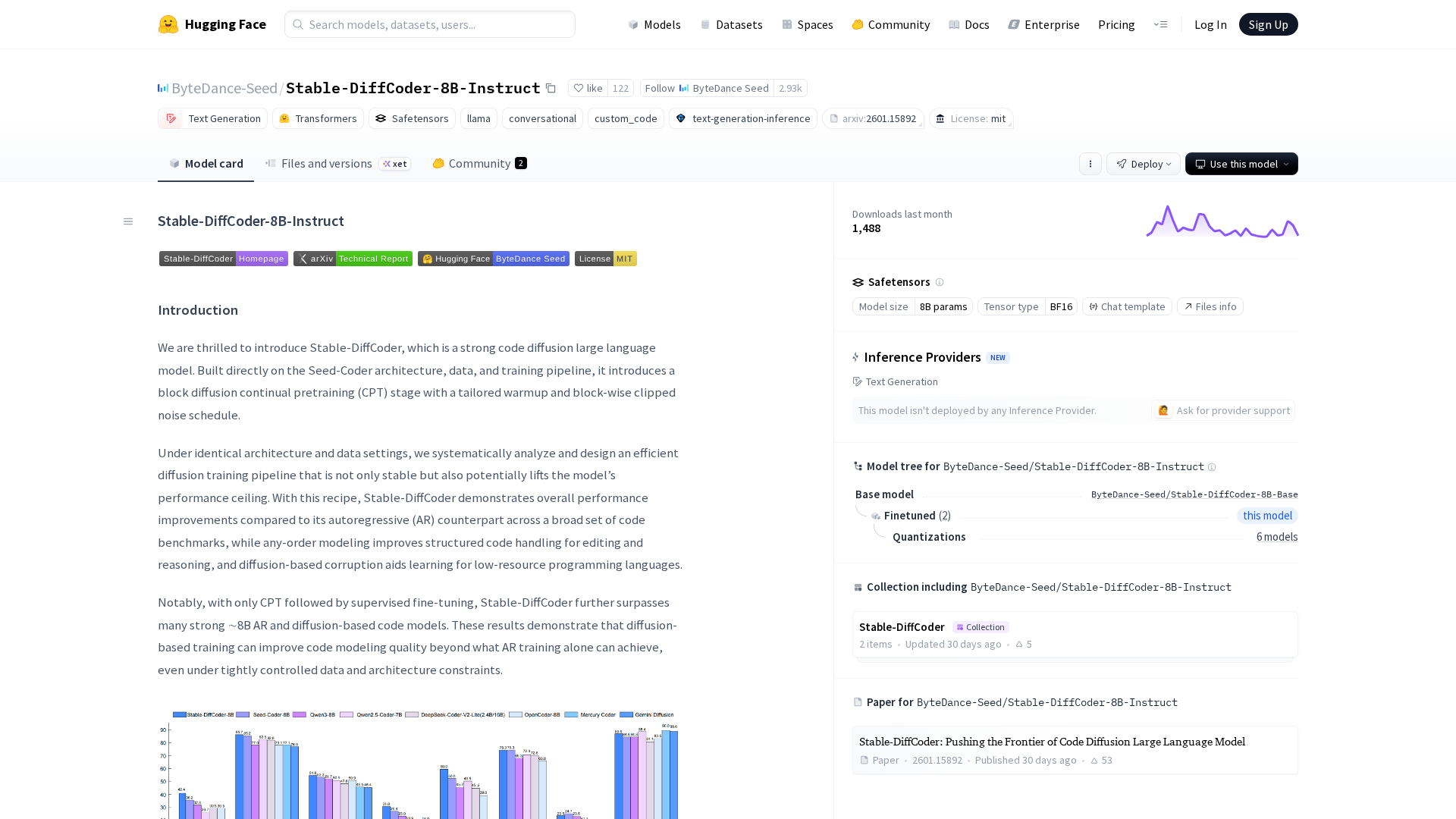
A diffusion-based 8B code model that outperforms autoregressive and DLLM peers across major coding benchmarks.
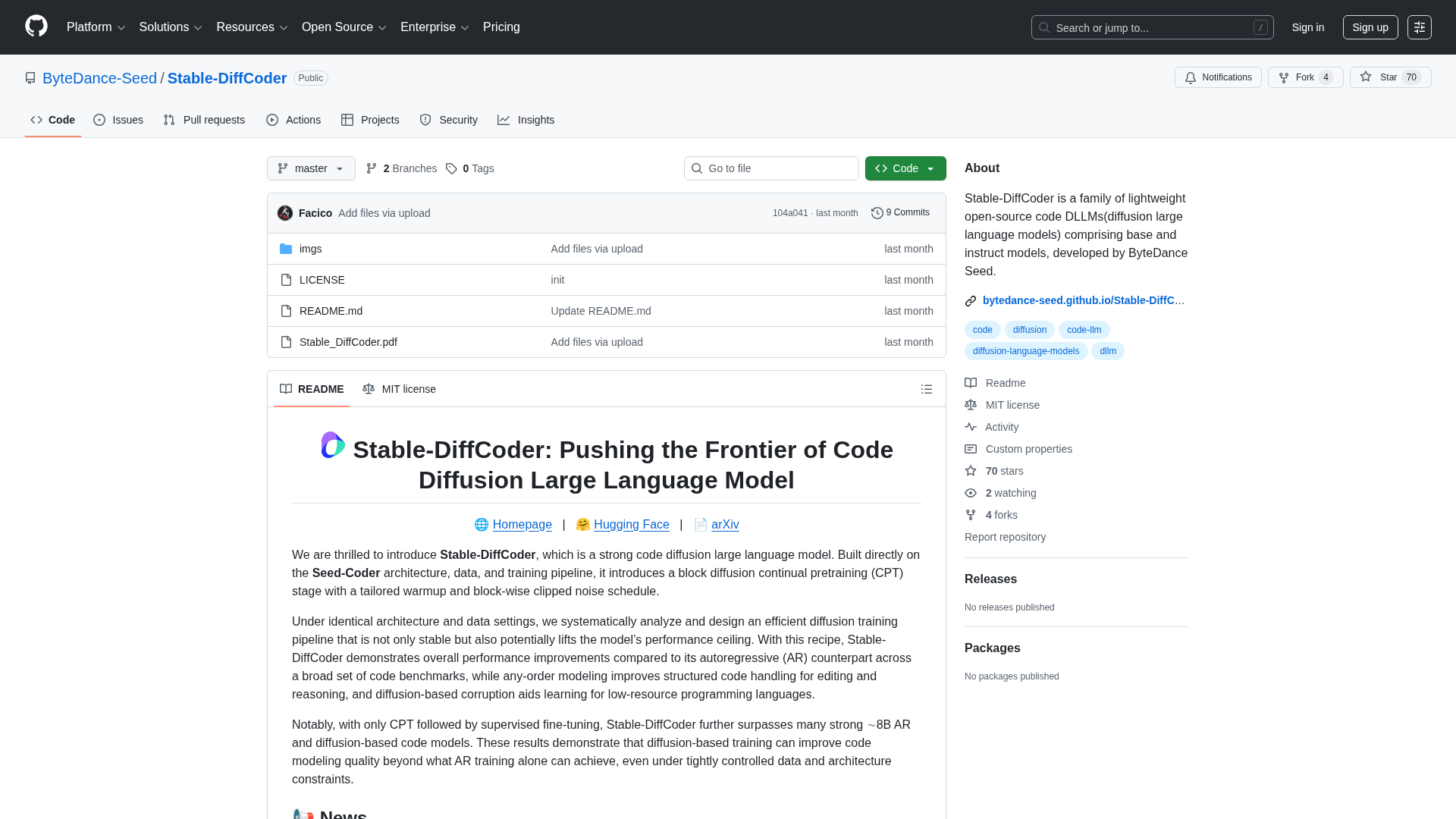
Open-source 8B code diffusion LLMs from ByteDance Seed that outperform autoregressive peers.
Convert any webpage into a real-time JSON API with AI-driven extraction and instant, secure endpoints—no coding required.
Connect PulpMiner with Zapier to automate AI tasks with no code, enterprise-grade security, and thousands of apps.