Topic Overview
This topic examines enterprise GenAI platforms—Google Cloud’s Gemini, Anthropic, AWS and Snowflake—by focusing on how they integrate with AI data platforms and governance tooling to support production use. It covers the growing need for RAG, model orchestration, private deployments and compliance controls as organizations move generative AI into critical workflows. Enterprises now evaluate platforms not only on model quality but on data connectivity, search/embedding pipelines, policy controls, auditability and multi-model interoperability. Snowflake positions itself as a data-centric host for embeddings and inference; Google Cloud (Gemini) and Anthropic emphasize model capabilities plus managed services and safety controls; AWS combines broad infrastructure, managed LLM services and enterprise identity/compliance integrations. Across providers, trends include hybrid/private hosting, fine-tuning and retrieval integrations, and richer governance APIs. Complementary developer and agentic tooling shapes how teams build and operate applications: LangChain provides stateful engineering frameworks for building, testing and deploying agentic LLM apps; Warp and Windsurf (formerly Codeium) offer agentic developer environments and AI-native IDEs to keep engineers “in flow”; GitHub Copilot, Tabnine and Cline supply coding assistants with varying focuses on private deployments and auditability; GPTConsole and Replit enable SDK/hosting and lifecycle management for production agents; Flowpoint demonstrates domain-specific agent automation for marketing analytics. As of 2025-12-19, enterprises prioritize platforms that balance model capability with data governance, operational tooling and vendor-neutral integration. Evaluations should weigh model features alongside embedding/infra costs, governance APIs, agent frameworks and the developer experience that accelerates safe, auditable production deployments.
Tool Rankings – Top 6

Engineering platform and open-source frameworks to build, test, and deploy reliable AI agents.

Agentic Development Environment (ADE) — a modern terminal + IDE with built-in AI agents to accelerate developer flows.

AI-native IDE and agentic coding platform (Windsurf Editor) with Cascade agents, live previews, and multi-model support.

An AI pair programmer that gives code completions, chat help, and autonomous agent workflows across editors, theterminal

Enterprise-focused AI coding assistant emphasizing private/self-hosted deployments, governance, and context-aware code.
Open-source, client-side AI coding agent that plans, executes and audits multi-step coding tasks.
Latest Articles (56)
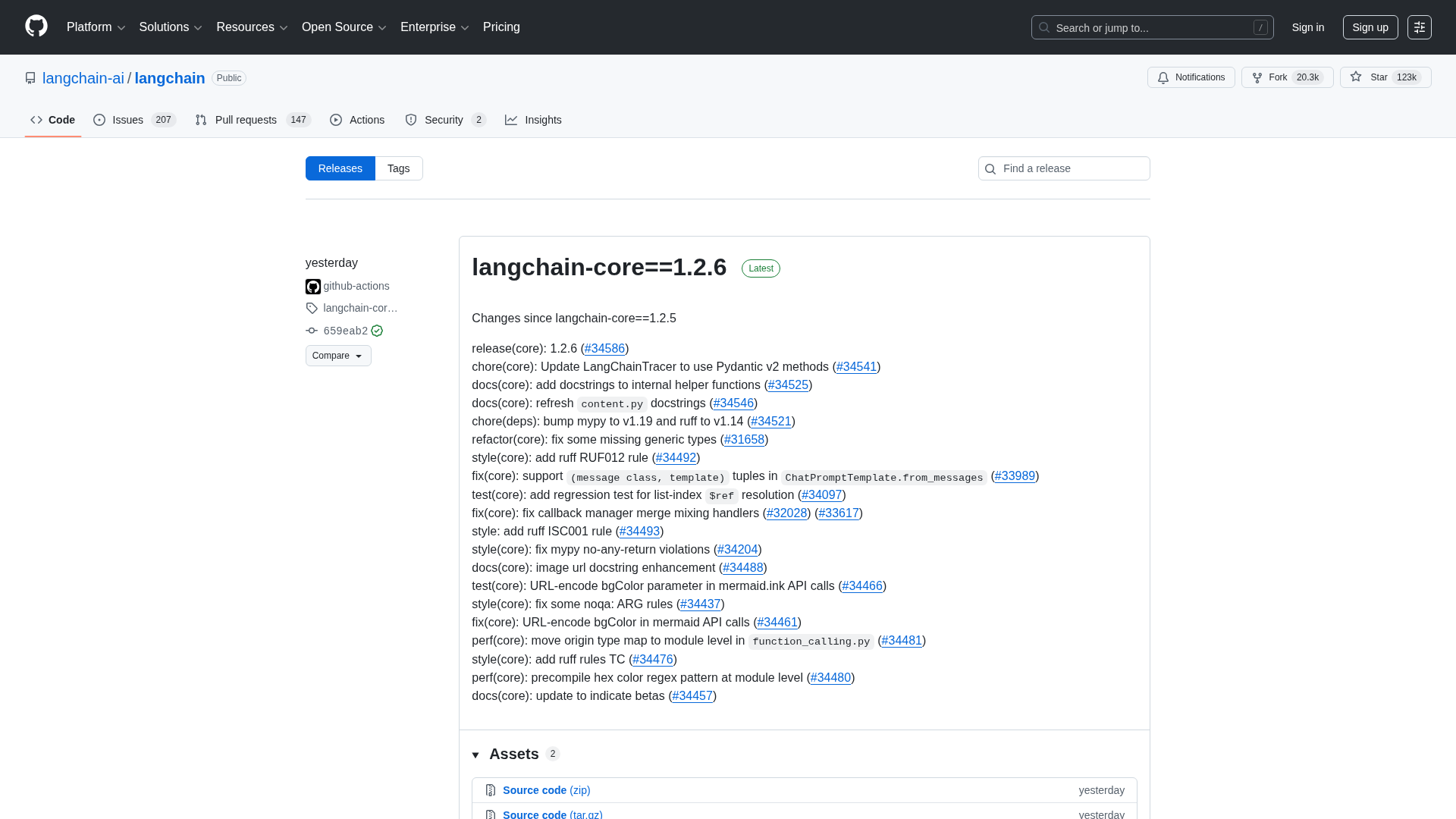
A comprehensive LangChain releases roundup detailing Core 1.2.6 and interconnected updates across XAI, OpenAI, Classic, and tests.

Cannot access the article content due to an access-denied error, preventing summarization.
A quick preview of POE-POE's pros and cons as seen in G2 reviews.
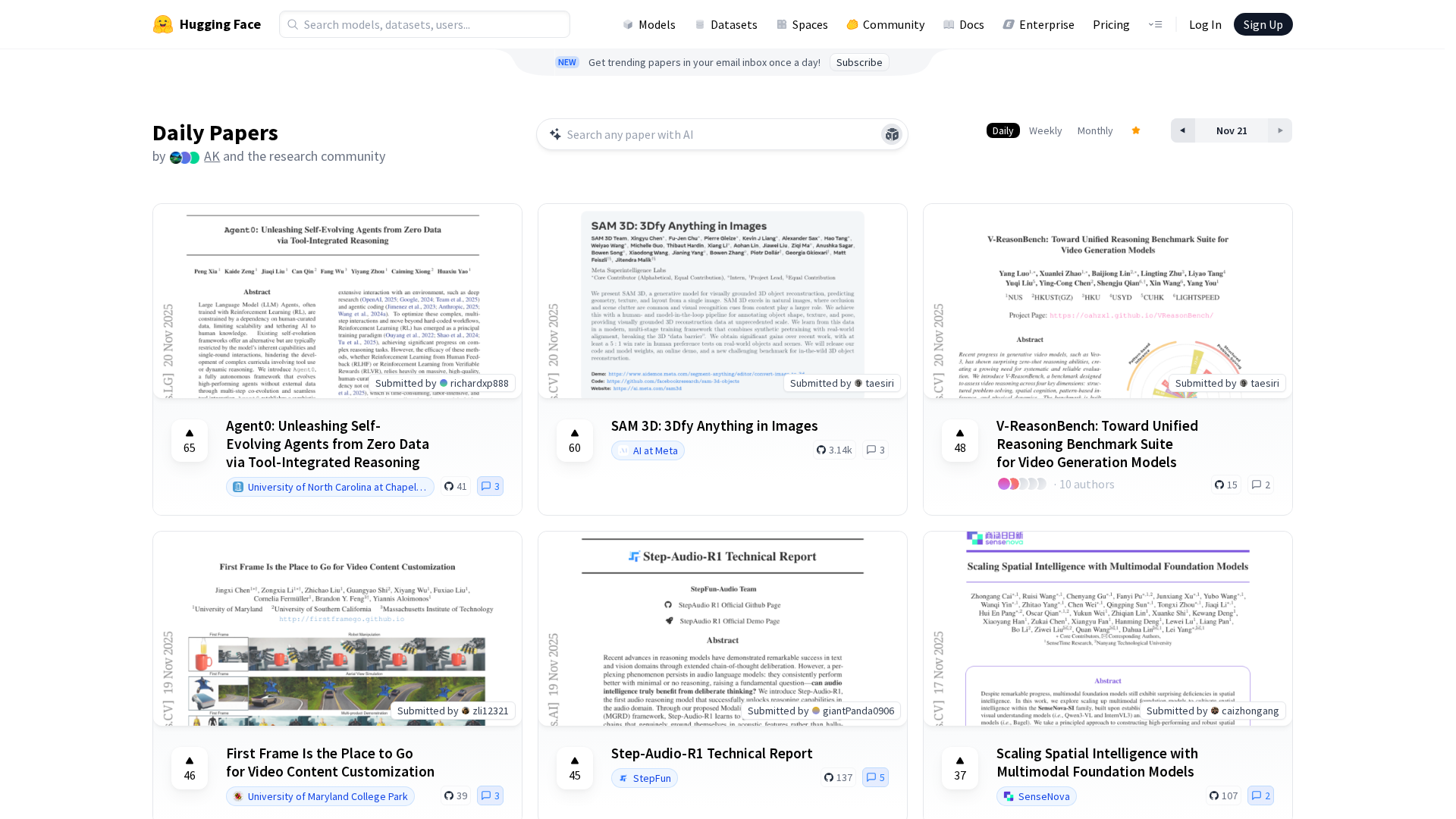
Get daily, curated trending ML papers delivered straight to your inbox.
Meta and Sify plan a 500 MW hyperscale data center in Visakhapatnam with the Waterworth subsea cable landing.