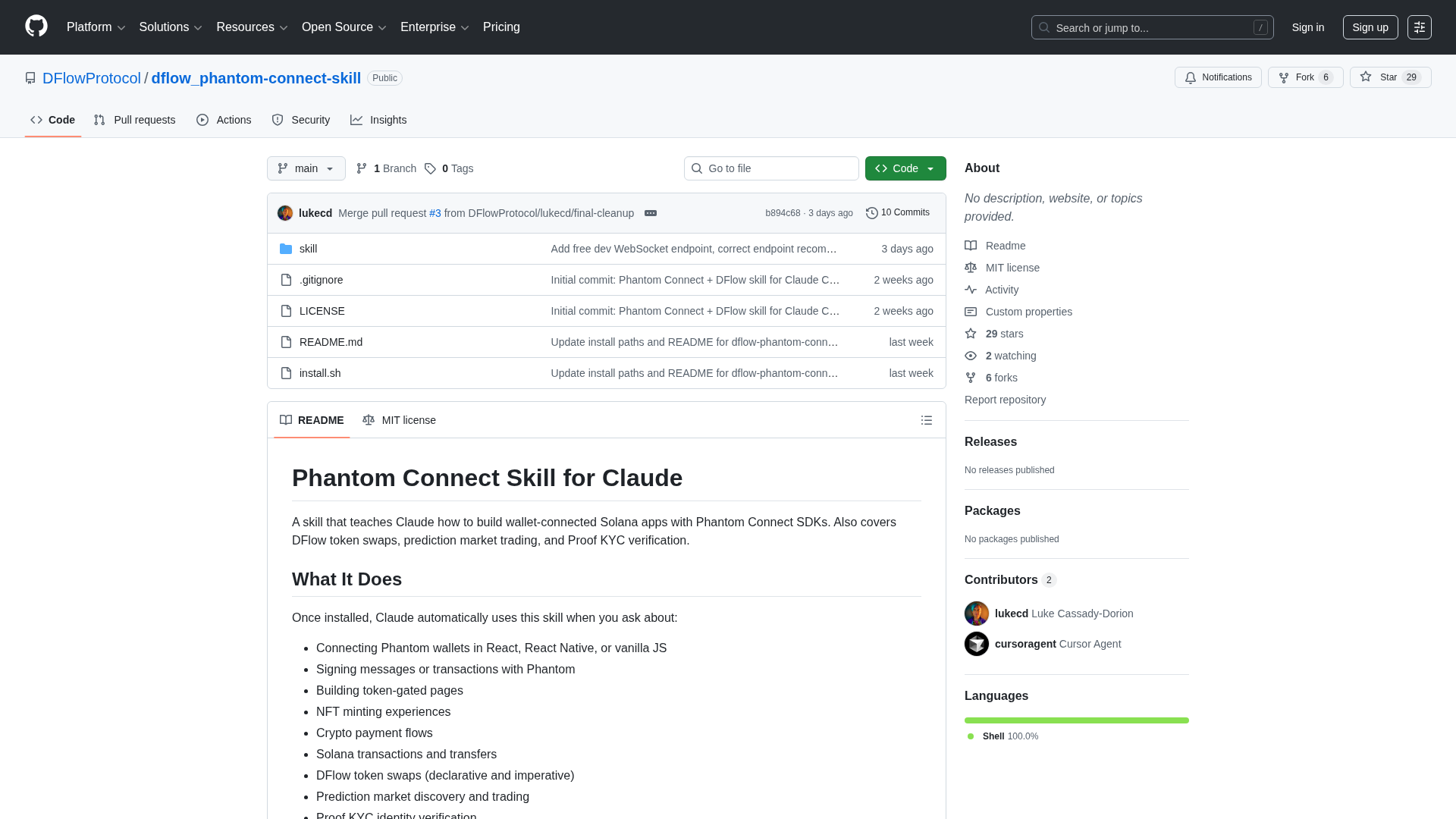
Topic Overview
This topic covers the toolkits and developer stacks used to build full‑stack decentralized applications (dApps) that embed autonomous AI agents. It spans four intersecting categories: AI agent marketplaces (distribution and skill discovery), agent frameworks (runtime, orchestration, observability), decentralized AI infrastructure (self‑hosted or on‑chain compute and wallet integrations), and AI data platforms (RAG, document agents and content pipelines). Practical tool examples include LangChain (open‑source SDKs and commercial platform for composing, testing and deploying LLM agents), LlamaIndex (turning unstructured content into production document agents and RAG pipelines), and code‑centric assistants like GitHub Copilot, Windsurf (AI‑native IDE with agentic features), Tabnine (enterprise/private deployments), Tabby (open‑source self‑hosted assistant), CodeGeeX and Code Llama (code‑specialized models). Web‑native platforms such as Replit combine IDE, hosting and agent assistants to shorten the build→ship loop. Emerging pieces referenced in the topic title—Claude Code Skill, Phantom and DFlow—represent the trend of agent skillsets, wallet‑level integration points and flow/orchestration layers that connect agent decisions to blockchain actions and full‑stack app lifecycles. As of 2026 this space is driven by demand for interoperable, observable and governable agent stacks: teams want RAG and data pipelines that scale, multi‑model developer tooling that preserves IP/privacy (self‑hosting), and standardized ways to bridge off‑chain agent logic with on‑chain transactions and wallets. Key considerations for selecting toolkits are integration surface (connectors to wallets, chains, and data stores), model and code governance, observability for agent behavior, and deployment options (cloud, edge, self‑hosted). This overview synthesizes the current landscape to help developers evaluate where to compose agent capabilities into production dApps.
Tool Rankings – Top 6

An open-source framework and platform to build, observe, and deploy reliable AI agents.

Developer-focused platform to build AI document agents, orchestrate workflows, and scale RAG across enterprises.

An AI pair programmer that gives code completions, chat help, and autonomous agent workflows across editors, theterminal

AI-native IDE and agentic coding platform (Windsurf Editor) with Cascade agents, live previews, and multi-model support.

Enterprise-focused AI coding assistant emphasizing private/self-hosted deployments, governance, and context-aware code.
.avif)
Open-source, self-hosted AI coding assistant with IDE extensions, model serving, and local-first/cloud deployment.
Latest Articles (46)
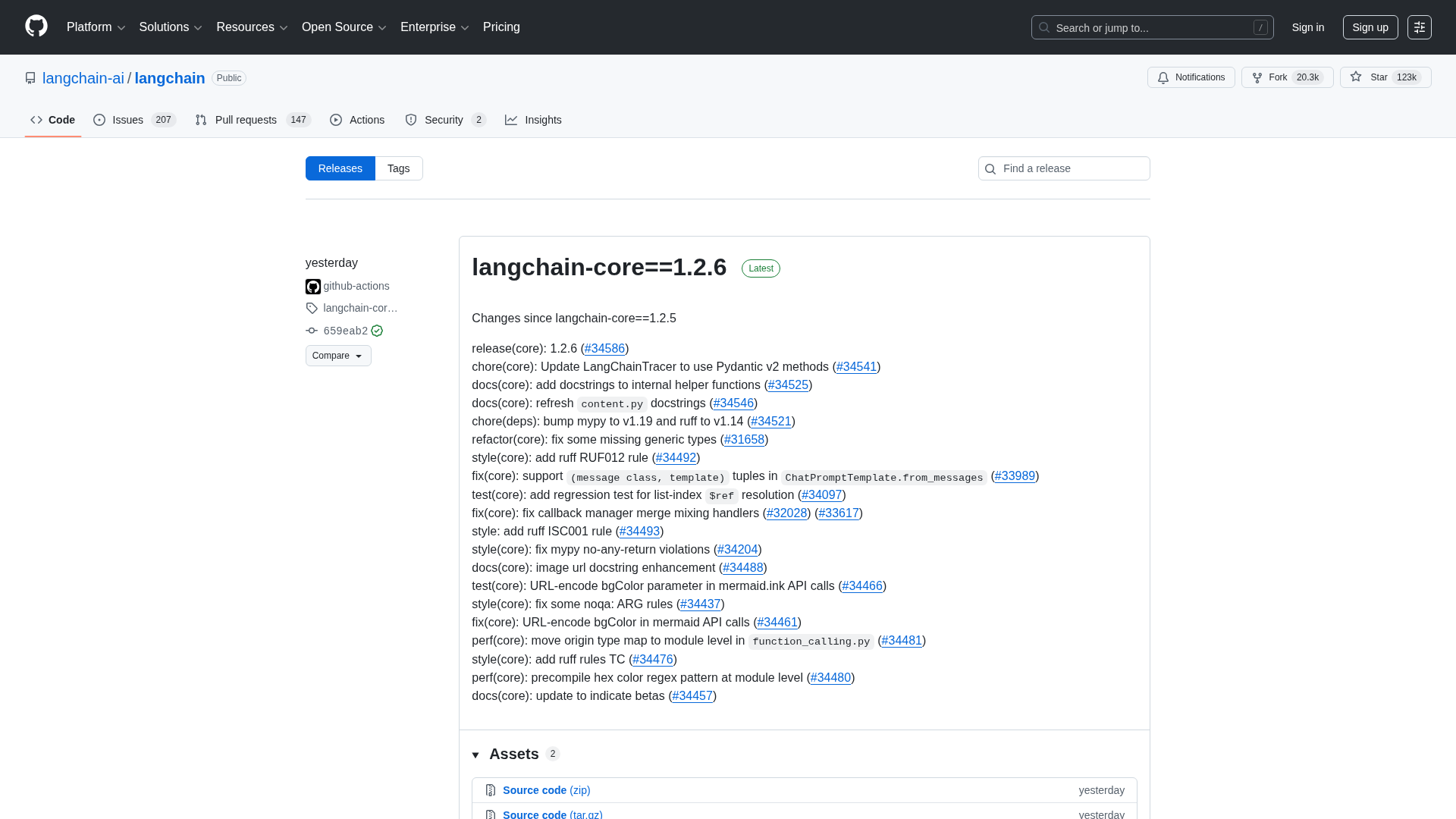
A comprehensive LangChain releases roundup detailing Core 1.2.6 and interconnected updates across XAI, OpenAI, Classic, and tests.
A reproducible bug where LangGraph with Gemini ignores tool results when a PDF is provided, even though the tool call succeeds.
A CLI tool to pull LangSmith traces and threads directly into your terminal for fast debugging and automation.
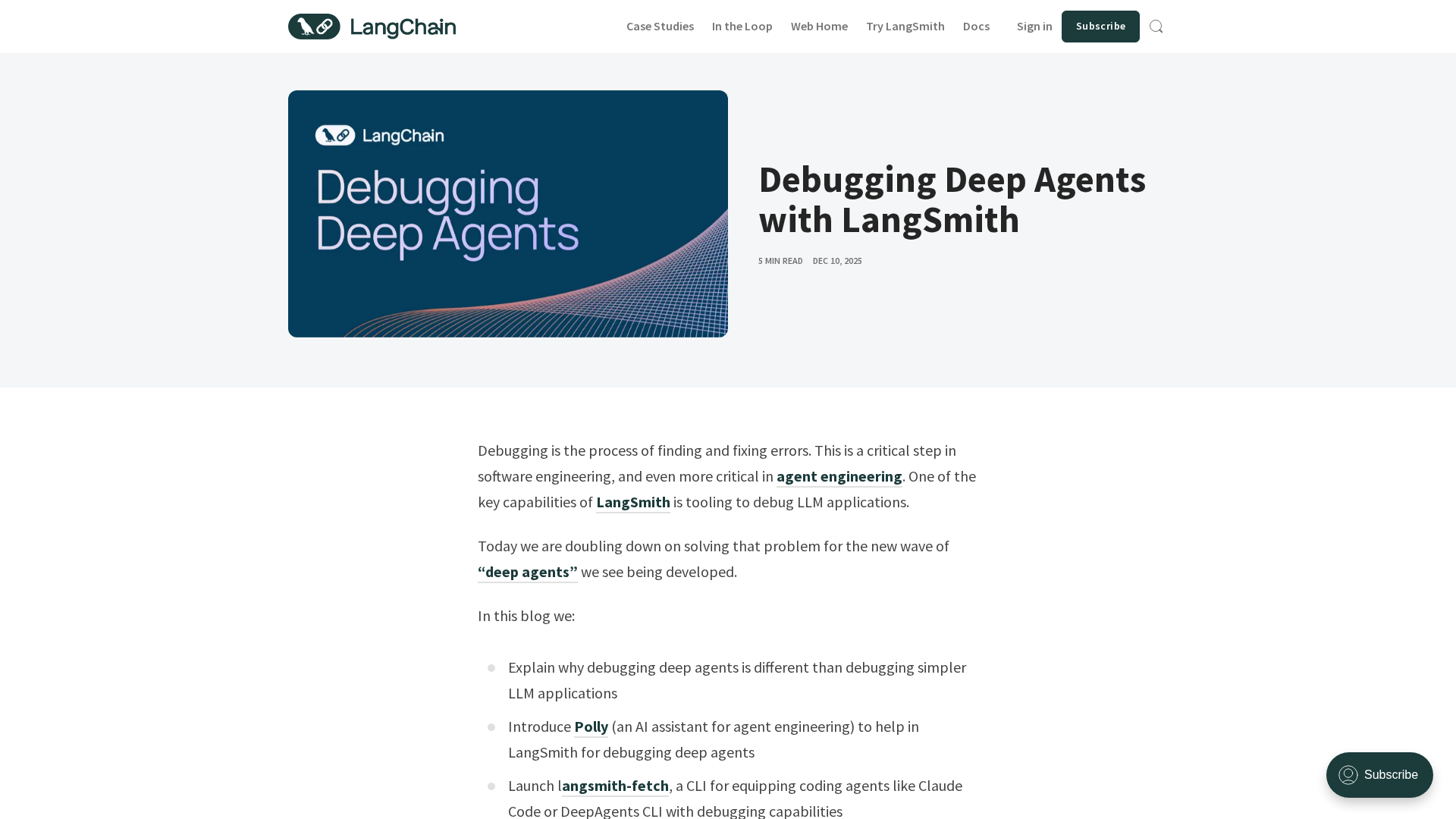
A practical guide to debugging deep agents with LangSmith using tracing, Polly AI analysis, and the LangSmith Fetch CLI.
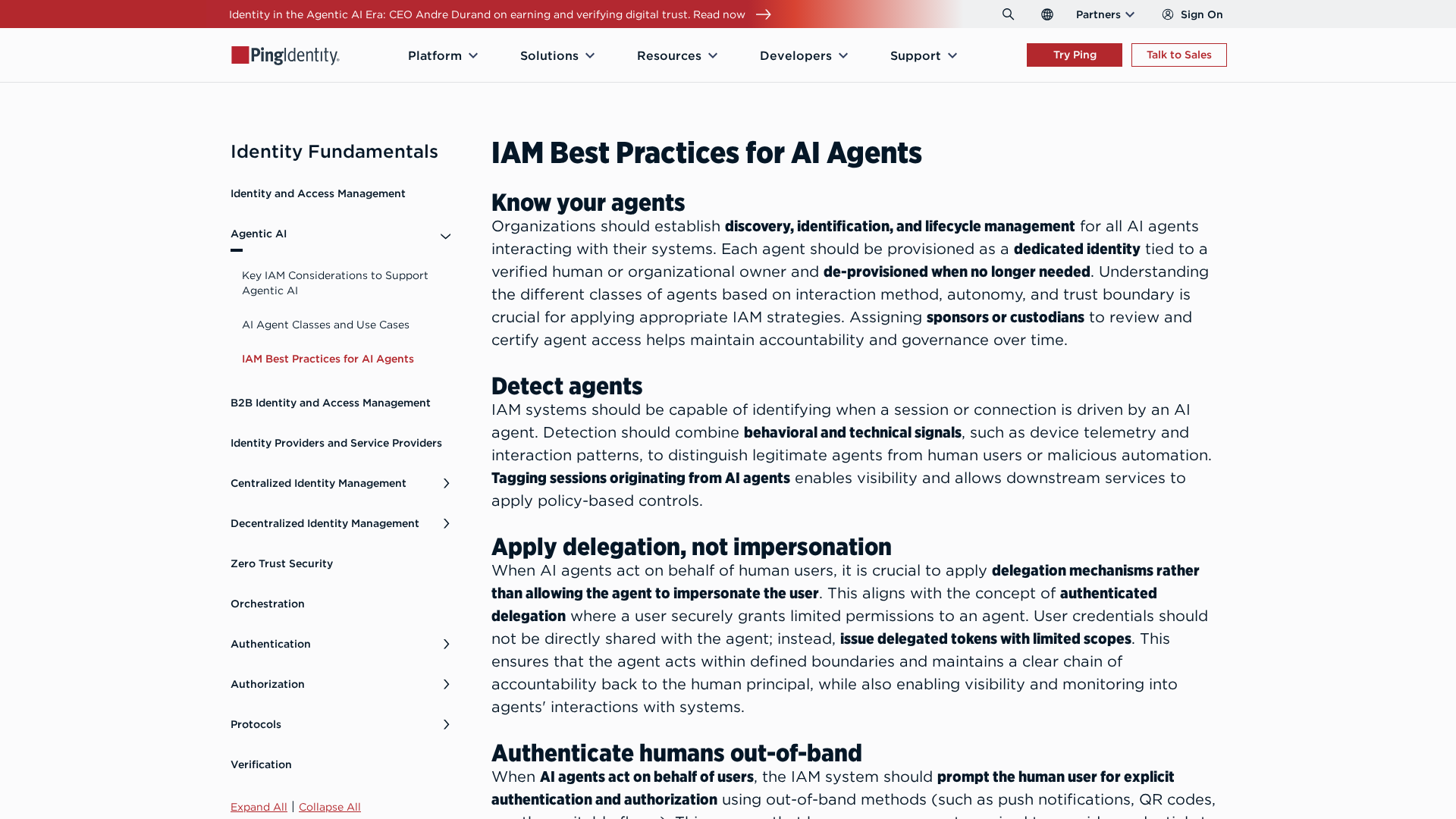
Best-practices for securing AI agents with identity management, delegated access, least privilege, and human oversight.