Topic Overview
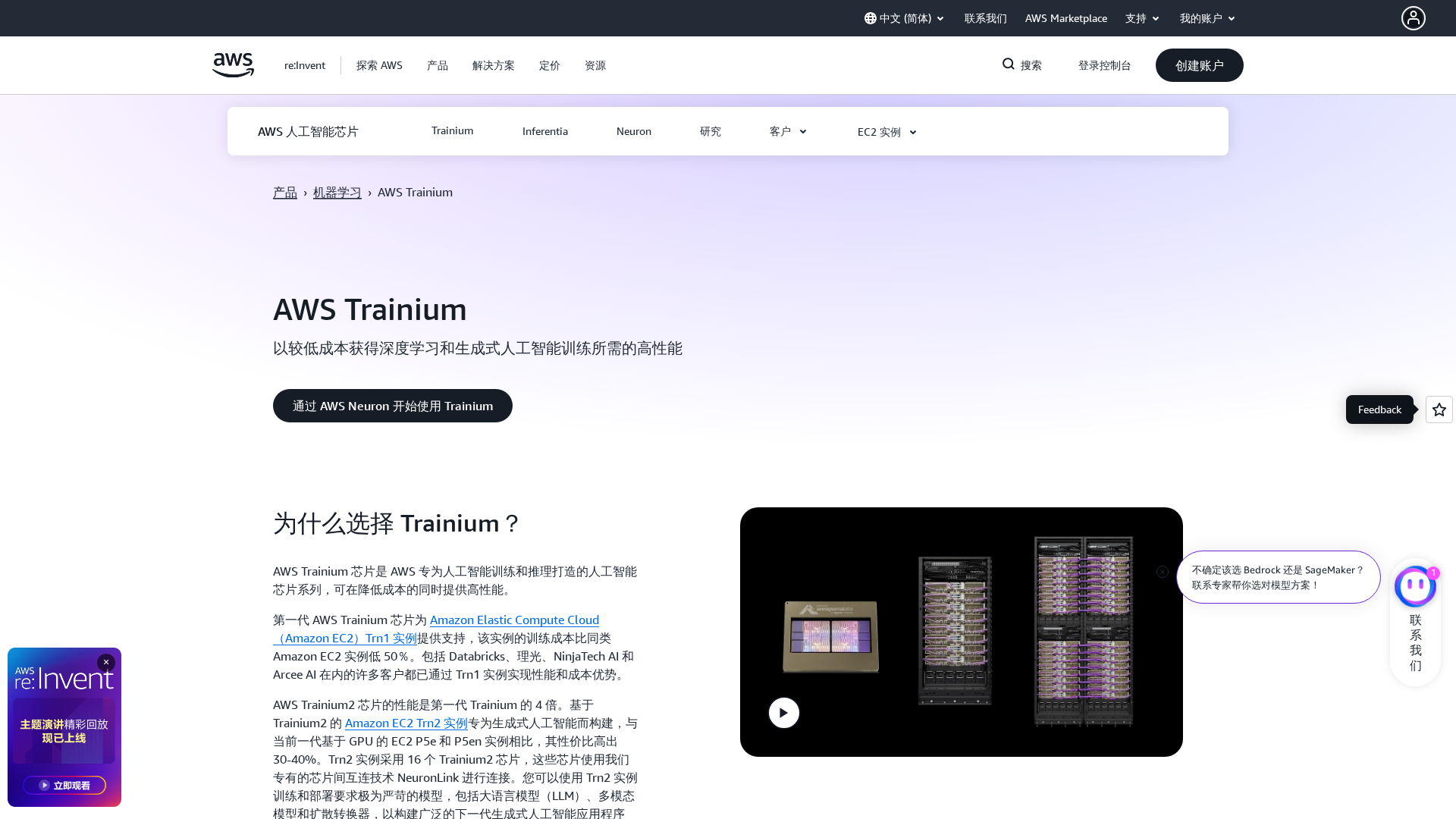
Inference servers and optimized stacks are the backbone of deploying generative AI at scale: they combine model runtimes, hardware accelerators, data pipelines, and orchestration to deliver low-latency, cost-effective, and energy-efficient LLM and multimodal services. This topic covers enterprise inference servers (for example Red Hat’s inference offerings and NVIDIA Triton), cloud accelerators such as AWS Trainium and Inferentia, emerging purpose-built silicon and systems (e.g., Rebellions.ai’s energy-efficient accelerators), and the software layers that enable batching, quantization, compilation and sharding. Relevance in late 2025 is driven by wider production adoption of large models, rising inference costs, and sustainability pressures that push providers toward hardware/software co-design and inference-specific optimizations. Practical stacks now integrate managed data and fine-tuning platforms (OpenPipe) and multimodal/vector stores (Activeloop Deep Lake) to support retrieval-augmented generation (RAG), evaluation, and continuous model updates. Decentralized infrastructure projects like Tensorplex Labs show alternative governance and hosting patterns for model development and serving, useful for edge and multi-stakeholder deployments. Model families tailored to workloads (e.g., Code Llama for code tasks) illustrate the need for inference stacks that handle diverse model sizes and operator support. Key design trade-offs include latency vs throughput, hardware efficiency vs software portability, and centralized vs decentralized hosting. Operators choose combinations of inference servers, accelerator nodes, vector DBs, and data capture/fine-tuning pipelines to meet SLAs and cost targets. Understanding this ecosystem — from Triton/Red Hat runtimes through accelerators and data platforms — is essential for building scalable, maintainable GenAI services.
Tool Rankings – Top 5

Energy-efficient AI inference accelerators and software for hyperscale data centers.

Managed platform to collect LLM interaction data, fine-tune models, evaluate them, and host optimized inference.

Deep Lake: a multimodal database for AI that stores, versions, streams, and indexes unstructured ML data with vector/RAG
Open-source, decentralized AI infrastructure combining model development with blockchain/DeFi primitives (staking, cross
Code-specialized Llama family from Meta optimized for code generation, completion, and code-aware natural-language tasks
Latest Articles (47)
How AI agents can automate and secure decentralized identity verification on blockchain-enabled systems.
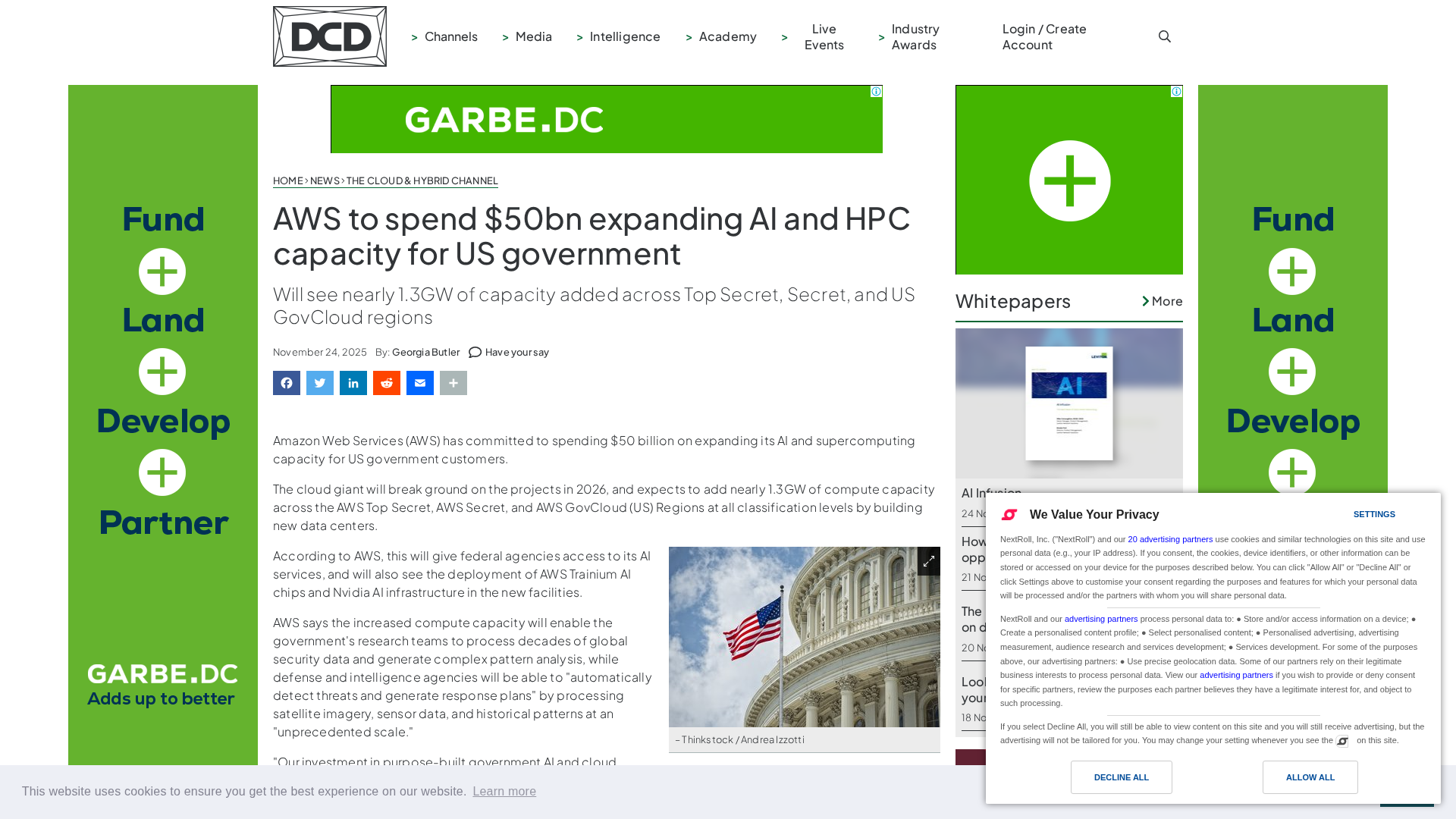
AWS commits $50B to expand AI/HPC capacity for U.S. government, adding 1.3GW compute across GovCloud regions.
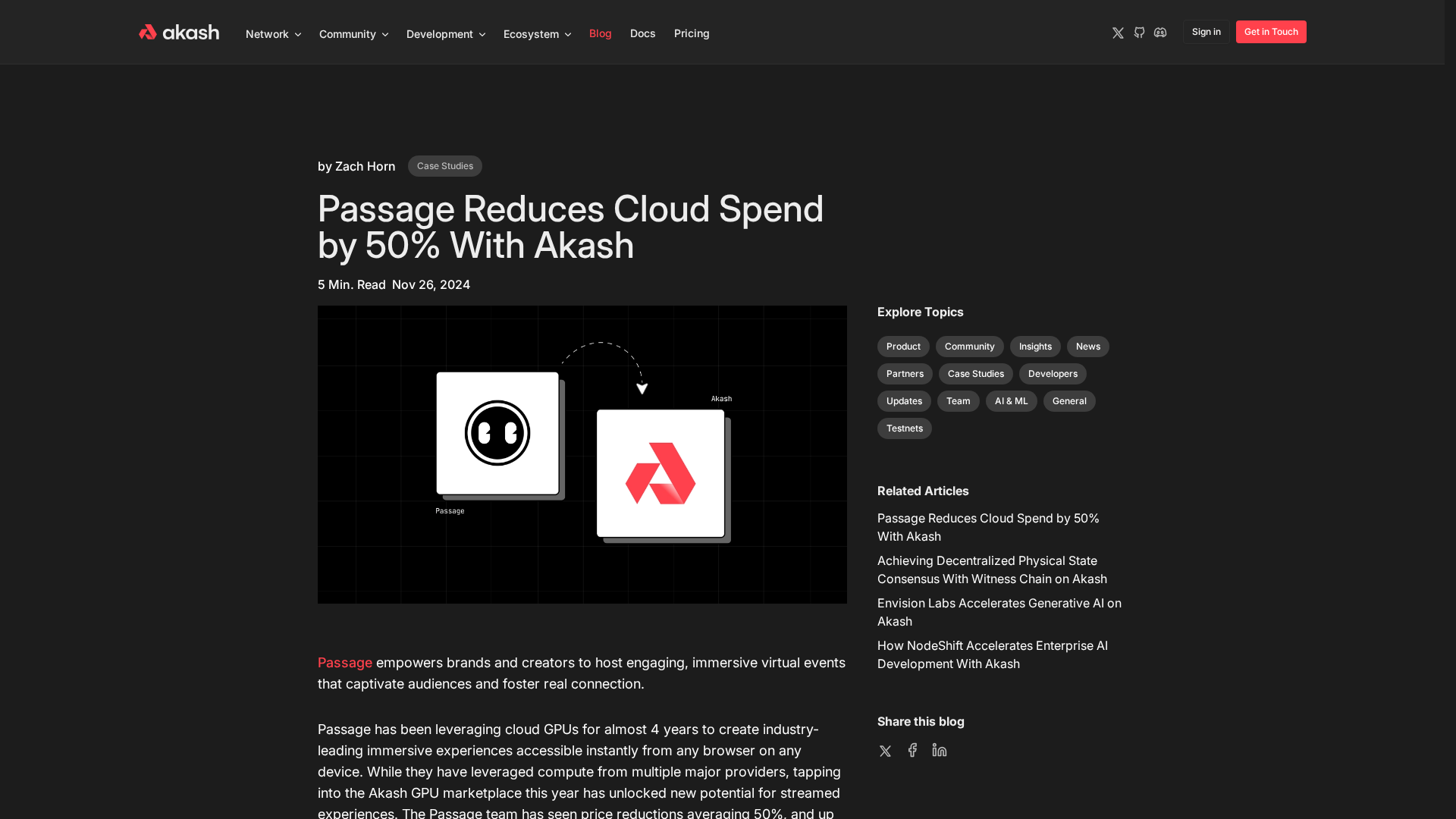
Passage cuts GPU cloud costs by up to 70% using Akash's open marketplace, enabling immersive Unreal Engine 5 events.
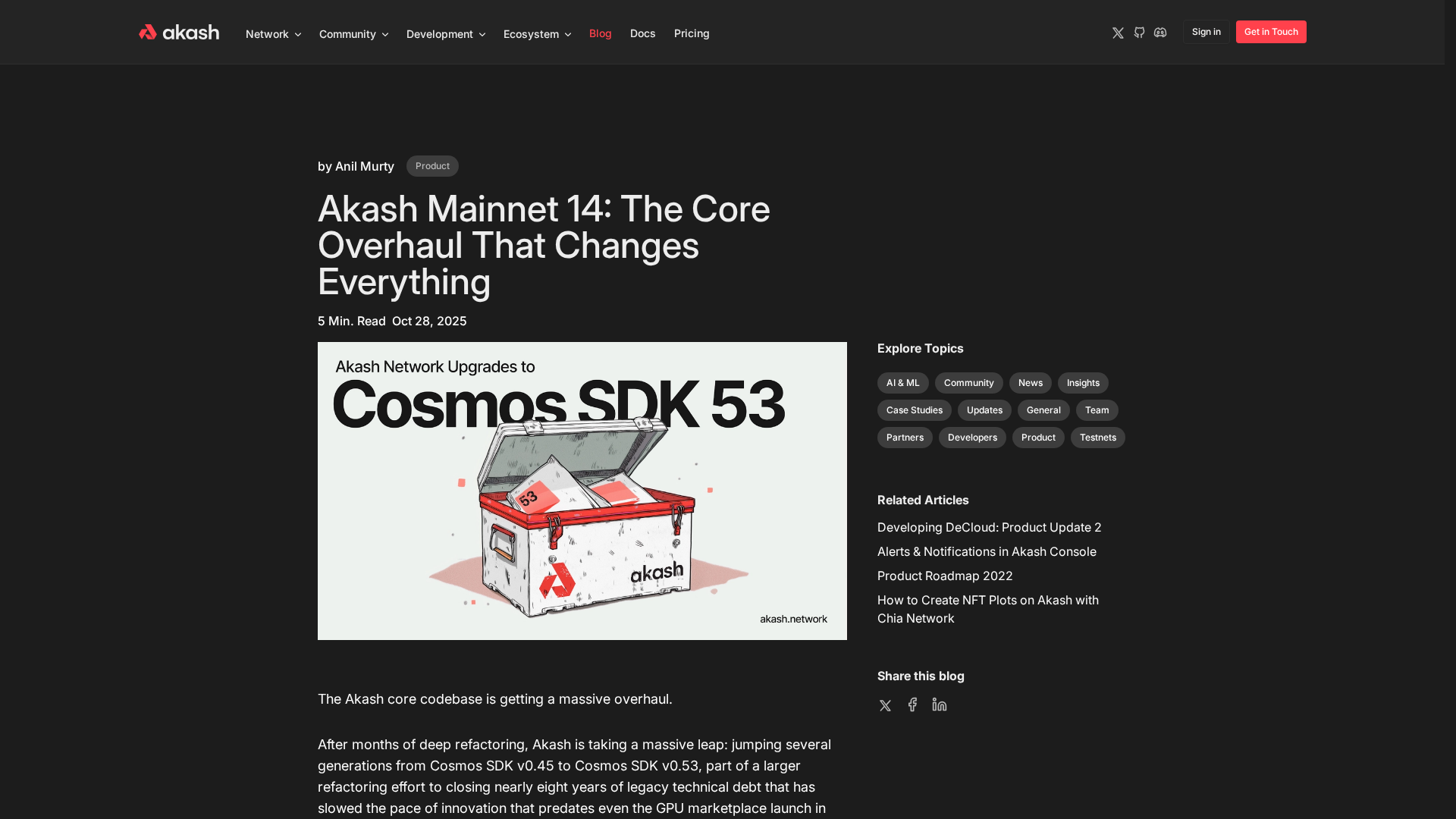
A foundational Core overhauL that speeds up development, simplifies authentication with JWT, and accelerates governance for Akash's decentralized cloud.

Meta plans a 500MW AI data center in Visakhapatnam with Sify, linked to the Waterworth subsea cable.