
Topic Overview
This topic covers the practical ecosystem of open-source large language models (LLMs) and the supporting toolchains enterprises use to build, deploy, and govern production AI. Interest in models like Mistral 3 and community alternatives (instruction-tuned families such as WizardLM) reflects a shift toward self-hosting, customizable instruction models and libraries that can be integrated into private stacks and hybrid cloud deployments. Enterprises are combining model families with engineering frameworks and agent platforms to meet needs for privacy, traceability, and domain adaptation. Key components include agent engineering frameworks (LangChain for building, testing and deploying stateful agentic applications), developer-facing coding assistants (Tabby and Tabnine offering self-hosted or enterprise-focused code completion and governance), lightweight client-side agents (Cline for audited multi-step coding tasks), and developer environments with embedded agents (Warp’s Agentic Development Environment). These tools map to categories such as AI Tool Marketplaces (discovering models and connectors), AI Data Platforms (RAG, indexing and data governance), Decentralized AI Infrastructure (self-hosted serving, edge inference), and AI Agent Marketplaces (composable agent pieces). Practical trends through 2025 include stronger demand for private deployments and governance controls, a maturing ecosystem of community-trained instruction models, and tighter integration between model-serving layers and agent orchestration frameworks. For enterprise adopters this means evaluating not just model quality but also deployment footprints, observability, audit logs, and the ability to compose chains of tools and data pipelines—often using open-source stacks to retain control and reduce vendor lock-in.
Tool Rankings – Top 6

Engineering platform and open-source frameworks to build, test, and deploy reliable AI agents.
Open-source, client-side AI coding agent that plans, executes and audits multi-step coding tasks.
.avif)
Open-source, self-hosted AI coding assistant with IDE extensions, model serving, and local-first/cloud deployment.

Open-source family of instruction-following LLMs (WizardLM/WizardCoder/WizardMath) built with Evol-Instruct, focused on

Enterprise-focused AI coding assistant emphasizing private/self-hosted deployments, governance, and context-aware code.

Agentic Development Environment (ADE) — a modern terminal + IDE with built-in AI agents to accelerate developer flows.
Latest Articles (39)
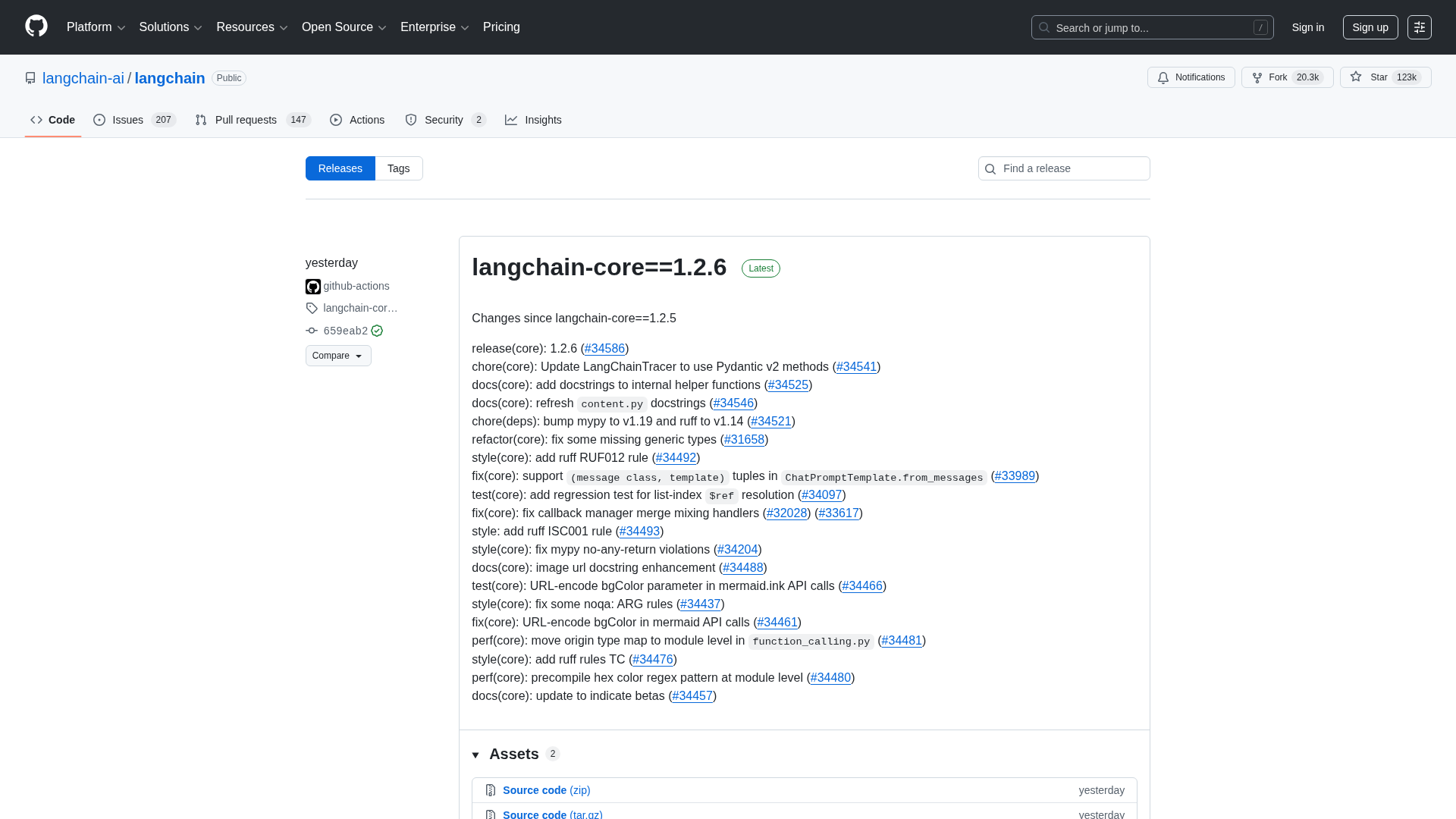
A comprehensive LangChain releases roundup detailing Core 1.2.6 and interconnected updates across XAI, OpenAI, Classic, and tests.

Cannot access the article content due to an access-denied error, preventing summarization.

Adobe nears a $19 billion deal to acquire Semrush, expanding its marketing software capabilities, according to WSJ reports.

A quick preview of POE-POE's pros and cons as seen in G2 reviews.

Meta may partner with Sify to lease a 500 MW Vishakhapatnam data center in a Rs 15,266 crore project linked to the Waterworth subsea cable.